Africa
Why Standing Your Ground is Not a Strength but a Failure -By Syeda Fatima Gardezi
Flexibility in the rule is not exhibited through stubbornness. The skill to rule responsibly in the world, which is complex, unequal and uncomfortable, demonstrates it. In that regard, the actual test confronting Congress is not whether it can reopen the government, but whether it still understands why compromise is essential.

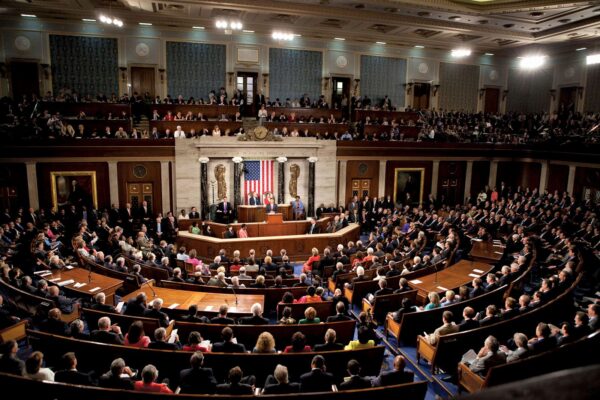
The partial government shutdown in the U.S. is commonly framed as an ordinary political battle, another episode of the eternal partisan fight in Washington. That framing is misleading. What is being experienced is not really a technical dispute about the levels of funding but rather a more fundamental breakdown of democratic thought, one that confuses inflexibility with ideals and obedience with leadership.
The House Speaker, Mike Johnson, is on the verge of a decisive vote on reopening portions of the government that have lost funding to various agencies of the federal government. The temporary funding bill has already passed the Senate in a bipartisan vote. However, the House has made no progress, mainly because former President Donald Trump publicly urged Republicans to enact the bill without changes. The education provided via social media does not give the legislature much room to make a judgment. It is not an argument; it is a command.
This pose is justified at first sight as decisive. It is, in fact, a shirking of responsibility. It is the role of legislatures to debate, amend, and refine policy. To demand that nothing can be done to change the situation, no matter what the circumstances are, is to deny the very meaning of representative government. Democratic systems do not have a weakness of compromise; rather, it is their logic of operation. In its absence, conflict becomes frozen.
This rigidity entails no theoretical costs. When the government shuts down, it disrupts vital services, delays payments to the public, and subjects its workers to financial instability they did not cause. These employees are not politicians, yet they frequently become casualties in political battles. When a strategy is predicted to harm uninvolved citizens, logic dictates that we ask whether it is a strategy to defend.
What is particularly eye-opening about the current shutdown is the timing. The fiscal wrangle is being played out in the national debate over the behavior of federal immigration enforcement, which is being taken seriously. Recent interactions between the federal agents and civilians in Minneapolis have led to the death of U.S. citizens. The use of video evidence and witness testimonies has raised plausible doubts about whether lethal force was reasonable. These cases have led to protests, inquiries, and demands for reform.
Democratic lawmakers have, in turn, called for a rapid review of Immigration and Customs Enforcement’s use-of-force policies. Their needs are specific and quantifiable: improved rules, body-worn cameras, transparency, and accountability measures for agents working in residential areas. They are not drastic innovations. Similar protections are available in most democratic countries and are commonly considered essential checks on the use of coercive power.
This is where the reasoning of no changes fails miserably. The only reason why federal funding is under the control of Congress is to create the power of oversight. It is not an obstructive move of conditioning funding on accountability, but a constitutional design. To state that the government should be reopened by disregarding legitimate concerns about law enforcement practices is to separate power and responsibility, and democracies cannot do that.
Those who hold the hardline view have suggested that the government should first be reopened, with reforms implemented later. Such an argument presupposes trust, but trust is precisely what is lacking. The promises of change in the future become empty when citizens witness federal agents work with lethal force and little supervision. Delayed responsibility is denied responsibility, particularly when people have already been killed.
This fact is implicitly acknowledged by the Department of Homeland Security’s decision to increase the use of body cameras in Minneapolis. It is an indicator that the population’s worries were not overdramatized or partisan constructions. When reforms are necessary in response to public pressure, they are severe enough to be openly discussed before funds are allocated. Logic demands consistency.
What is most disturbing, from an external perspective, is the ease with which the process of compromise has been redefined as weakness. The politics of social media favors absolutism due to the simplicity and performance nature of the action. But a complex society must be ruled by judgment, flexibility, and responsiveness to evidence. When a leader is unable to change their position in light of emerging facts, they are not principled but rigid. And rigidity, when it is detrimental to the populace, turns to negligence.
It is a fact that the shutdown needs to end. Political strategy should not be used as a ransom for federal workers. To recapitulate, the government, without addressing the larger issues of power, force, and accountability, would be treating a symptom while ignoring the disease. Budgets are moral documents. They represent not only what governments finance, but what they condone.
Disagreement is not the real crisis underlying this shutdown. Democracies are built on discord. The crisis consists of the inability to reason. Democratic institutions are emaciated when leaders substitute argument with command and negotiation with ultimatums.
If shutdowns remain in their role of ideological discipline, they will recur with increasing frequency. Public trust will be further reduced each time. The harm will not be in the form of non-payment of wages or late delivery of services. It will be quantified in cynicism, disengagement and gradual normalization of dysfunction.
Flexibility in the rule is not exhibited through stubbornness. The skill to rule responsibly in the world, which is complex, unequal and uncomfortable, demonstrates it. In that regard, the actual test confronting Congress is not whether it can reopen the government, but whether it still understands why compromise is essential.