Africa
Why The ₦3m Bribery Allegation In The National Assembly Must Not Stand -By Isaac Asabor
Democracy is too fragile to be toyed with. Nigerians have endured too many betrayals from those in power. They cannot afford another one from their lawmakers. The National Assembly must now choose: to be remembered as a bazaar where bills were bought and sold, or as a true people’s parliament where voices are heard freely, without a price tag.

The National Assembly is supposed to be the temple of democracy, a place where the voices of Nigerians are amplified through motions, bills, and petitions. It is where the collective will of the people is debated and transformed into laws that shape national destiny. That is why the recent allegation that lawmakers must part with between ₦1 million and ₦3 million before presenting a bill or motion is not just troubling, it is scandalous, shameful, and an insult to Nigeria’s democracy.
If true, the allegation reduces our legislature to a cash-and-carry marketplace. If false, it represents a dangerous smear campaign that further erodes public trust. Either way, it is a matter that cannot be swept under the carpet.
To bluntly put it, it is a direct assault on democracy. The reason for being blunt in making the foregoing assertion cannot be farfetched as lawmaking is a constitutional duty, not a privilege traded at the highest bidder’s table. The 1999 Constitution vests legislative powers in the National Assembly “for the peace, order and good governance of the Federation.” No clause demands that an honorable member must “settle” anyone before exercising this responsibility.
If bills and motions require bribes to see the light of day, then the principle of representation collapses. Citizens would no longer be sure whether laws are passed on merit or because someone paid their way through. That is not democracy. That is auctioneering.
The issue, no doubt, tantamount to mocking the Nigerian people. To come to grip with the foregoing view, it is germane to opine that every four years, Nigerians defy hardship, insecurity, and sometimes violence to vote for lawmakers. Their expectation is simple: representation. To suggest that their representatives cannot present motions or bills without paying a bribe is to mock the value of those votes.
It is akin to telling the Nigerian electorate: “Your votes gave us the seats, but your voices will only be heard after we pay a fee.” Such a situation insults the people and reduces the National Assembly to a bazaar where the people’s mandate is bartered.
Not only is the allegation a mockery, the integrity of the legislature is undoubtedly at stake. This is as the legislature is the watchdog of democracy, but what happens when the watchdog itself is suspected of feeding on corruption? If lawmakers are forced to pay bribes to present motions, then they lose the moral authority to investigate corruption, scrutinize budgets, or hold the executive accountable.
How can a House committee credibly summon a minister for mismanaging funds when whispers of bribery echo within its own chambers? A legislature that cannot cleanse itself cannot credibly cleanse the system.
On this matter, silence is dangerous. Nigerians are weary of endless whispers of corruption in high places. The leadership of both chambers of the National Assembly must address the allegations head-on.
It is not enough to dismiss them with vague denials. Nigerians deserve transparency. The National Assembly must open its doors to scrutiny, allow an independent investigation, and reassure the people that the hallowed chambers are not for rent.
In fact, at the heart of this storm is a sitting member of the House who alleged in a viral video that bribes are required to present bills and motions. Whether or not one agrees with his methods, his disclosure touches on public interest.
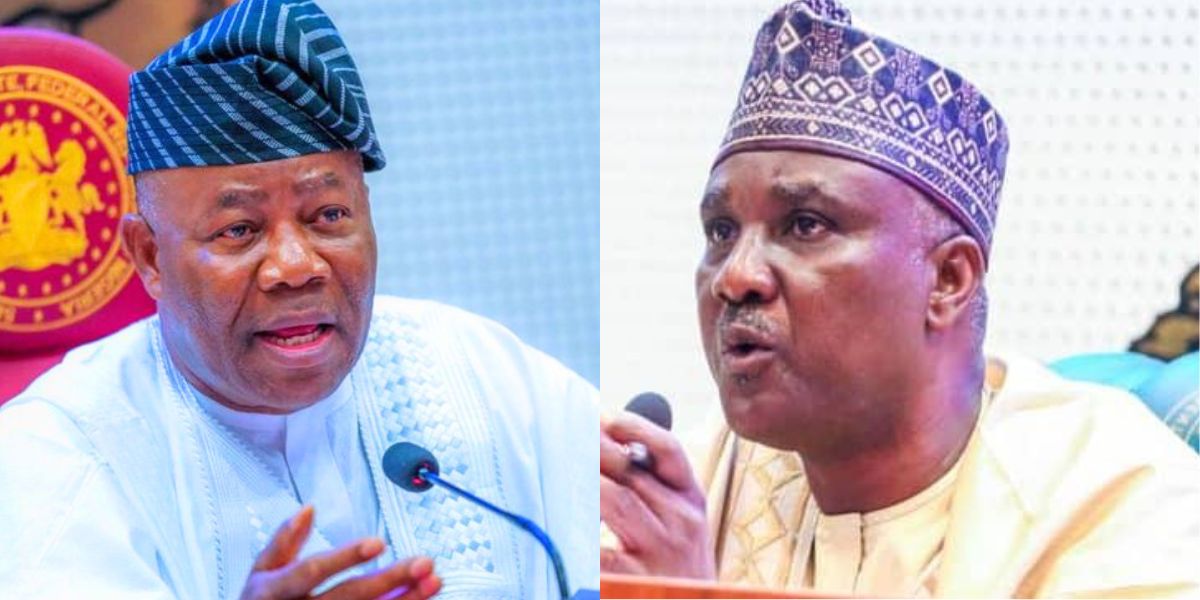
At this juncture, it is expedient to recall that the leadership of the Socio-Economic Rights and Accountability Project (SERAP) has called on Senate President, Godswill Akpabio, and Speaker of the House of Representatives, Tajudeen Abbas, to “urgently refer the allegations made by the Reps member, Ibrahim Auyo, to anti-corruption agencies for investigation and prosecution of suspected perpetrators.”
It will be recalled in this context that the Jigawa lawmaker Auyo last week alleged that House members paid between N1m and N3m to have their bills presented at the Green Chamber. However, some of his colleagues in the House dismissed the allegations, insisting Auyo must substantiate his claims when the House resumes plenary.
Speaking in Hausa, Auyo was reported to have said, “Since I was elected as a member in 2015, no individual has given me a bill to pass. And also, even the bills and petitions are paid for.
However, rather than vilify the outspoken lawmaker, his safety and rights must be guaranteed. A democracy that silences whistleblowers is already failing. Nigeria cannot claim to be fighting corruption while gagging those who dare to speak up.
At this juncture, not a few people are asking, “What If the allegations are false?” To my view, if investigations prove the allegations false, Nigerians must be told in clear terms. Nothing erodes institutions faster than unfounded claims left to fester. Reckless accusations can be just as damaging as corruption itself, they poison trust and weaken democracy.
The truth must be established. If bribery exists, let reforms follow and culprits face justice. If it does not, let the nation be reassured with evidence, not rhetoric.
There is no denying the fact that Nigerians deserve a People’s Parliament. In fact, the Nigerian people deserve lawmakers who respect their mandate. They deserve to know that when a bill is introduced, it is because of its merit, not because someone greased a palm.
Without any iota of exaggeration, lawmakers take an oath to perform their duties “without fear or favour.” So a pay-to-present culture completely negates that oath. It introduces fear of being excluded and favour based on payment. Such a system, if true, is unconstitutional, immoral, and unacceptable.
In fact, if the allegation is founded, then, this is the time to clean both the red and green chambers. This allegation, whether true or false, cannot be ignored. It either exposes rot within the legislature or highlights a culture of reckless falsehood aimed at weakening institutions. Both possibilities are dangerous.
The National Assembly must rise above partisanship to confront this scandal. If the claims are true, let heads roll. If they are false, let accountability follow swiftly. But under no circumstance should Nigerians be left in the dark.
Democracy is too fragile to be toyed with. Nigerians have endured too many betrayals from those in power. They cannot afford another one from their lawmakers. The National Assembly must now choose: to be remembered as a bazaar where bills were bought and sold, or as a true people’s parliament where voices are heard freely, without a price tag.