Africa
A Tearful Letter to Justice Binta Nyako: When the Law Must Speak Above Power, Fear, and Delay -By John Egbeazien Oshodi
You are in possession of a case that carries more than legal consequences—it carries national, spiritual, and generational weight. The matter of Senator Natasha Akpoti-Uduaghan is not only about what happened in the chamber of the Senate. It is about whether a chamber of law will affirm the dignity of truth.


Dear Justice Binta Nyako,
This is not a legal brief. This is not a media headline. This is not an accusation. This is a letter. A solemn, sober appeal to your spirit, to your integrity, and to the legacy you are still building.
You sit at a crossroads that most public servants will never truly understand—not just between two legal arguments, but between fear and fortitude. Between duty and destiny. Between the convenience of delay and the clarity of conscience.
You are in possession of a case that carries more than legal consequences—it carries national, spiritual, and generational weight. The matter of Senator Natasha Akpoti-Uduaghan is not only about what happened in the chamber of the Senate. It is about whether a chamber of law will affirm the dignity of truth.
And the question many are quietly asking—some aloud, some within—is this:
What is the worst they can do to you, if you do what is right?
Can they block your elevation to the Supreme Court? Possibly.
Can they transfer you to a quieter, less convenient judicial post? Perhaps.
Can they isolate you from their circles of comfort? Likely.
But at your stage, with your experience, your age, your understanding of life’s deeper currents—is any of that worth more than your conscience?
They may have power for today. But only truth travels into forever.
And robes, titles, appointments—these things do not outlive memory. But justice does.
Justice, real justice, lives beyond buildings and bulletproof gates. It is carried in the mouths of citizens, in the prayers of women who feel unseen, and in the notebooks of students who hope that, one day, the law will protect them too.
They may offer influence. They may offer distance from discomfort. But no one—no matter how connected—can offer you peace with your own name, if your name drifts from the truth.
Remember, Madam Justice, this is not your beginning. This is the phase where every word from your lips, every judgment from your gavel, becomes the story that others will tell when you are no longer there to tell it yourself.
And when your robe is folded away, and your seat becomes someone else’s—what story will be told in your absence? What legacy will outlive the salary, the titles, the ceremonial entrances? Will it be said that you stood, or that you stalled?
There are those who whisper that courage costs too much. But courage, when spent in service of truth, never runs out. It multiplies. It echoes. And it blesses generations to come.
Those who sit in power may change the rules, but they cannot change the records of time. Those who wish to bend your judgment may do so in shadows, but light always finds what shadows try to hide.
What stands before you is not simply a legal argument. It is a national temperature check. Will the judiciary affirm courage, or bow to convenience? Will the Constitution guide judgment, or will unseen hands shape rulings through unseen pressures?
We are not asking you to be political. In fact, we ask the opposite.
We ask you to be judicial.
We ask you to show that law is still sacred in Nigeria. That truth still has a home. That the robe still means something beyond ceremony.
You are no longer just one among many. This case, and what you do with it, may well be the most publicly remembered moment of your judicial career. And it will not be remembered for the technicalities or citations—but for the courage, or the absence of it.
You are a woman whose age grants you freedom from ambition, and whose experience grants you the wisdom to see through all political fog. You carry no need to climb ladders anymore. You are already above them. And from this height, you have one sacred opportunity left: to decide whether you will descend with the crowd—or rise above the noise.
Let them say what they will. Let them plot what they may.
But let it also be said, one day:
That Justice Binta Nyako, in her time, was not moved by fear.
That she did not flinch.
That she remembered what the robe was meant to symbolize.
That she ruled for the law—and not for the loud.
Let it be said not in newspapers, but in homes. In classrooms. In the silence of the mind where all true memory lives.
You are not doing this for Natasha.
You are doing it for your name.
For democracy.
For your Creator.
For Nigeria.
And yes—especially for those unborn daughters who will someday sit where you sit, and will wonder whether the law still bends to truth.
We are watching. Not with anger—but with hearts breaking under the weight of disbelief. With the trembling belief that perhaps—perhaps—this time, justice will not bow. That one judge, one voice, might still resist the tide.
And while we weep and wait, we remember—with grief and expectation—what your fellow justices once declared with courage.
We remember the year 2017. A year when a Federal High Court, unshaken by political heat, declared the suspension of Senator Ali Ndume not only unlawful but a betrayal of the Constitution. That judgment was not about favor. It was about fidelity. That ruling reminded Nigeria that no Senate chamber has the right to suspend a voice elected by the people. The judge that day saw beyond chairs and titles—he saw a constitutional violation bleeding in daylight.
And again, in 2018, it happened. A court stood again. This time in defense of Senator Ovie Omo-Agege. The judgment was firm: this suspension too, like the one before, was a misuse of legislative procedure. It was an overreach. It was unlawful. That court did not care for political winds. It did not pause for party lines. It heard only the voice of the law—and responded without trembling.
Now, we hear the excuse: that Senate internal rules justified defiance of court orders. That they could brush aside a judicial instruction because their Standing Orders allowed it.
But how, Justice Nyako? How can any internal Senate rule ever rise above the Constitution? How can any legislative manual supersede a court order from a constitutional judge? How can Nigeria claim to be a democracy—if its lawmakers obey their own preferences and defy the rule of law?
Justice Nyako, no. This cannot be accepted. Not again. Not now.
You know this. You have lived this. You carry the weight of decades in the legal system. You know that once the judiciary is made to kneel before politics, democracy becomes theatre.
Those rulings in 2017 and 2018 were not accidents. They were the cries of a legal system fighting to stand. They said clearly that legislative chambers are not above the law. They cannot suspend a Senator in darkness and call it order. They cannot hide injustice behind the veil of ‘procedure.’
And now, you have been handed this same flame.
You are not writing the first paragraph—but perhaps the last hope.
When you raise your gavel, raise it in the name of those rulings.
Raise it in defense of the Constitution.
Raise it for the daughters who will one day ask whether courts still had strength in their mother’s time.
Let your ruling say what fear cannot.
Let it whisper into the fabric of our nation: that justice is not an accessory, and law is not a tool of convenience.
Let it be your moment—not for applause—but for legacy.
With prayer. With grief. With tears still falling—because Nigeria is desperate for one judge who reminds the powerful: justice is not a strategy. It is a stand.
This writer does not know any of the individuals involved; the focus is solely on upholding democracy, truth, and justice.
Respectfully,
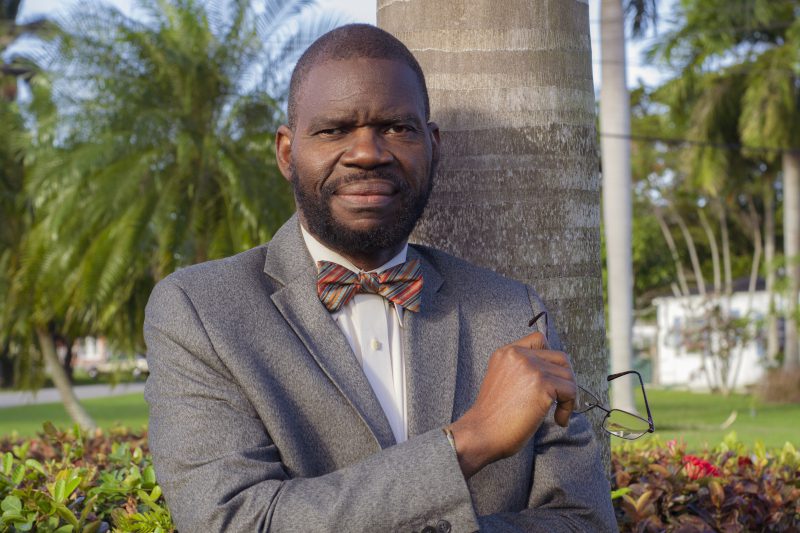
Professor John Egbeazien Oshodi is an American psychologist, educator, and author specializing in forensic, legal, and clinical psychology, cross-cultural psychology, police and prison sciences, and community justice. Born in Uromi, Edo State, Nigeria, he is the son of a 37-year veteran of the Nigeria Police Force—an experience that shaped his enduring commitment to justice, security, and psychological reform.
A pioneer in the field, he introduced state-of-the-art forensic psychology to Nigeria in 2011 through the National Universities Commission and Nasarawa State University, where he served as Associate Professor in the Department of Psychology. His contributions extend beyond academia through the Oshodi Foundation and the Center for Psychological and Forensic Services, advancing mental health, behavioral reform, and institutional transformation.
Professor Oshodi has held faculty positions at Florida Memorial University, Florida International University, Broward College, where he also served as Assistant Professor and Interim Associate Dean, Nova Southeastern University, and Lynn University. He is currently a contributing faculty member at Walden University and a virtual professor with Weldios University and ISCOM University.
In the United States, he serves as a government consultant in forensic-clinical psychology, offering expertise in mental health, behavioral analysis, and institutional evaluation. He is also the founder of Psychoafricalysis, a theoretical framework that integrates African sociocultural dynamics into modern psychology.
A proud Black Republican, Professor Oshodi advocates for individual empowerment, ethical leadership, and institutional integrity. His work focuses on promoting functional governance and sustainable development across Africa.