National Issues
African Union, ECOWAS Suspend Single Currency Plan, by Kestér Kenn Klomegâh

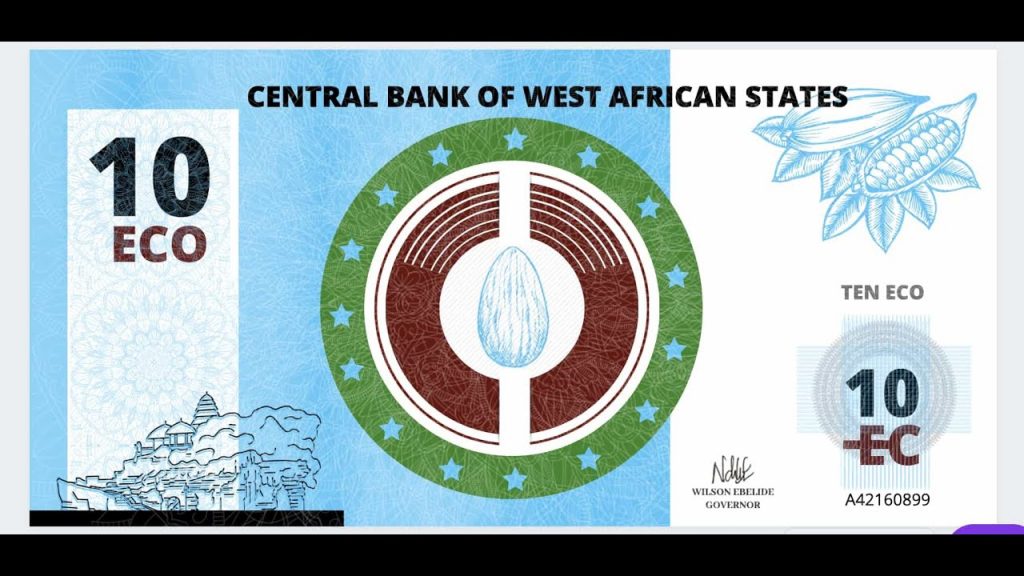
The Economic Community of West African States (ECOWAS), an organization created to promote regional economic integration, indicated in an official media statement the indefinite suspension of its single currency initiative – ECO – after years of struggles to actualize the plan. The African Union (AU) and Regional Economic Organizations have not successfully created their own currencies. While none of Africa’s regional organizations have created its single currency considered as a mechanism for promoting trade and pursuing their collective economic aspirations down years, these African leaders have currently engaged in discussions over de-dollarization.
In June 2019, the ECOWAS Heads of States and Government expressed ultimate commitment to having a single currency and desirously adopted the name “ECO” during its Extraordinary Session in Abuja, capital of Federal Republic of Nigeria. Prior to that, there were series of discussions at summit and conferences focusing on economic integration including the single currency. Quite recently, Former Nigerian President, Olusegun Obasanjo has advised the Economic Community of West African States (ECOWAS) to consider seriously the adoption of a single currency for member countries in order to boost trade in the region. Obasanjo gave this suggestion at the 24th Annual General Meeting (AGM) of the African Export-Import Bank (Afreximbank) in Kigali, Rwanda.
With the expected promise to launch West African currency in 2020, ECOWAS cited multiple obstacles at that time including the COVID-19 pandemic, political differences with the French-speaking West African States, and finally the sudden exit of the republics of Burkina Faso, Mali and Niger. Reports said Burkina Faso, Mali and Niger have created an Alliance of Sahel States (AES), trilateral association which signed a military and an economic pact. Nevertheless, it is convincing to describe West Africa as seriously fragmented region, although ECOWAS with optimism looks to create conditions that will enable it to stabilize the economies across the region. Several meetings and conferences, in that direction of economic and political stabilization, have still not shown any noticeable results.
Statement delivered by the African Union Commissioner for Trade and Industry, Ambassador Albert M. Muchanga at the annual meeting of the Association of African Central Banks on 2nd September 2024, while re-emphasizing the challenging developments across Africa and world, current limitless reasons and predicaments, catastrophies and instability in the continent, and further mentioning western sanctions emerging from the conflict in Ukraine,…finally said those obstacles have saddled “the agenda of promoting inclusive growth and sustainable development” in Africa.
“We require effective and timely implementation of the macroeconomic convergence criteria to lay the groundwork for the establishment of the African Central Bank, and immediately after that, a single African currency. We need a single African currency to, among others, increase intra-African trade flows, and this is key to strengthening the African economy and making it more resilient to endogenous and exogenous shocks,” explained Albert Muchanga. According to Albert Muchanga’s explanation, the African Union, among other weaknesses, given an account of the main economic developments, still prioritizes the introduction of single currency, but preliminarily needs “urgent and effective implementation of macroeconomic convergence criteria as an instrument for continental economic integration and the establishment of the African Central Bank.”
According to late August statement by Edwin Melvin Snowe Junior, Co-chair of the ECOWAS joint committees on Social Affairs, Gender and Women Empowerment, Legal Affairs and Human Rights, Political Affairs, Peace, Security and African Peer Review Mechanism (MAEP), Legal and Human Rights, Trade Customs and Free Movement, in Banjul, Gambia, a feasible for launching the single regional currency was fixed at 2027.
The ECOWAS single currency initiative was first proposed in the late 1990s and the idea gained more attention in 2000 when the West African Monetary Zone (WAMZ) was established to work towards creating a single currency for the region. The Eco was envisioned to become a cornerstone of economic growth and development for the 15 member states of ECOWAS, as it is expected to simplify transactions, reduce the hassle of currency exchange, and promote a more integrated and prosperous West African region.
That however, the initiative has hit stumbling rocks and seemed dead in the light of existing political challenges. West Africa is also too diverse in political approach, French and English factor have exacerbated existing political and economic problems, and further complicated its original aspirations and objectives of regional integration.
In stark similarity, speaking on the struggles in actualizing the single currency initiative, MP Snowe Junior said there had been some political challenges. “The single currency is a work in progress. It has its political implications. There has been a lot of political situation that has to be addressed. It’s not that we don’t have good economists or analysts who can understand and implement it. We have had little or less problems from the English-speaking zone but because we have the French CFA with the reserve in France and then you have the BCEAO bank as another federal bank for the French-speaking country, we have to integrate the currency. So, it still needs a lot of political will and that is why the last three countries that had coup d’état are talking about changing their currencies because their reserve is in France and not in West Africa or Africa,” Edwin Melvin Snowe Junior noted in his speech.
In pursuit of that, Edwin Melvin Snowe Junior proposed that the regional bloc would possibly have tow currencies: a single currency for the Anglophone States and another one for the Francophone States in the region as a replacement for Eco. Around the world, there single currencies. For instance, the United Kingdom has the pound sterling. United States has the dollar, European countries under the European Union (EU) adopted Euro as its common currency. Eurasian Union has been engaging members over adopting a single currency. Lacking behind with the introduction of single currency is also the African Union.
“That is why sometimes we propose that Nigeria, which is the hub of our region, in addition to Ghana, Liberia, Gambia and Sierra Leone, that is the five English-speaking countries, could have one currency for now,” he said. “Then, the Francophone countries could have another currency. Then you can ask Guinea Bissau and Cape Verde to join either the Francophone or Anglophone so that we have two currencies for now. And then, over the years, those two currencies can migrate into a single currency.”
During their last meeting it was noted that political instability in the region had halted the consideration of the proposals of two currencies for the region but assured that focus would be shifted back to the issue as soon as possible. African leaders have to be more concerned with putting the regions back together, resolving the security situation in the regions and also prioritize putting back the issue of their own single currency to inspire confidence and trust in the population, and to boost the economy and intra-regional trade in Africa.
In July 2024, ECOWAS re-elected Nigerian President Ahmed Bola Tinubu as the Chairman of the Economic Community of West African States (ECOWAS) Authority of Heads of States and Government. It implies he will remain in office for another 12 months (one year), with the primary task of serving the democracy and building the stipulated principles and values of the regional structure. He first assumed the position in 2023 at the group’s 63rd Ordinary Session in Bissau, the capital of Guinea-Bissau.
The Economic Community of West African States (ECOWAS) is a regional political and economic union of fifteen countries of West Africa. It has an estimated population of over 424.34 million, and with its stated mission to promote economic integration across the region. Africa has a population, approximately 1.4 billion. The African Union is a continental organization with the objectives of uniting all the countries in the continent.