Connect with us

Africa

Africa’s Crisis of Military Coups and Insecurity -By Safiya Zakari Muhammad

Research consistently shows that coups and term-limit evasions are closely linked, both contributing to autocracy, corruption, conflict, and recurring political instability. Legislatures, oversight institutions, and accountable security sector governance are identified as critical but often undermined under military regimes.

Published

on

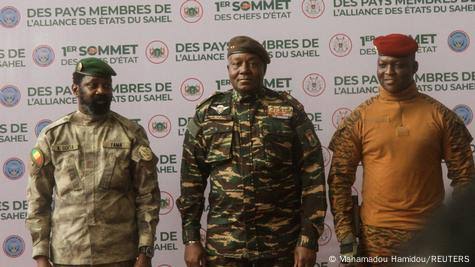
Mali, Niger Republic and Burkina Faso

Africa has experienced a growing wave of military coups over the past decade, posing a serious threat to civian-led democratic governance. These coups are rooted in long histories of military rule, weak institutions, and attempts by armed forces to reclaim political power they believe they are entitled to hold.

Across countries such as Mali, Guinea, Burkina Faso, Niger, Chad, and Sudan, military juntas have overthrown elected governments, often promising short transitions to civilian rule. In practice, however, these juntas have delayed or manipulated transitions through controlled constitutional referendums, repression of dissent, and consolidation of power.

Rather than improving security, military rule has coincided with worsening insecurity, particularly in the Sahel. Militant Islamist violence has expanded significantly, with over 150,000 deaths linked to extremist groups in the past decade, driven largely by instability in Mali, Burkina Faso, Niger, and Somalia. Despite aggressive propaganda campaigns, security, economic, and humanitarian conditions have deteriorated under junta governments.

The erosion of democracy has also weakened regional and international security cooperation. In some cases, juntas have expelled traditional partners and turned to alternative actors, including Russian-linked mercenary groups, further complicating security challenges and increasing civilian harm.

Research consistently shows that coups and term-limit evasions are closely linked, both contributing to autocracy, corruption, conflict, and recurring political instability. Legislatures, oversight institutions, and accountable security sector governance are identified as critical but often undermined under military regimes.

Advertisement

Overall, accommodating military juntas has amplified insecurity, economic hardship, and humanitarian crises, rather than resolving them. SuSustainable peace and stability in Africa depend on restoring constitutional order, strengthening democratic institutions, ensuring civilian oversight of the military, and imposing meaningful regional and international consequences on unconstitutional seizures of power.

Continue Reading
Advertisement
Click to comment

Leave a Reply

Your email address will not be published. Required fields are marked *

Trending Contents

Topical Issues

Oluwafemi Popoola Oluwafemi Popoola
Africa2 hours ago

The Mirabel Confession and Simi’s Reckoning -By Oluwafemi Popoola

What complicates this narrative for me is that I genuinely admire Simi’s artistry. There is something profoundly disarming about Simi’s...

Sahara-Reporters Sahara-Reporters
Africa1 day ago

Two Decades of Truth Without Borders: Celebrating 20 Years of Sahara Reporters’ Fearless Journalism -By Daniel Nduka Okonkwo

It has reported on political crises, economic developments, and cultural shifts, providing alternative perspectives on African and global affairs. Its...

Phebe Ejinkeonye-Christian Phebe Ejinkeonye-Christian
Africa1 day ago

From Inclusion To Action: Making TVET Work For Women -By Ejinkeonye-Christian Phebe

Moving from inclusion to action requires a shift in perspective – from viewing women’s participation in TVET as an optional...

Hope Uzodimma Hope Uzodimma
Africa1 day ago

Gov Hope Uzodinma: Harassment of Joseph Ottih and Family Must Stop -By Leo Igwe

Again this is a case of state religious persecution. The police forcefully removed his Agwu. The Ottihs have the right...

Oluwaleye Adedoyin Grace Oluwaleye Adedoyin Grace
Africa1 day ago

Social Media Trials VS. Due Process In Nigerian Law: The Mirabel Case -By Oluwaleye Adedoyin Grace

From a legal perspective, I present these observations as my personal analysis and assumption the final determination rests with the...

Voters Voters
Africa1 day ago

2027 Is Around the Corner — Must Nigeria Fear Electoral Violence Again? -By Collins Faida Ezra

As 2027 approaches, Nigeria must make a choice. Political leaders must commit publicly to peaceful campaigns. Security agencies must act...

Forgotten Dairies2 days ago

The Republic of City Boys: When Politics Becomes Playground -By Vitus Ozoke, PhD

The tragedy is not that these men are boys. The tragedy is that they seem proud of it. Until that...

Osun State Osun State
Forgotten Dairies2 days ago

Still On The 2026 Osun Governorship Election -By Abiodun Akaraogun

The APC candidate - a two-time Commissioner for Finance and former Managing Director/CEO of the National Inland Waterways Authority (NIWA)...

Nigeria-Election Nigeria-Election
Forgotten Dairies2 days ago

2027—And They Will Deceive Us Again -By Prince Charles Dickson Ph.D

And the children; my God, the children are not in school. They trek to the minefields instead, those treacherous places...

Ugochukwu Ugwuanyi Ugochukwu Ugwuanyi
Forgotten Dairies2 days ago

Electoral Act Amendment Vindicates Nathaniel Bassey’s Call for National Prayers -By Ugochukwu Ugwuanyi

The successful amendment of the Electoral Act by the authorities amid widespread opposition is a testament to the redoubtable albatross...