Forgotten Dairies
Alausa’s Singapore Initiative and the Broad Reforms Reshaping Education -By Oluwafemi Popoola
History in the education sector is rarely made through dramatic headlines. More often, it emerges quietly through steady reforms that restore trust and stability to systems people had almost given up on. Looking at the evolving story of Nigeria’s universities today, I cannot help but feel that we are witnessing one of those moments. And if the momentum continues, future students may look back on this period as the point when the tide finally began to turn.

Last year, during an appearance on Channels Television, Nigeria’s Minister of Education, Dr Maruf Tunji Alausa made a bold declaration: the long era of endlessly disrupted academic calendars would come to an end. The reaction from many quarters was a mixture of laughter and disbelief. Some commentators rolled their eyes and said we had heard that song before. A few professional pessimists practically declared the idea impossible. According to them, strikes were as permanent as semester exams. Universities, they said, would always shut down like clockwork every few months.
Well, I don’t blame them. It is sometimes difficult for Nigerians to believe that a promise made by government can actually be kept. We have grown accustomed to treating government promises with caution. I understand that instinct. That skepticism did not arise without reason.
But here we are today, and something quietly historic is happening before our eyes.
Students who gained admission into Nigerian universities in 2023 are already approaching their final year. That simple sentence may not sound revolutionary to people in countries where academic calendars run like Swiss watches. In Nigeria, however, it is nothing short of extraordinary. For the first time in a long while, thousands of young Nigerians are moving steadily through their programmes without the anxiety of sudden closures or prolonged strikes. They have experienced something their older siblings often did not: a predictable university journey. Many of them know exactly when they will graduate, and that certainty is changing how they plan their futures.
I have spoken to some of these students, and their relief is almost palpable. They are studying with focus instead of fear. They can think about internships, postgraduate studies, and careers without the constant worry that their academic clock might suddenly freeze for months. In quiet but powerful ways, their confidence in the system is being restored. For a generation that had grown accustomed to hearing stories of seven-year four-year degrees, the stability they are witnessing now feels like a small miracle.
Of course, stability in universities does not happen by wishful thinking. It requires leadership, negotiation, and sometimes the patience to sit across the table for long hours until agreement is reached. That is exactly what the Ministry of Education, under the watch of Dr. Alausa, has done. The renegotiated agreement with the Academic Staff Union of Universities, which delivered a 40 percent upward review in academic staff remuneration, represents more than a pay increase. It represents a deliberate attempt to reset the relationship between government and academia.
You cannot expect world-class universities if the people who power them are treated like an afterthought. Knowledge does not flourish where the knowledge producers are constantly worried about survival. What fascinates me about Dr. Alausa’s approach is that the reforms did not stop at wages. It would have been easy to announce the salary increase, hold a press conference, and move on. Instead, what we are seeing is a broader attempt to repair the entire education ecosystem piece by piece.
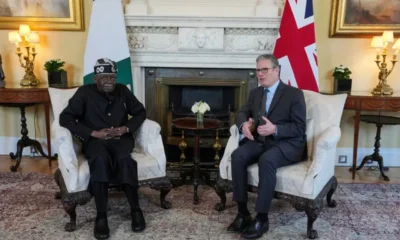
Take the recent partnership between Nigeria and Singapore’s Institute of Technical Education Education Services. When I first heard about it, I smiled because it reflects a rare humility in policymaking—the willingness to learn from systems that are working elsewhere. Singapore did not become a global skills powerhouse by accident. Their technical education system treats vocational training with the same seriousness that many countries reserve for universities.
Through the partnership, Nigerian technical instructors will undergo a Train-the-Trainer programme designed to sharpen teaching methods and improve assessment standards. Principals and department heads will receive leadership training in Singapore, and Nigerian institutions will adopt the Global Excellence Model for Skills Training to benchmark themselves against international standards. In practical terms, this means the young Nigerian learning welding, mechatronics, or industrial automation will be trained under systems comparable to global best practices. For a country trying to build an industrial future, that is no small matter.
Then there is the ambitious plan to connect schools across Nigeria to reliable internet infrastructure. I often imagine what my own school days would have looked like if the entire internet sat quietly inside a classroom. We might have spent less time copying notes from chalkboards and more time exploring knowledge that stretches far beyond textbooks. Dr. Alausa, working with the Minister of Communications, Bosun Tijani, appears determined to bring that reality closer.
The vision goes beyond laying fibre cables. It involves telecommunications towers, satellite systems, and digital infrastructure that can support artificial intelligence tools and modern learning platforms. In simple terms, it means a student in a rural classroom could eventually access the same digital resources available to students in the world’s leading universities. If implemented successfully, it could dramatically narrow the educational gap that geography once created.
Another reform that caught my attention is the introduction of the Procurement Compliance Monitoring System, known as PICOMS. Now I know that procurement reform does not sound particularly exciting. Nobody gathers friends on a Friday evening to discuss procurement systems. But anyone who has followed public sector projects in Nigeria understands how bureaucratic delays and incomplete documentation can quietly suffocate good ideas.
PICOMS digitises procurement processes across the education ministry and its agencies. Documents can be tracked electronically, submissions monitored in real time, and approval timelines reduced. In plain language, projects that once crawled through endless paperwork might finally begin to move at the speed of common sense. Sometimes the most transformative reforms are the ones that simply remove obstacles.
Then there is something I find personally satisfying as a writer: the presentation of seventy-two academic textbooks authored by Nigerian scholars under the TETFund Higher Education Book Development Intervention. For too long, our universities have relied heavily on foreign textbooks that explain foreign realities. Students studying agriculture in Nigeria sometimes read examples about temperate climates that look nothing like our own farms.
With this new development, the ministry is encouraging scholars to produce materials grounded in Nigerian experiences and African realities. It means engineering students reading about infrastructure that resembles the roads they actually travel. It means social science students analysing societies that feel familiar rather than distant. Knowledge becomes more meaningful when it speaks your language and understands your environment.
When I step back and look at these initiatives together—the improved lecturer remuneration, the Singapore TVET partnership, the nationwide school connectivity drive, the digital procurement platform, and the expansion of Nigerian academic publishing—I begin to see a pattern. They are not isolated policies. They are pieces of a broader attempt to modernise the entire educational architecture.
Naturally, there are still critics. In Nigeria, skepticism is practically a competitive sport. Some of the loudest voices initially dismissed the salary review as unrealistic. Others confidently predicted that the agreement would collapse before implementation. I must confess that watching those predictions age badly has been mildly entertaining. It turns out that what the cynics declared impossible was simply waiting for determined leadership.
And leadership, in this case, has meant recognising that universities are not just credential factories. They are engines of national development. Countries that dominate the global knowledge economy understand this clearly. Their universities produce research that drives industry, technology and innovation. Nigeria cannot aspire to compete globally while its higher education system remains trapped in endless industrial disputes.
This is why the current progress matters so much. When students move smoothly through their programmes and lecturers feel valued for their work, the entire ecosystem begins to function more effectively. Laboratories stay open. Research projects continue uninterrupted. Academic collaborations flourish. Even the simple act of planning a semester becomes less stressful when everyone trusts that the calendar will hold.
For the students admitted in 2023, these reforms are no longer theoretical policy discussions. They are lived realities. Their university experience has unfolded without the familiar disruptions that once defined public higher education in Nigeria. Many of them are already preparing for their final year projects, internships, and graduation ceremonies. They are witnessing proof that promises made to them can indeed be fulfilled.
I find that profoundly encouraging. A government told them their four years would truly be four years. It promised their lecturers that long-overdue salary adjustments would come. Those commitments are now materialising in ways that even some optimists did not expect. When promises translate into action, confidence grows—not just in institutions, but in the idea that progress is possible.
History in the education sector is rarely made through dramatic headlines. More often, it emerges quietly through steady reforms that restore trust and stability to systems people had almost given up on. Looking at the evolving story of Nigeria’s universities today, I cannot help but feel that we are witnessing one of those moments. And if the momentum continues, future students may look back on this period as the point when the tide finally began to turn.
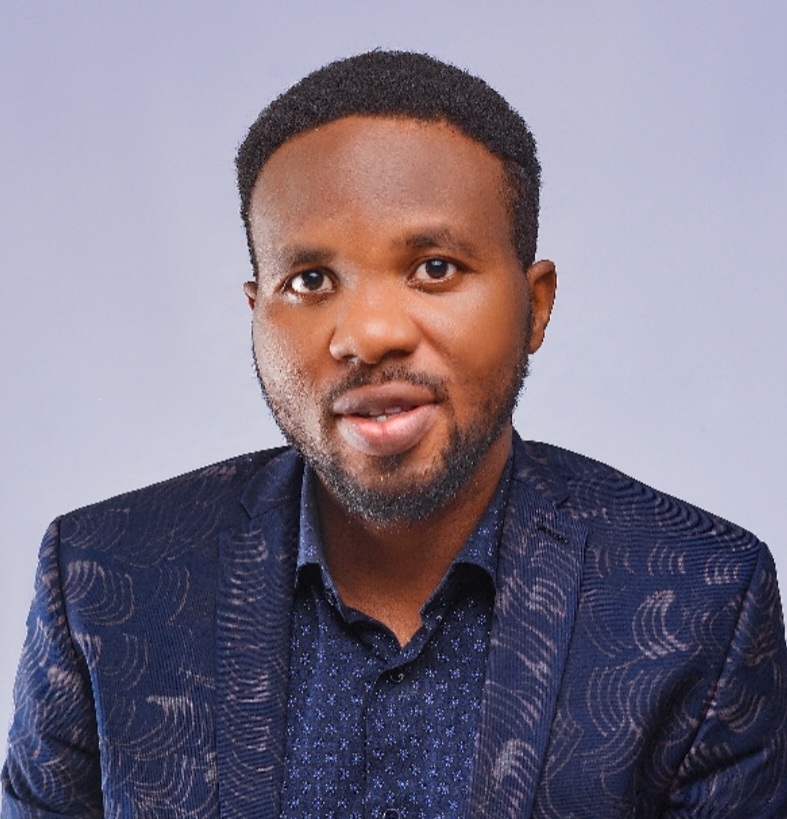
Oluwafemi Popoola is an educator and journalist. He can be reached via bromeo2013@gmail.com