Africa
Arewa Is Bleeding: Silence Is No Longer an Option -By Abdulsamad Danji Abdulqadir
The bleeding must stop, the silence must end, and the time for decisive action is now, because the future of Arewa cannot be negotiated with violence and cannot survive on fear. but chose silence instead.


The blood of innocent people has become a recurring headline across Northern Nigeria, and what should shock the conscience of the nation now risks becoming a normal part of daily news consumption.
A region that once symbolized agricultural strength, deep cultural heritage, and intellectual contribution is increasingly associated with fear, displacement, and unending funerals.
The crisis has moved beyond isolated incidents and has entered homes, farms, schools, highways, and places of worship, turning ordinary routines into calculated risks for survival.
Parents now measure safety in hours rather than in guarantees, and communities live with the constant awareness that an attack can occur without warning.
In 2026 alone, bandits and armed groups have killed at least 30–50 people in recent attacks in Zamfara and another 33 in Kebbi, while over 323 Nigerians have been killed by insecurity in just the first 20 days of February, yet too many still remain silent instead of speaking up for our people.
These numbers are not abstract statistics because each figure represents a life violently cut short and a family permanently altered by grief, economic hardship, and psychological trauma.
Behind every death is a story of a farmer who never returned from his field, a trader who never reached the market, or a child whose education ended in fear.
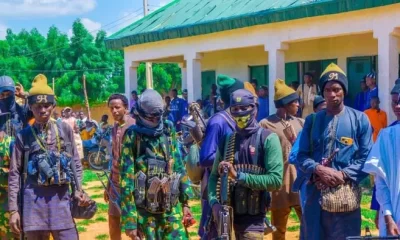
Banditry has evolved from sporadic criminal activity into a structured system of violence that targets rural communities with military-like coordination and weaponry.
Armed groups move in large numbers on motorcycles, surround villages, loot food supplies, burn houses, and impose illegal levies on residents who are already struggling with poverty.
Communities that refuse to comply face mass killings or abductions, creating a climate of forced submission that undermines the authority of the state and erodes public trust in security institutions.
Kidnapping has transformed into one of the most profitable criminal enterprises in the region, affecting students, women, farmers, and travelers across highways and rural settlements.
Families are forced to sell farmland, livestock, and personal belongings to raise ransom payments while living in constant fear that their loved ones may not survive captivity.
The psychological toll on victims and their relatives is long lasting, as many survivors return with trauma, physical injuries, and a shattered sense of safety.
Armed robbery has further deepened insecurity by turning major roads into dangerous corridors where commercial activities are severely disrupted.
Transporters and traders now travel in convoys or avoid certain routes entirely, leading to economic isolation of rural markets and increased cost of goods.
The fear of highway attacks has weakened trade networks that once connected Northern communities to the rest of the country.
In the North-East, Boko Haram and ISWAP continue to carry out ambushes, suicide bombings, and raids on both civilian populations and security formations, prolonging a conflict that has lasted for more than a decade.
Millions of people remain displaced, living in camps where access to food, healthcare, education, and sanitation is limited and often dependent on humanitarian assistance.
Children growing up in these camps face interrupted education, malnutrition, and exposure to violence that shapes their worldview and limits their future opportunities.
Agriculture, which has historically been the economic backbone of Arewa, is collapsing in many areas because farmers cannot safely access their land.
Uncultivated farmland has reduced food production, increased prices, and deepened poverty, not only in the North but across Nigeria.
The destruction of rural livelihoods has forced many young people to migrate to urban centers where unemployment and social frustration are already high.
Youth unemployment remains a critical driver of insecurity because economic desperation makes some young people vulnerable to recruitment by bandit groups and insurgent networks.
Without access to education, vocational training, and legitimate employment, the promise of quick financial gain through criminal activity becomes dangerously attractive.This cycle of poverty and violence sustains itself and expands when there are no viable alternatives for young people.
The normalization of ransom payments has strengthened the financial capacity of kidnapping syndicates and has created a parallel economy built on human suffering.
Each successful ransom transaction funds the purchase of more weapons, motorcycles, and communication equipment, enabling further attacks and abductions.
This cycle weakens public confidence in the ability of the state to protect its citizens and encourages criminals to continue their operations with impunity.
Many affected communities feel abandoned because security interventions are often reactive rather than preventive, arriving after attacks have occurred instead of stopping them through intelligence gathering and constant presence.
Local vigilante groups attempt to fill the security gap, but they often lack the training, equipment, and coordination required to confront heavily armed attackers.
This situation creates a dangerous imbalance where civilians are forced to confront organized violence with limited resources.
Women and children bear a disproportionate share of the suffering through widowhood, displacement, loss of education, and exposure to exploitation in camps and host communities.
The social fabric of families is weakened as breadwinners are killed or abducted, leaving households without economic support.The long-term impact of this disruption threatens the stability of future generations.
Religious and traditional leaders who should serve as mediators and moral voices for peace now operate under threat, reducing their ability to promote unity and community resilience.
Their limited mobility and influence in insecure areas weaken grassroots peacebuilding efforts that are essential for long-term stability.
The silence of influential voices, whether due to fear or political calculation, has allowed the crisis to persist without the level of urgency it demands.
Ending the bleeding of Arewa requires comprehensive and sustained action that goes beyond public condemnation and temporary military operations.
There must be proactive security deployment in rural communities, dismantling of criminal financing networks, protection of schools and farmlands, and investment in education and youth employment.Intelligence driven operations, community policing, and collaboration between citizens and security agencies are essential for preventing attacks before they occur.
Arewa is bleeding, but it is not beyond healing if silence is replaced with responsibility and fear is replaced with collective action.The stability of Northern Nigeria is directly linked to the stability of the entire country, and every life lost is a reminder that inaction carries a cost that the nation can no longer afford.
History will judge not only those who perpetrate violence but also those who had the opportunity to speak, to act, and to protect livesArewa still has the strength of its people, the richness of its land, and the depth of its values, and these must become the foundation for rebuilding security and hope.
The region must not be defined by bandits, kidnappers, Boko Haram, or ISWAP, but by resilience, unity, and renewal.
The bleeding must stop, the silence must end, and the time for decisive action is now, because the future of Arewa cannot be negotiated with violence and cannot survive on fear. but chose silence instead.
Abdulsamad Danji Abdulqadir a concerned Nigerian citizen and a student of mass communication from federal university of kashere gombe state I hold a keen interest in education and human-rights issues.