National Issues
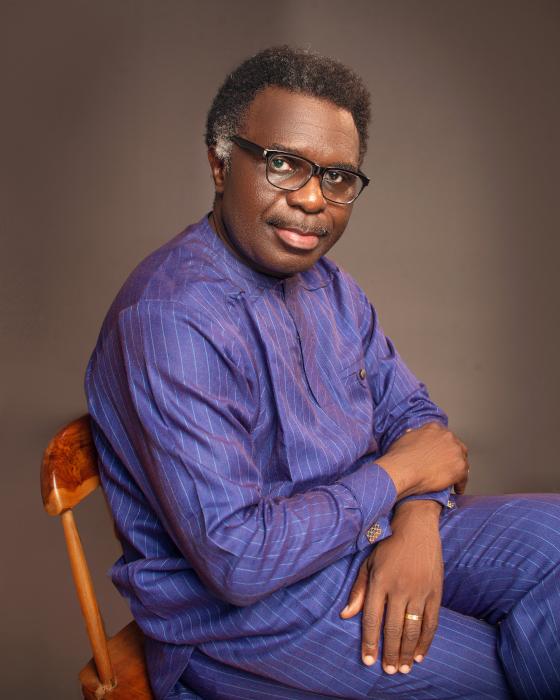
At the Turn of the New Year: When the Day Is Kind, and We Are Not -By Ozuomba Egwuonwu
What is true of days and families is also true, on a far grander scale, of countries. A country can be good to you year after year without you being good to it. It may offer language(s), roads, institutions, memory, and a shared horizon of meaning. Even flawed nations often still permit life, work, dissent, and hope. To enter a New Year within a country is already to benefit from sacrifices you did not personally make.


The New Year arrives quietly, almost deceptively. It does not force wisdom upon us; it merely extends time again. In this, it resembles every other day, yet it also exposes the central asymmetry of human existence: a day, and by extension a year, may be good to us without us being good to it.
A day is good to you when it does not betray you. A year is good to you when it opens its calendar without catastrophe. When it allows you the use of your human faculties-sight, memory, reason, imagination, hope. When no fateful ill wind rises against your fragile vessel; when no shipwreck occurs so absolute that it forecloses learning, adaptation, or recovery.
To cross into a New Year with your mind intact, your body largely obedient, and your name unrevoked by disaster is already an unearned mercy. As Martin Heidegger reminds us,
“Every man is born as many men and dies as a single one.” Each New Year preserves this unfinished plurality within us- the chance or inevitability to become otherwise.
Yet to say the New Year is good to you is not to say you will be good to it.
You are not good to the year when you merely inhabit it. When its days pass without your having midwifed anything from the unseen into the seen; without articulating, however imperfectly, what surfaced in your consciousness; without advancing an idea, clarifying a value, or improving a process of becoming. To be good to the New Year is to accept its moral invitation. It is to take what arrives as raw perception-confusion, insight, intuition, memory, and press it into clearer form than it had in the year before. As Aristotle observed, “Where the needs of the world and your talents cross, there lies your vocation.” A New Year asks that this crossing be attempted, be sustained, even if falteringly.
Most years are merciful. They do not collapse the world upon us. They grant continuity-another cycle in which to try again. This mercy is not earned; it is given. The tragedy begins when gratitude ends in inertia, when survival substitutes for contribution.
This asymmetry extends beyond calendars into relationships and families. A relationship can be good to you throughout a year without you being good to it. It may carry you through your distracted months, your emotional winters, your unspoken absences. Yet you may fail to reciprocate its moral demand. You are not good to a relationship when you do not deepen it, when you do not listen more carefully than before, speak more truthfully, or convert shared time into shared understanding. To enter a New Year unchanged toward those who sustained you is to have received without returning.
Families, too, often carry us faithfully from one year into another. They provide identity before consent, care before merit, belonging before achievement. But one may cross many New Years within a family without having refined what one inherited. To be good to a family is to articulate silences that survived last year, to heal patterns that keep repeating, to leave the family system wiser than it was twelve months ago. As Simone Weil warned, “Imagination and fiction make up more than three quarters of our real life.” Families suffer not only from what happens, but from what is repeatedly imagined and never corrected.
What is true of days and families is also true, on a far grander scale, of countries. A country can be good to you year after year without you being good to it. It may offer language(s), roads, institutions, memory, and a shared horizon of meaning. Even flawed nations often still permit life, work, dissent, and hope. To enter a New Year within a country is already to benefit from sacrifices you did not personally make.
Yet citizens may waste entire decades. You are not good to your country when each New Year finds you morally where the last left you,when you have not elevated public conversation, resisted corruption, clarified values, or translated private insight into public good. To be good to a country is not blind loyalty; it is demanding love. It is to imagine the nation more justly than it currently is and to act, however modestly, in that direction.
Across days, years, relationships, families, and nations, the same principle endures: goodness received is not the same as goodness returned. The New Year does not demand perfection; it demands participation. Time keeps offering itself. The question is whether we answer with articulation or mere consumption.
To be good to the New Year is to leave it better spoken than it found you.
To be good to relationships is to leave them deeper than the previous year allowed.
To be good to a country is to leave it more intelligible, more just, more humane than last year.
Anything less is simply having crossed into another year that did not have to spare us-and did.
Ozuomba Egwuonwu