Politics
Benue APC Parallel Congresses: Why Legitimacy Must Be Clarified Now -By Leonard Karshima Shilgba
The APC, at its highest levels, has consistently affirmed that serving governors are the leaders of the party in their states. This is not a mere slogan—it reflects political reality and operational control.


The crisis arising from the parallel state congresses of the All Progressives Congress in Benue State on March 3, 2026 has gone beyond an internal party disagreement. It now raises fundamental questions of legality, political morality, and democratic clarity for the Benue electorate.
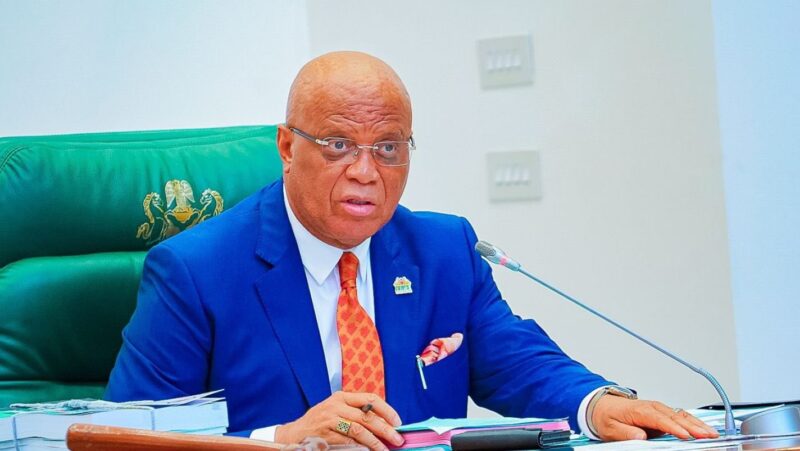
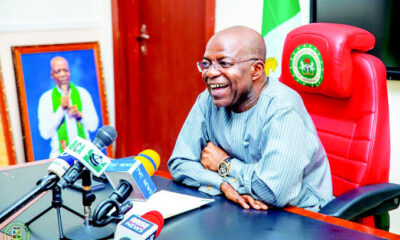
Two factions—one aligned with Governor Hyacinth Alia and the other with George Akume—produced parallel leaderships. Yet, not all congresses are equal under law, process, and evolving electoral realities.
The Question of Party Leadership Cannot Be Ignored
The APC, at its highest levels, has consistently affirmed that serving governors are the leaders of the party in their states. This is not a mere slogan—it reflects political reality and operational control.
Therefore, a critical question arises:
Can a state congress be considered legitimate when conducted outside the authority or participation of the sitting governor?
While party constitutions may allow procedural flexibility, political practice in Nigeria shows that excluding a sitting governor creates a legitimacy deficit that is difficult to cure.
A party structure that stands in opposition to its own governor risks becoming:
- politically detached
- operationally ineffective
- ultimately unsustainable
2. Expiration of Tenure: A PPLegal Weakness
It is now established that the tenure of the Agada-led executive expired on February 8, 2026.
This fact is critical.
Even prior reporting confirms the existence of deep disputes over the leadership structure and interventions such as caretaker arrangements in the past.
If tenure has lapsed, then any attempt to “reaffirm” or “extend authority” without a fresh, valid mandate raises serious legal and procedural concerns
In simple terms:
You cannot build legitimacy on an expired mandate.
This significantly weakens the claim of continuity relied upon by the Akume-aligned faction.
3. National Supervision and Procedural Compliance
Reports indicate that the congress at IBB Square—where Benjamin Omale emerged—was conducted under national supervision and in line with party processes, including the inauguration of executives.
Additionally, APC had deployed multiple national committees to supervise congresses in Benue, underscoring the importance of adherence to official procedures.
If a congress:
- is supervised by a recognized national committee
- produces new executives
- and inaugurates them in line with party guidelines
then it possesses a prima facie procedural legitimacy that cannot be casually dismissed.
4. The Electoral Act 2026 Has Changed the Game
The newly passed Electoral Act 2026 introduces a major shift:
- primaries must be conducted through:
- direct voting, or
- consensus among aspirants
This reform weakens the old system where:
- control of delegate structures determined political outcomes
The implication is profound:
Party structures built on delegate dominance are losing legal relevance.
This strengthens actors who:
- command broader grassroots support
- or can influence consensus
In practical terms, this shift tilts the balance toward incumbents, especially sitting governors.
5. Two Competing Claims of Legitimacy
What we now have in Benue is not a simple dispute, but a collision of two types of legitimacy:
(A) Legacy/Structural Legitimacy
- rooted in past recognition
- associated with the Agada-led structure
(B) Political and Procedural Legitimacy
- anchored on:
- the authority of the sitting governor
- expiration of previous tenure
- supervision by national party mechanisms
- alignment with emerging electoral law
6. Why Immediate Clarification Is Necessary
This is not an internal matter alone—it directly affects:
(i) Party Stability
Without clarity:
- parallel leadership will persist
- internal sabotage becomes inevitable
(ii) Electoral Integrity
Confusion over legitimate leadership may:
- distort candidate nomination processes
- trigger litigations that could invalidate future elections
(iii) Voter Confidence
The Benue electorate deserves to know:
- which structure represents the APC
- who has authority to speak for the party
Without this clarity, the party risks appearing:
- disorganized
- divided
- unfit to govern cohesively
7. The Responsibility of the National Leadership
Ultimately, only the APC national leadership—under Prof. Nentawe Yilwatda—can resolve this.
That resolution must be:
- clear (not ambiguous)
- justifiable (based on rules and facts)
- forward-looking (aligned with the new electoral framework)
Anything short of this will:
- deepen factionalism
- weaken the party ahead of 2027
Conclusion
The Benue APC crisis is not merely about personalities—it is about the transition from old political structures to a new electoral order.
- A structure with an expired mandate cannot claim enduring legitimacy.
- A process that ignores the sitting governor lacks political coherence.
- A party that fails to clarify its leadership risks losing public trust.
Clarity is no longer optional—it is urgent and necessary for democratic stability in Benue State.
Prof. Leonard Karshima SHILGBA is a foundation member of Benue APC