
Africa
Alex Otti and the Short Fuse Syndrome: An FFK Replay -By Oluwafemi Popoola
If he truly believes in the transformation of Abia State, he should welcome scrutiny as validation. He should publish the numbers, host detailed briefings, empower his commissioners with charts and verifiable indicators. Let the data speak thunderously. That would silence critics far more effectively than scolding them.

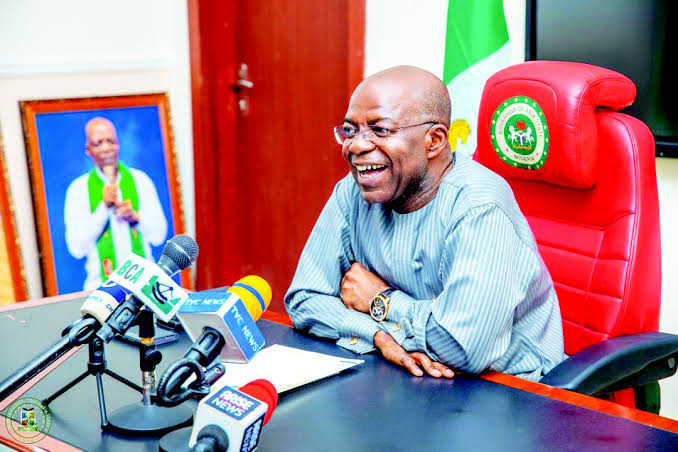
The world is on edge. It trembles under the weight of unfolding events. Joint US and Israeli air strikes in Iran have reportedly altered the balance of power in the Middle East, with claims about the elimination of Iran’s supreme leader sending shockwaves through diplomatic corridors. In ordinary times, my attention would be consumed by the geopolitical implications of such events. I would be poring over analyses, studying maps, dissecting expert commentary and reflecting on how power shifts redefine nations. But were this not a season thick with politics at home, my gaze would have remained there. Instead, it is drawn to something smaller in scale but no less revealing. It is the temperament of those entrusted with authority.
Just a few days ago, Governor Alex Otti, during his monthly media chat, was asked by Chika Nwabueze of BON Media Group to provide verifiable, quantifiable data showing measurable socio-economic improvements in Abia State since he assumed office in May 2023. Beyond the visible road rehabilitations, beyond the painted curbs and renovated facades, what were the hard numbers? How many jobs created? What is the unemployment rate now compared to before? How has inflation within the state been cushioned? How many citizens have been empowered through specific policies?
It was, in my view, one of the most important questions any governor should be prepared to answer in this era of biting economic hardship. It was not a hostile question. It was not a slur. It was governance 101. But Governor Otti did not see it that way. He snapped.
“You can’t come to a media chat and ask me to provide data about measurable impact… It’s irresponsible,” he said. He added that just because the platform was open did not mean people should be “stupid”. Wow. He further described the request as “irresponsible” and suggested that the journalist should already “feel” the improvements. Feel them? I did not know governance had migrated from statistics to spirituality. I thought public policy required spreadsheets, not scolding. I expected figures, not fury. I expected governance, not glares.
As I watched the clip, I could not help but remember August 2020 in Calabar, when Femi Fani-Kayode famously erupted at a journalist, Mr. Eyo Charles of Daily Trust. Charles had asked who was bankrolling Fani-Kayode’s interstate “inspection tours,” given that he held no public office. It was a fair question but it triggered a volcanic response.
In that viral video, Fani-Kayode thundered: “Don’t ever try that with me. I have a short fuse, I will hit you hard.” He called the journalist “stupid,” questioned his upbringing, and refused to take further questions from him. The outrage was swift and national. Nigerians recoiled at the spectacle of a public figure humiliating a reporter for asking a question rooted in accountability.
Now fast-forward to Umuahia. Governor Otti did not threaten to “hit” anyone. But the tone — that defensive combustibility — felt hauntingly familiar. It was the same short-fuse energy. The same “Do you know who you’re talking to?” vibration, even if not uttered in those exact words.
I say this carefully but firmly: Alex Otti is playing out the short-fuse man like FFK. The only difference, some would joke — and Nigerians are never short of jokes — is that this time around, Otti is a short man. And we all know the stereotype: short men are said to be difficult, combustible, unstable in character. I say that with a smirk, because height has nothing to do with temperament. Character does. But when a leader reacts explosively to scrutiny, the metaphor writes itself. This is not about stature. It is about stature of mind.
There is something deeply embarrassing about public office holders who tremble at scrutiny. Especially those who have wrapped themselves in reformist robes. Those whose media machinery has painted them as transformational figures. There are news reports of Otti’s achievements flying around. I do not live in Abia or Umuahia, so I rely on what I read and hear. If the trumpet-blowing is anything to go by, Otti is next to Jesus in the pantheon of modern governors. Roads have risen from decay, hospitals revived, schools reborn. And if these things are true, then fantastic. But being a good governor must also reflect in how you compose yourself, especially when dealing with journalists. If your achievements are as monumental as advertised, then data should not frighten you. It should liberate you. Instead, what we witnessed was irritation at the mere demand for metrics.
And that is where both episodes — FFK in 2020 and Otti now — intersect. Both involved a simple question about accountability. Both responses were disproportionate. Both revealed a certain godship complex that has infected segments of Nigerian public life.
Some of our leaders have begun to see themselves as sovereigns. Not as elected officials but as benefactors dispensing favor. When they speak, applause is expected. When they are questioned, indignation follows. They have ascribed to themselves a kind of minor divinity — beyond interrogation, beyond data, beyond doubt. But democracy is allergic to godship.
The press is the Fourth Estate of the realm. It exists not to applaud but to interrogate. Journalists are not court jesters. They are meant to ask hard and uncomfortable questions. They are supposed to be fearless.
History honors such courage. Dele Giwa paid with his life for investigative journalism in Nigeria, yet his legacy endures as a symbol of defiance against repression. Pius Adesanmi, though more an intellectual columnist, used his pen to pierce the conscience of power before his tragic death. From Ghana, Anas Aremeyaw Anas has risked everything to expose corruption through undercover journalism. In the United States, Bob Woodward and Carl Bernstein stood firm during Watergate, asking questions that brought down a president. Anna Politkovskaya in Russia reported relentlessly on Chechnya despite threats, ultimately losing her life. Maria Ressa in the Philippines has faced legal persecution for holding her government accountable.
These are not journalists who massage egos. They ask for data. They ask for proof. They ask for accountability. If a governor cannot provide measurable indicators of his policies’ impact nearly two years into office, that is not the journalist’s embarrassment. It is his.
And here lies the consequence of such outbursts. They chill the atmosphere. They signal to other reporters: be careful. They subtly encourage self-censorship. No one wants to be publicly ridiculed at a media chat for doing their job. But once fear creeps into the press corps, citizens lose oxygen. Accountability weakens. Democracy limps.
I find it ironic, almost tragic, that leaders who once criticized previous administrations for opacity now bristle at the same demands for transparency. Power, it seems, is a shape-shifter. It changes the voice. It shortens the fuse.
The FFK episode was widely condemned because it revealed arrogance. The Otti episode deserves equal scrutiny for revealing intolerance of scrutiny. If we condemned one in 2020, we cannot romanticize the other in 2026.
I am not unaware that governance is difficult. I know critics can be unfair. I know opposition media can needle and provoke. But the antidote to provocation is proof. The cure for doubt is data. The answer to skepticism is statistics.
Calling a question “stupid” does not make it disappear. It only amplifies it.
And so, I say this plainly: Governor Alex Otti must apologize. Not because journalists are infallible. Not because leaders cannot be frustrated. But because public office demands emotional discipline. Because tone matters. Because humiliation is not governance.
If he truly believes in the transformation of Abia State, he should welcome scrutiny as validation. He should publish the numbers, host detailed briefings, empower his commissioners with charts and verifiable indicators. Let the data speak thunderously. That would silence critics far more effectively than scolding them.
I write this not out of malice, but out of concern for the culture we are normalizing. When leaders behave as though questioning them is an act of rebellion, they drift dangerously close to the very authoritarian instincts they once opposed.
Oluwafemi Popoola is a Nigerian journalist, media strategist, and columnist. He can be reached via bromeo2013@gmail.com
























You must be logged in to post a comment Login