
Forgotten Dairies
Black Gold, Dark Deals: The Pertamina Scandal and the Fragility of the Rule of Law -By Fransiscus Nanga Roka, Yovita Arie Mangesti
The presumption of innocence remains fundamental. The case against Kerry Adrianto Riza and his co-defendants must be heard under stipulations for fair trials, transparent evidentiary standards, and the absence of judicial partiality. Conviction cannot be taken for granted; guilt has to be proven beyond reasonable doubt. Yet the bigger question still remains: will this trial end up inspiring systemic reform, or will we instead see just one of many isolated cases carried out?

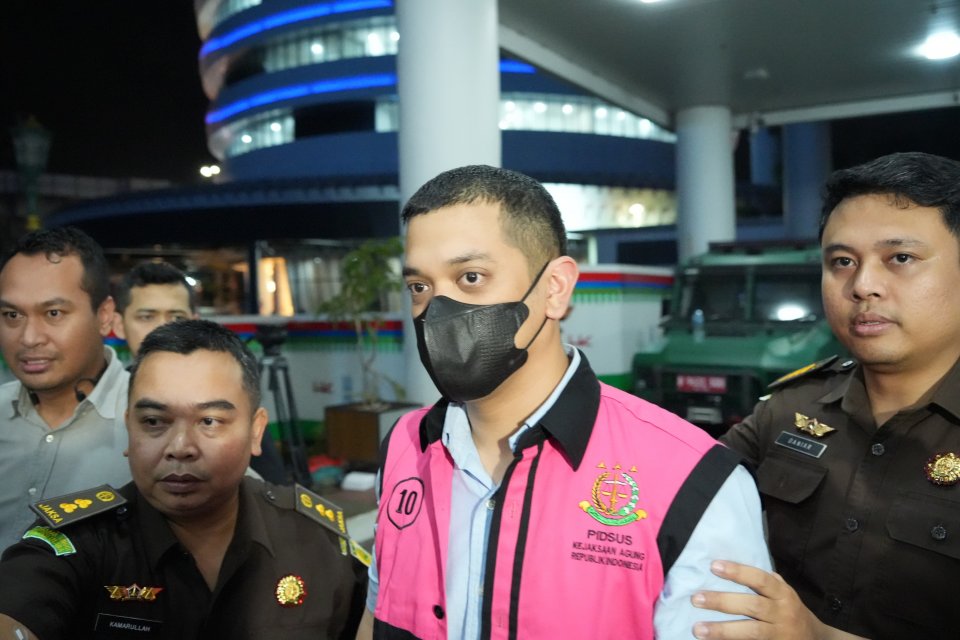
Not just a courtroom drama, the prosecution of Kerry Adrianto Riza on charges related to the alleged crude oil scandals at Pertamina stands as a critical test for Indonesia’s nascent rule of law, in the very beating heart of its strategic economy. Oil, referred to as black gold, has always infused geopolitics, national sovereignty and economic stability. So when corruption charges come up in this area, the damage caused is not limited to balance sheets; it extends far beyond that. Pertamina is more than a business enterprise. On the one hand, Indonesia’s state owned oil and gas concern assures national energy security and helps subsidize domestic fuel prices. On the other hand, its every decision in such vital activities as crude supply, pricing policies, lifting allocations and financing methods has a direct bearing upon millions of citizens. If these allegations of infraction in such a key institution if proved true point not only to individual breaches, we may well be witnessing systemic weaknesses in national oversight and management. The Kerry Adrianto Riza case lies within the wider anti corruption framework of Indonesia. For decades, this country has maintained a strong legal base and its Corruption Eradication Commission (KPK) long held international respect both for what it was doing and how it manifested US solidly against corruption. Yet recently, debate over institutional independence and political pressure has stirred emotions here. The scandal that has enveloped Pertamina thus serves as a barometer: in a sector tied up with political and economic forces can Indonesia carry out fair accounting? Energy governance is a realm known for opacity. The buying and selling of unprocessed petroleum involves detailed contractual formulas, long-term supply arrangements, short run market swings that do not square with future contracts at all, plus off the beaten path involvement by third parties, and international deal making. This creates many opportunities for personal gain, without clear lines of authority, transparent tender procedures, or immediate accountability. The global oil trade can easily lend itself to “regulatory capture,” i.e. the gradual takeover of state decision making by skewed commercial interests in which impartial government regulation no longer operates stifly.
If confirmed, corrupt practices in crude governance would undermine so much more than Indonesia’s public finances. At this time of global capital has increasingly accustomed itself to Environmental, Social and Governance (ESG it would hit investor confidence at a time when the year 2017 is well past half gone, and all hopes are frantically focused on next year. The world’s national oil companies face ever increasing scrutiny to appear more transparent about their affairs Especially now as a global shift away from energy brings into being completely new markets. Whether Indonesia can attract foreign investment to build closer regional energy cooperation and push stability-forward development in southeast Asia hinges largely on the nature of institutions.
But the case is also about the legitimacy. When the rule of law cannot stand up to the weight of strategic interests, all else is fragile as well. To prosecute corruption in minor bureaucratic offices is one thing: To stand against alleged malfeasance of a state-owned oil company requires political courage and independent judiciary.
The presumption of innocence remains fundamental. The case against Kerry Adrianto Riza and his co-defendants must be heard under stipulations for fair trials, transparent evidentiary standards, and the absence of judicial partiality. Conviction cannot be taken for granted; guilt has to be proven beyond reasonable doubt. Yet the bigger question still remains: will this trial end up inspiring systemic reform, or will we instead see just one of many isolated cases carried out?
High visibility accountability has been demonstrated repeatedly by Indonesia’s legal system. Nonetheless, critics counter that institutional reform seldom keep pace with the punishment of individuals. True transformation in oil governance calls for digitised procurement platforms, publicly available pricing methodologies, independent compliance units within state-owned enterprises and strong whistleblower protection.
As a state instrument, Pertamina’s dual identity gives rise to problems for oversight: the commercial activities of the company are mixed in with those mandated by law. International best practice recommends a clear divide between administrative control departments and commercial units, an especially strong supervisory board insulated from political interference, and full transparency in all contracts with high value. Without this there is little means to prevent from repeating a whole stream-of major scandals.
Globally, resource rich states are finding that corruption in extractive industries eats at the roots of democracy. Money which should go towards public welfare instead flows into opaque channels. Trust is lost. Cynicism grows. Citizens wonder whether national resources truly serve the public good. For this reason, the study and pursuit of Integrity become the inexorable current of the times in Indonesia. It is not merely a question within the purview of law, but encompassing development for nation state as well. And among those developing countries most affected by corrupt practices, especially when states grow bigger and more powerful. The international community of NGOs acknowledges that conflicts of interest between governments and companies constitute an open field ripe for corruption. The “rule of law” faces its greatest threats when pitted against concentration of economic power.
Indonesia’s legal strength must be evaluated not only on the battle cry of anti-corruption, but on whether it consistently enforces the law; whether its proceedings are open and transparent; and whether it is willing to address systemic weaknesses. “Black gold” has brought wealth to many nations, but at the same time it has caused them trouble. Just how strong is Indonesia’s rule of law? This will be judged not by the noise surrounding anti-corruption activities, but through enforcement results. In the world today, no one on looking at such an issue objectively and considering its import comprehensively actually doubts that governance must take precedence over dark bargains. Indonesia ’s’ ultimate trial therefore is more than one of the law itself; it is a referendum on this country’s institutional power relative to strongest magnet which pulls at its most precious resource. The world is watching not for cursing, but for demonstration that governance can we are stronger than any dark deal. This is the place to test whether the rule of law can survive.
























You must be logged in to post a comment Login