
Forgotten Dairies
Insights into Africa’s Energy Security -By Kestér Kenn Klomegâh
The real strength lies in adapting to each country’s strategy. If that continues, nuclear cooperation becomes not just about energy, but about shaping long-term technological development. Rosatom is one of the few global players capable of delivering the entire nuclear value chain. This includes reactor technologies, fuel supply, waste management solutions including reprocessing, as well as long-term operational support and human capital development. This comprehensive capability is what allows us to move projects from concept to reality in a structured and sustainable way.

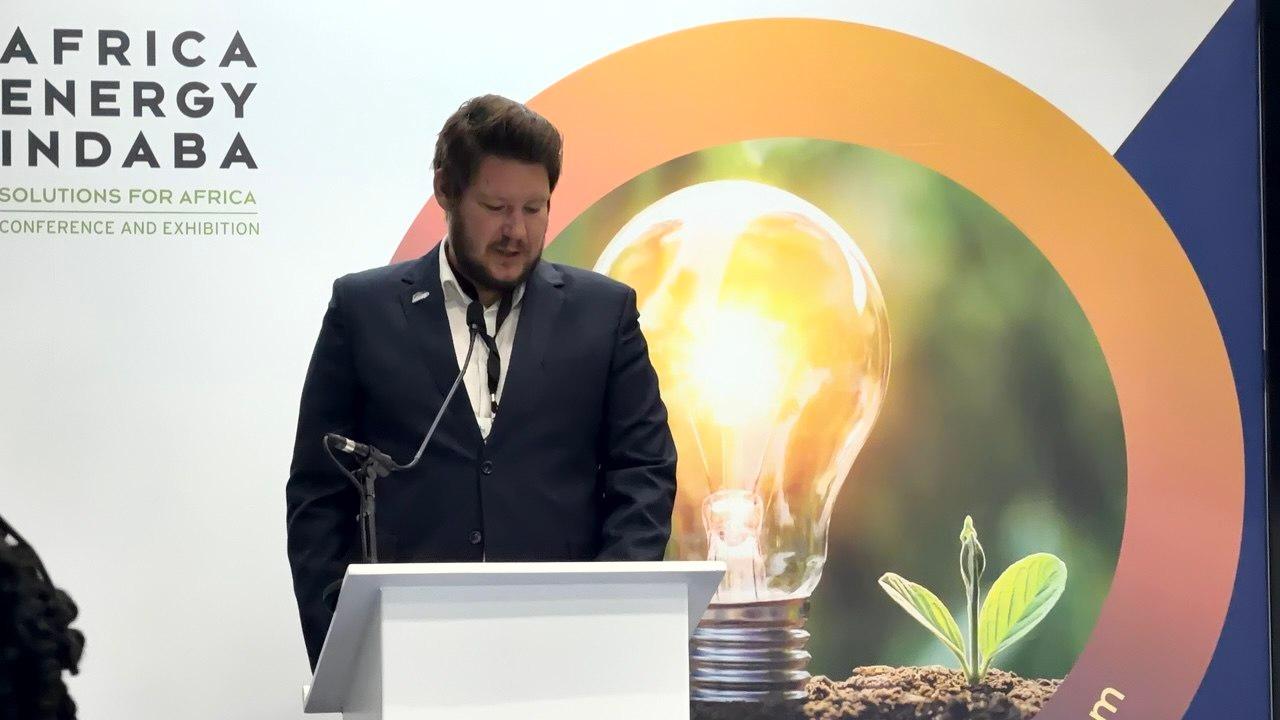
Perhaps Russia’s state nuclear corporation, Rosatom, is at the frontline, shaping Africa’s energy security. And African countries are also accelerating coordinated efforts to build nuclear power plants primarily to supply their energy, which will drive industrialisation and boost power capacity for domestic ulitisation. Energy experts say adopting nuclear can further support a diverse energy mix, reduce reliance on fossil fuels, across the continent. Over the past two decades, Russia has been collaborating with African countries, adopting energy initiatives on providing power to approximately half the continent’s population, and making it an important component of Africa’s future energy strategy and solutions. At this point, however, it is necessary to underline the irreversible fact that Russia’s ultimate goal is to ensure long-term Africa’s energy security.
In this interview, Rosatom’s Chief Executive Director for Central and Southern Africa, Ryan Collyer, reiterates the strategic importance of Russia-Africa’s energy cooperation, through strengthening bilateral agreements on collaboration on the peaceful use of nuclear energy. Collyer explains that Russian approach is its ability to offer an integrated solution, from technology and financing to training and localisation. According to him, partnerships must be built on mutual benefit and on the principle of transparency. Here follows the interview excerpts:
What are the expectations, specifically in the nuclear energy sphere, for Africa during the forthcoming Russia–Africa Summit scheduled for 2026?
Ryan Collyer: The expectation is a clear shift from dialogue to delivery. Over the past few years, we have built a strong foundation through agreements, feasibility discussions and partnerships. The 2026 Russia–Africa Summit is an opportunity to demonstrate tangible progress. In practical terms, I would expect greater focus on implementation readiness. That includes regulatory development, human capital, financing models and localisation strategies. We also expect to see more structured cooperation in areas like small modular reactors, which are particularly relevant for many African grids, as well as stronger emphasis on education and training partnerships. Ultimately, the success of the Summit will be measured by how many initiatives move from concept to execution.
Why, despite many bilateral agreements, is Africa still experiencing a significant energy deficit?
Collyer: Africa’s energy deficit is not a result of a lack of ambition or agreements. It is primarily a question of scale, financing and infrastructure readiness. Energy projects, especially large-scale ones, require long-term investment, stable policy frameworks and strong institutional capacity. Many countries are working under fiscal constraints, and at the same time demand is growing rapidly due to population growth and urbanisation. So even when progress is made, it can be outpaced by rising demand.It is also important to understand that many agreements are not meant to deliver immediate infrastructure. They are part of a longer preparation cycle, including feasibility studies, regulatory development and workforce training. Nuclear projects in particular are long-term by nature, and while this can be perceived as slow progress, it is actually a reflection of the level of diligence required.
How do you assess the contribution of nuclear energy to climate change mitigation and technological development in Africa?
Collyer: Nuclear energy plays a dual role in Africa’s development, both as a clean energy source and as a driver of technological advancement. From a climate perspective, nuclear provides reliable, low-carbon electricity at scale. Africa needs a significant expansion of its energy capacity to support economic growth, and this growth must be both stable and sustainable. Nuclear allows countries to increase power generation without increasing emissions, while ensuring a consistent baseload supply.At the same time, its impact goes beyond electricity. Nuclear technologies support medicine, agriculture, water management and industrial processes. Across Africa, they are already used in areas such as cancer treatment, food preservation and environmental monitoring, making nuclear a broader platform for sustainable development. In this context, Rosatom offers integrated solutions across the full nuclear value chain. This includes large-scale and small modular reactors, as well as advanced non-power applications such as nuclear medicine and irradiation technologies. Our focus is on delivering practical, tailored solutions that support long-term development and local capacity building.
Is Africa unprepared to deal with nuclear waste, as some critics suggest?
Collyer: I would say that preparedness varies across countries, but it would be inaccurate to suggest that the issue is being ignored. Responsible nuclear programmes require a comprehensive approach to waste management from the very beginning. This includes legal frameworks, regulatory oversight, storage solutions and long-term planning. These elements are part of international best practice and are supported by organisations such as the IAEA. What is true is that this topic is often under-communicated in the public space. It should be discussed more openly, because transparency builds trust. Countries that are serious about nuclear energy understand that waste management is not optional. It is a core component of the programme, and it is addressed in parallel with all other aspects of development. Rosatom offers comprehensive solutions for spent fuel and radioactive waste management. These include technologies for safe storage, transportation, reprocessing and recycling of nuclear materials. In fact, advanced reprocessing solutions allow for the reuse of valuable components of spent fuel, significantly reducing the volume of waste and improving overall sustainability of the nuclear cycle.
Nuclear power remains controversial. Why do you believe it is important for Africa, and what role does it play in the energy mix?
Collyer: Africa needs a balanced and pragmatic energy strategy. The conversation should not be about choosing one technology over another, but about building an energy mix that is reliable, affordable and sustainable. Renewables will play a critical role and are already expanding rapidly. However, they are variable by nature. For industrialisation, countries also need stable, continuous power that is baseload. This is where nuclear can make a meaningful contribution. A diversified energy mix that includes renewables, nuclear, hydropower and other sources allows countries to reduce risk, improve energy security and support long-term economic growth. Nuclear is not the only solution, but it is an important part of a resilient system, especially for countries with growing industrial ambitions. In this context, Rosatom is able to support countries with integrated energy solutions that combine reliability, sustainability and long-term partnership models, tailored to national development priorities.
How can we shift public perception, given the legacy of Chernobyl and Fukushima?
Collyer: We cannot rewrite history, and we should not try to. Events like Chernobyl and Fukushima shaped public perception for a reason. The starting point is respect for those concerns, not dismissal. At the same time, what is often missing in the conversation is what happened after those events. Chernobyl, in particular, fundamentally reshaped the entire philosophy of nuclear safety. It led to a complete rethinking of reactor design, emergency response, and regulatory oversight. Independent regulators were strengthened, safety responsibilities were clearly separated from operators, and safety culture became not just a principle but a legal requirement supported by continuous drills and probabilistic risk assessments.Technologically, the industry also changed dramatically. Modern reactors are designed to withstand even worst-case scenarios, with multi-layered “defence-in-depth” systems, core melt traps, and passive safety mechanisms that rely on natural physical processes rather than human intervention. These are not incremental improvements. They are the direct result of lessons learned at a very high cost. But facts alone do not change perception. People do not build trust through reports. They build it through experience and transparency. That is why our approach in Africa is deliberately open. We create opportunities for students, young professionals and journalists to visit nuclear facilities, research centres and training programmes. When people can see how systems operate, how safety is managed, and how seriously it is taken, the conversation becomes more grounded and less abstract. There is also an important human dimension that is often overlooked. The history of Chernobyl is not only a story of tragedy. It is also a story of professionalism, responsibility and the people who managed the crisis and generated the knowledge that made today’s safety standards possible. Acknowledging that full picture helps move the discussion away from fear alone toward understanding. At the same time, we need to broaden the narrative. Nuclear is not only about power generation. It is about cancer treatment, food security, water management and high-skilled employment. When communities begin to connect nuclear technology with real benefits in their own lives, it stops being an abstract risk and starts becoming a practical solution. Ultimately, perception does not change through persuasion. It changes through consistency. Through transparency, long-term engagement, and real-world impact.
What are your final thoughts on Russia’s preparedness to support Africa’s nuclear ambitions?
Collyer: Russia has demonstrated that it is committed to long-term partnerships in Africa, particularly in the nuclear sector. We are already seeing concrete examples of cooperation in areas such as project development, education and skills transfer. The key strength of the Russian approach is its ability to offer an integrated solution, from technology and financing to training and localisation. Partnerships must be built on mutual benefit and transparency. Africa’s priorities are clear: energy security, economic development and local capacity building. Any partner that is ready to contribute to these goals in a consistent and practical way will have a meaningful role to play. If we look country by country, the picture becomes even more interesting. Take Ethiopia. This is a country thinking long-term about energy security and industrialisation. It has strong hydropower, but also understands the need to diversify. Ethiopia is prepared to take a big step towards nuclear energy.In Rwanda, the approach is different. It is focused on innovation and speed. There is strong interest in small and flexible nuclear technologies, alongside active use of nuclear science in healthcare and agriculture. What stands out is the clarity of vision and pace of implementation.Then there is Namibia. As a major uranium producer, the question is how to move up the value chain. Partnerships can help connect resources to technology, skills and future energy applications. So Russia’s role is not one-size-fits-all. The real strength lies in adapting to each country’s strategy. If that continues, nuclear cooperation becomes not just about energy, but about shaping long-term technological development. Rosatom is one of the few global players capable of delivering the entire nuclear value chain. This includes reactor technologies, fuel supply, waste management solutions including reprocessing, as well as long-term operational support and human capital development. This comprehensive capability is what allows us to move projects from concept to reality in a structured and sustainable way.























You must be logged in to post a comment Login