Connect with us

Breaking News

IMF cuts Nigeria’s 2026 growth forecast to 4.1% amid Middle East conflict shocks

The IMF has reduced Nigeria’s economic growth projection for 2026 to 4.1%, warning that global disruptions and higher import costs could slow expansion.

Published

on

IMF

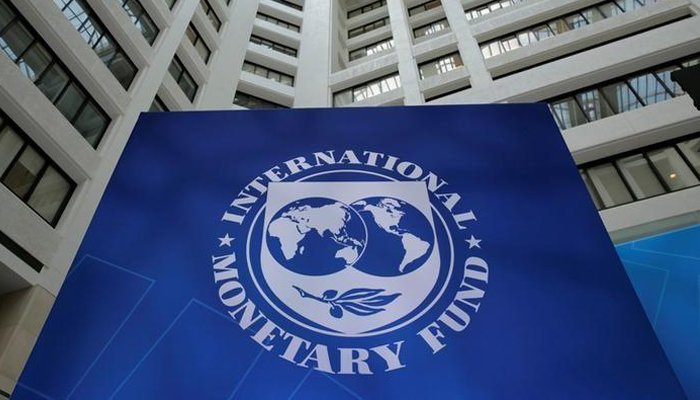
The International Monetary Fund has downgraded Nigeria’s economic growth projection for 2026 to 4.1%, attributing the revision to higher fuel and fertilizer prices and increased global shipping costs resulting from the ongoing Middle East crisis.

The updated forecast represents a 0.3 percentage point reduction from the 4.4% estimate released in January. The adjustment was published in the IMF’s April 2026 World Economic Outlook, unveiled during the IMF/World Bank 2026 Spring Meetings in Washington DC.

The IMF said Nigeria’s outlook is being shaped by rising global uncertainty and external shocks from the conflict. Although the economy is still expected to grow at a moderate pace, the institution warned that elevated import, transport, and input costs may restrain economic performance.

Globally, the IMF also revised growth downward, projecting world output at 3.1% in 2026 compared to 3.4% in 2025, citing war-related disruptions to economic activity.

At the report briefing, IMF Research Department Director Pierre-Olivier Gourinchas said Sub-Saharan Africa is experiencing broad downward revisions:

Advertisement

“In Sub-Saharan Africa, we are seeing, broadly, a downgrade in growth and rising inflation in a number of countries in the region. The impact is largely in line with global trends. For many countries, especially energy importers, the situation is challenging, although there are also energy exporters in the region, so the impact varies.”

For Nigeria, IMF official Deniz Igan stated:

“growth has been revised down by 0.3 percentage points to 4.1% in 2026. This reflects two opposing forces. On one hand, higher fuel and fertilizer prices and increased shipping costs are expected to weigh on non-oil activity.

“On the other hand, higher oil prices provide some offset. Overall, the balance is negative for growth in 2026, with some recovery expected in 2027.”

She also stressed monetary policy discipline:

Advertisement

“maintaining tight monetary policy, remaining data-dependent, and closely monitoring exchange rate movements and inflation expectations will be crucial to achieving the inflation target.

The report further highlighted regional headwinds, including declining foreign aid, rising inflation, and worsening trade conditions, with Sub-Saharan Africa’s median inflation projected to increase from 3.4% in 2025 to 5%.

Africans Angle News


Advertisement
Continue Reading
Advertisement
Click to comment

Leave a Reply

Your email address will not be published. Required fields are marked *

Trending Contents

Topical Issues

MA-Abubakar MA-Abubakar
Forgotten Dairies3 hours ago

From Claims To Facts: What M.A Actually Delivered For Bauchi -By Sani Danaudi Mohammed

These programs show that M.A. Abubakar, SAN approached youth and women empowerment with both immediate relief and long-term capacity building....

Donald Trump Donald Trump
Forgotten Dairies3 hours ago

America’s Bribery Justice Punishes Men, Spares Corporations -By Fransiscus Nanga Roka

The DOJ refers to this as 'individual accountability' I refer to that as corporate cowardice made possible by prosecutorial convenience....

Mind Game Mind Game
National Issues8 hours ago

Why Mental Health Conversations Should Be Normalised in Nigeria -By Ugwuoke Anthony Nnachetam

The time has come for Nigerians to speak openly about mental health. We must encourage empathy instead of ridicule, understanding...

Aliyu Tanimu Aliyu Tanimu
Forgotten Dairies8 hours ago

Africa’s Greatest Wealth Is Its People: Why Human Capital Must Come First -By Arc. Aliyu Tanimu

In a lighter mood, there have been some giant strides recorded in the realm of value addition. For example, in...

CYRIL RAMAPHOSA CYRIL RAMAPHOSA
Global Issues10 hours ago

When State Rhetoric Meets The Street: How Electoral Promises Fed South Africa’s Afrophobic Incidents -By Isaac Asabor

The painful lesson from South Africa's recurring Afrophobic violence is that political rhetoric, however well intentioned, does not always stop...

Ugochukwu Ugwuanyi Ugochukwu Ugwuanyi
National Issues16 hours ago

Empathy Storytelling: Where Brands Relive Audience Realities for Relatability -By Ugochukwu Ugwuanyi

AI chatbots should therefore be confined to their assistant role, where they help with research, proofreading and polish for brevity,...

Stericycle Stericycle
Forgotten Dairies16 hours ago

Stericycle’s Bribery Architect Walks Free While Justice Sleeps -By Fransiscus Nanga Roka

In a company whose entire business model relies on public faith that the collection and disposal of medical waste will...

crude-oil-extraction-nigeria crude-oil-extraction-nigeria
Forgotten Dairies17 hours ago

THE GHOSTS OF KOFAR NASSARAWA: How Nigeria Traded Its Agrarian Empire for a Oil Barrel—And Lost Both -By Abdulazeez Toheeb Olawale

Every few years, politicians visit Kano, stand on a podium, and promise to "bring back the groundnut pyramids." But stacking...

Oriire School Children Kidnapping In Oyo, Boko Har Oriire School Children Kidnapping In Oyo, Boko Har
Forgotten Dairies17 hours ago

The Spirit Of Oriire -By Pius Mordi

Oriire represents a turning point in Nigeria's war against terror, insurgency and banditry. The template for the execution of the...

Isaac Asabor Isaac Asabor
Forgotten Dairies17 hours ago

Nobody Can Kill the Gospel -By Isaac Asabor

Groups including the Christian Council of Nigeria and the Organization of African Instituted Churches argue that the proposal unnecessarily criminalizes...