
Global Issues
The Role of Civil Law in Strengthening Corporate Accountability in Indonesia: Between Global Contracts and Constitutional Mandates -By Moch Rizky Adi Pratama Putra, Erny Herlin Setyorini

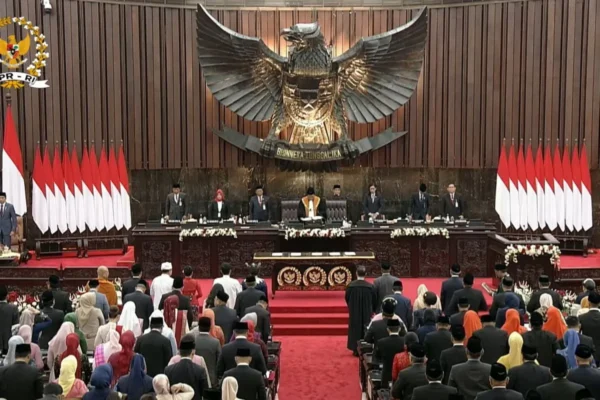
Amidst global geopolitical and economic dynamics, Indonesia has reaffirmed its position as a nation open to international cooperation. The bilateral relationship between Prabowo Subianto and Donald Trump—which has recently resurfaced in the discourse of trade and investment cooperation—presents both significant opportunities and serious challenges for the national legal system. The question is: are Indonesia’s civil law systems strong enough to guarantee corporate accountability in this global investment flow? International cooperation is fundamentally based on agreements. Within the context of states, international agreements form the basis for cross-jurisdictional legal relations. However, at the level of business practice, private contracts between national and foreign corporations are more dominant. This is where civil law plays a strategic role. It serves as the foundation for legal certainty, protection of national interests, and a mechanism for monitoring corporate behavior.
Indonesia must not view international cooperation solely as an economic opportunity. Any trade or investment agreement framed in a bilateral treaty must be translated into a business contract that adheres to the principles of prudence, balance, and good faith. Globally, contracts are often structured to standards that favor the party with the stronger bargaining position. Without strengthening civil law, Indonesia risks becoming trapped in clauses that are detrimental to national interests. This is where the relevance of Article 33 paragraph (3) of the 1945 Constitution becomes apparent. This provision affirms that the land, water, and natural resources contained therein are controlled by the state and used to the greatest benefit of the people. This principle is not merely a symbolic norm, but a constitutional mandate that must be reflected in every investment, financing, and corporate cooperation contract with foreign parties.
Corporate accountability in civil law extends beyond breach of contract. It also addresses aspects of unlawful acts (PMH), liability for losses, and compensation obligations. In the context of foreign investment, civil law instruments can serve as a tool for the state to ensure that any breach of contract, negligence, or business practices that harm the public can be effectively held accountable. The bilateral relationship between the leadership of Indonesia and the United States, including in the context of political communication between Prabowo and Trump, has the potential to encourage large investments in the energy, defense, and infrastructure sectors. However, investment without a strong civil law system will only create inequality. Non-transparent contracts, arbitration clauses that completely favor foreign forums, or limitations on corporate liability can weaken Indonesia’s position in future disputes. Article 28D paragraph (1) of the 1945 Constitution also affirms the right of every person to recognition, guarantees, protection, and fair legal certainty.
This norm applies not only to individuals, but also to national business actors dealing with multinational corporations. If the civil law system is able to guarantee certainty, Indonesia will not only be attractive to investors but also respected as a sovereign state governed by the rule of law. Strengthening corporate accountability through civil law can be done through several steps.
First, standardizing strategic contract clauses involving natural resources and vital sectors.
Second, strengthening the evidentiary mechanism in civil disputes to ensure fairness between large corporations and the public.
Third, optimize civil lawsuits to recover state or public losses, including through class actions and derivative suits. Indonesia needs to promote harmonization between international treaties and national law. Every bilateral commitment must go through a clear constitutional mechanism, as stipulated in Article 11 of the 1945 Constitution concerning international treaties. This means that high-level political cooperation must not ignore the principle of checks and balances and the interests of the people as sovereign holders.
More broadly, civil law can be an instrument of economic diplomacy. Countries with strong contractual systems, credible civil courts, and effective judgment enforcement mechanisms will command greater respect in the global arena. Corporate accountability is not an obstacle to investment, but rather a guarantee of long-term stability. Indonesia stands at a crucial crossroads. On the one hand, it offers significant opportunities for international cooperation. On the other, it faces a constitutional obligation to safeguard the interests of the people.
Moch Rizky Adi Pratama Putra, Erny Herlin Setyorini
University of 17 August 1945 Surabaya


























You must be logged in to post a comment Login