Politics
Echoes from Ekiti, Lifelines in Osun -By Abiodun KOMOLAFE
To plead in mitigation, one might argue that August 15 is still a long way off, but with June 20 already knocking at the door, it is really not that far. The people of Osun deserve to be presented with a plethora of programmes by the leading contenders in order to make a discerning choice. The absence of such programmes means that there is very little interest on the ground, let alone enthusiasm about an electoral contest so vital to the state and its destiny. This is ominous for democracy, as it could result in an abysmal voter turnout.

With growing doubts about the efficacy of institutions in Nigeria, it is very important to use scenario-planning to forecast the reactions to unfolding events, particularly in the electoral arena. The off-cycle elections in Ekiti on June 20 and Osun on August 15 will herald the real test to come in the January 2027 general elections. They should really be taken like mock examinations.
Those who value democracy expect the Independent National Electoral Commission (INEC) to use stakeholders as proper sounding boards and partners for pilot tests. INEC has to get it right, for the price of failure will be cataclysmic. The electoral commission must get to grips with its past inadequacies, which revolved around logistics and the effective coordination of the election announcements.
By any objective measure, it has taken too long for the Commission to put together a solid blueprint, which in itself should not be a problem in today’s data-driven, computer scenario-planning world. Except one wants to be economical with the truth, today’s world is based on logistics for competitiveness and INEC has to get it right by using Ekiti and Osun as a testing ground to show that the past has truly become a bucket of ashes. There can be no excuse for the Electoral Commission to continue wallowing in the cesspool of past ineptitude, for we have seen the effectiveness of electoral commissions in other climes such as Senegal and Kenya.
Indeed, by now, after so many decades, Nigeria’s electoral commission should have developed a logistics framework from which to earn income, leasing its infrastructure to commercial firms, governments, and even security or quasi-security agencies. INEC has to get rid of these operational wrinkles this time; it simply must get it right. It is also imperative to be reassuring in its media process, mastering both information coordination and the delicate management of election announcements. Realising that the buildup to the announcement of elections is critical, INEC must create the atmosphere that avoids giving the impression that the road to doomsday is nearer than ever contemplated.
A very instructive example is the last presidential election in Ghana. At one point, with the tension in the air almost assuming the texture of a dress rehearsal for chaos, the country’s electoral commission defused the crisis by ensuring fair play for all participants. INEC must ensure its own upcoming test-runs do not signal a similar doom, leading foreign nations to issue travel advisories. This would come at a major cost to the Nigerian economy, particularly as key economic actors plan to raise money from the capital market this September. We simply have to be mindful and proactive.
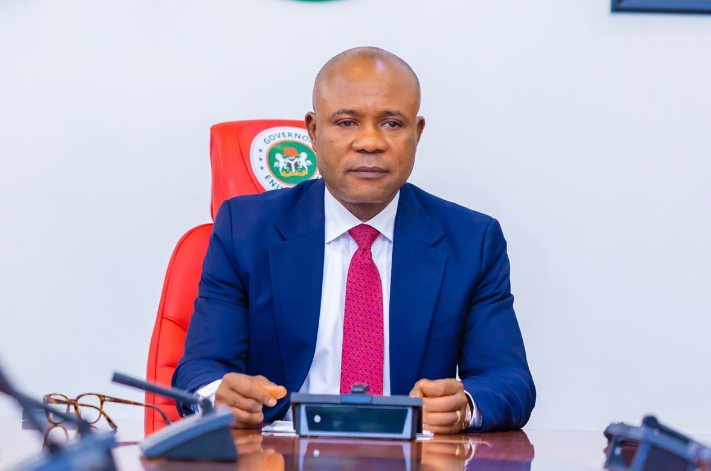
By all indications, Ekiti should not pose a problem for INEC, as the conventional wisdom across all shades of opinion is that Governor Biodun Abayomi Oyebanji (BAO) of the All Progressives Congress (APC) has established a massive lead ahead of his re-election bid, predicated on two pillars. First, the governor is seen as having put in a highly commendable performance throughout his first term in office, prompting the state’s political establishment to rally behind him in a manner that is completely unprecedented in Ekiti history. This has given him a definitive head start.
The second pillar is his unmatched brand recognition, for those opposing him in the contest are barely recognizable, even within their own local governments. This brand advantage is so massive that the race is beginning to take on the toga of a ‘no-contest.’ In boxing parlance, the governor looks as if he is poised for a technical knockout (TKO).
Surely, and certainly, what BAO stands for is clear. But what remains obscure is who his opponents are, and what alternative visions or programmes they are presenting that could prove superior to his track record that may offer a compelling reason for his replacement. The real question now, in the long game leading up to June 20, is how Oyebanji will consolidate a lead that already appears convincing in the political calculus. However, this lack of competition does not augur well for democracy at all, and in the future, political parties must present coherent programmes that offer the electorate a genuine choice. They should also establish succession planning mechanisms where prepared aspirants are brought to the fore to ensure a meaningful contest.
Osun will be completely different from Ekiti State, more so as the issues are troublingly diverse. There is no consensus around basic issues across the different zones and cultures in the state. Here, far more than in Ekiti, INEC will have to show great dexterity and management skills.
Truth be told, it is difficult to categorically state that there is a clear, unambiguous frontrunner in Osun State. Indeed, the contest is turning out to be more of a three-horse race with shifting alliances, very much like the changing compositions and complexions witnessed at the height of the Kiriji War. With weeks left until the election, it is proving difficult to discern any coherent messaging in the state capable of truly enthusing the electorate. While one candidate – whose profession demands courage and yields both exposure and wide networks – is working to add value to the race, the other, cocky in his craft, is busy running upandan, deploying clever distractions to colour public perception. Funnily enough, two or three others are irresistibly searching for the missing rhymes and rhythms of their political loci; and it is as if Osun is in for a long haul.
To plead in mitigation, one might argue that August 15 is still a long way off, but with June 20 already knocking at the door, it is really not that far. The people of Osun deserve to be presented with a plethora of programmes by the leading contenders in order to make a discerning choice. The absence of such programmes means that there is very little interest on the ground, let alone enthusiasm about an electoral contest so vital to the state and its destiny. This is ominous for democracy, as it could result in an abysmal voter turnout. As fate would have it, voter apathy is already treated like a discarded used plate in Nigeria, and anything that could accentuate it must be frowned upon.
Lastly – and this is crucial – those taking part in the forthcoming governorship election in Osun must become more invigorated and offer clear choices to the electors. We hope there will be robust debates so that the electorate can plainly interrogate the womb of what is on offer to guide them. As of now, the situation remains temptingly uninspiring.
In Southwestern Nigerian politics, elections don’t follow a linear march towards some predetermined conclusion; they are cooked in an unstable crucible of shifting loyalties and cultural anxieties. Osun and Ekiti speak to this reality, although they offer entirely different lessons. While Ekiti demonstrates how continuous engagement locks down a ruling party’s dominance, Osun’s fluid, egregiously fractured political board offers the APC a powerful horizon of hope. In a landscape where old structures are buckling under the weight of chaotic realignments, a disciplined, progressive fold in Osun is looking at a compelling vantage.
To seize this lifeline, the Osun APC governorship candidate must lace his boots and work to tame the fissures before the cracks become craters. Asiwaju Munirudeen Bola Oyebamiji (AMBO) must sincerely rally all segments of the party – especially those whose outward calm is merely a carapace for secret disaffection – into a cohesive front. For the progressive fold, burying old grievance is no longer just about unity, it is a matter of sheer political survival.
May the Lamb of God, who takes away the sin of the world, grant us peace in Nigeria!
Email: ijebujesa@yahoo.co.uk.
Mobile: 08033614419 SMS only.