Africa
Between Culture and Religion: When Culture Becomes a Battlefield for Existence -By Richard ODUSANYA
If we insist on using hoes for large-scale farming simply because our ancestors did, we are not honouring tradition—we are sabotaging progress. Culture must grow, or it will become a museum piece: admired, but no longer lived.
In the end, the fight for culture is the fight for identity, and the fight for identity is the fight for freedom and human dignity. And that, surely, is a cause worth standing for.


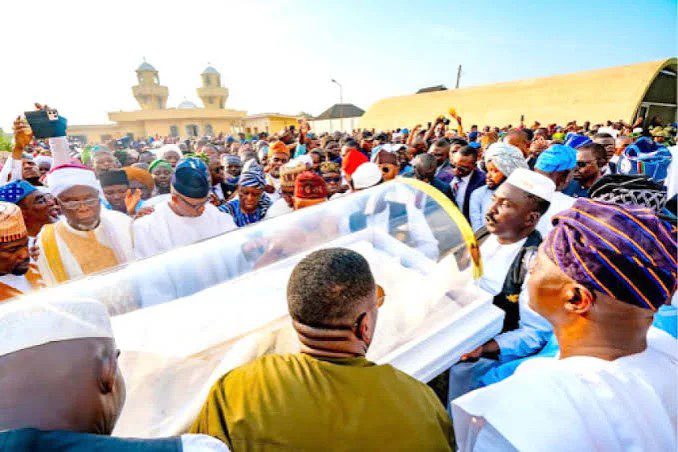
In recent days, the controversy surrounding the burial rites of the late Awujale of Ijebu-Ode has once again stirred the complex waters where culture and religion collide. That a revered traditional ruler chose to depart under Islamic rites—eschewing certain customary rituals—has sparked reactions ranging from mild confusion to near-outrage. But beneath the noise lies a deeper conversation, one that compels us to re-examine the evolving nature of identity, culture, and the politics of belonging.
Culture and Religion: Kindred Twins, Not Opposites
Often treated as distinct entities, culture and religion are, in fact, deeply intertwined. Both are social constructs—products of human interpretation, adaptation, and evolution. Religion typically offers a metaphysical framework of beliefs and rituals, while culture encompasses the totality of how people live, express, and organize their lives. But in reality, religion is embedded within culture, and culture is often saturated with religious values.
There are cultures with multiple religions and religions that wear different cultural “clothes” depending on geography. Christianity in Brazil looks nothing like Christianity in Finland; Islam in Morocco sounds different from Islam in Malaysia. Culture provides the context for religious expression. In this light, religion can be seen as a subset of culture—and not its superior.
Why Culture Must Evolve
While culture roots a people to history, meaning, and collective memory, it must never become a prison. Culture, like language and law, must be dynamic, not static. It should evolve in response to knowledge, ethics, science, and human dignity. Practices once normalized—like the killing of twins in Efik culture—are today unthinkable, thanks to the enlightened resistance led by individuals like Mary Slessor.
We can not, in the name of “tradition,” continue to worship shadows while crucifying progress. To insist on certain outdated cultural forms without questioning their utility, justice, or morality is to risk becoming irrelevant—or worse, harmful.
The Politics of Erasure: _When Identity Becomes a Threat
This debate is not merely theoretical for those of us who have suffered discrimination, erasure, and persecution because of our ethnic origins, language, or cultural affiliations. I speak not just as an observer but as someone who has lived the consequences of cultural marginalization.
When my nationality is denied, when my language is mocked or dismissed, when my people’s history is rewritten or silenced, it is not just offensive—it is dangerous. These are not harmless oversights; they are symbolic acts of violence that often precede more literal ones. To deny a people’s identity is to render them disposable. That is why I can not afford to be neutral on matters of culture and religion. To attack my cultural being is to attack my very existence.
Why Cultural Identity Matters for Development
Cultural identity is not a relic of the past—it is a pillar of national development. It fosters social cohesion, creates a sense of ownership, and builds resilience. When people know who they are and where they come from, they are better equipped to engage the world confidently and creatively. It also protects against the homogenizing tendencies of globalization that often erase indigenous knowledge and values.
Understanding and affirming cultural identity also strengthens mental health and emotional well-being, especially among youth in postcolonial or conflict-prone societies. We must stop treating culture as a distraction or a nuisance in nation-building—it is, in fact, its soul.
Final Thoughts: We Must Modernize with Moral Clarity
To modernize culture is not to destroy it—it is to redeem it. A “Universal Scientific Culture“—grounded in human dignity, scientific reasoning, and moral clarity—must inform our journey forward. We must learn to hold the past with reverence, not bondage; to inherit without being imprisoned; and to question without losing our roots.
If we insist on using hoes for large-scale farming simply because our ancestors did, we are not honouring tradition—we are sabotaging progress. Culture must grow, or it will become a museum piece: admired, but no longer lived.
In the end, the fight for culture is the fight for identity, and the fight for identity is the fight for freedom and human dignity. And that, surely, is a cause worth standing for.