Opinion
Biblical Wisdom Meets Global Politics As Netanyahu’s UNGA Speech Stuns World Leaders, by Isaac Asabor

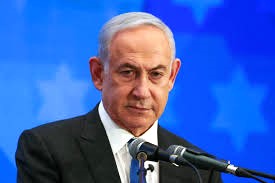
In a speech that will be remembered for years to come, Israeli Prime Minister Benjamin Netanyahu captivated global leaders at the United Nations General Assembly (UNGA) today, September 27, 2024. His address, rich with references to biblical history and modern-day geopolitics, left world leaders in awe as he artfully linked Israel’s ancient past to its present and future on the global stage.
Netanyahu’s speech was far more than a standard diplomatic address as it was an invitation to view Israel not just as a nation with contemporary challenges but as a civilization with a storied legacy. By drawing on ancient biblical references, he evoked powerful imagery that transcended politics and reached into the heart of Israel’s cultural and spiritual identity. The speech resonated on a deeply emotional level, not just for Israelis, but for people across the globe who see the Bible as a shared heritage.
With a commanding presence, Netanyahu began by referencing King David’s battles for Jerusalem, framing Israel’s current position in the Middle East as a continuation of biblical struggles. “Just as David faced Goliath with courage and faith, today Israel stands before great adversaries. But like David, we will prevail,” he declared, his voice ringing through the hall. The analogy drew a standing ovation from many in attendance, with several world leaders visibly moved by his words.
Netanyahu’s references to the Bible did not stop there. He invoked the prophetic wisdom of Isaiah and Ezekiel to discuss the turbulent dynamics of the Middle East and the constant threats Israel faces, particularly from Iran. “As the prophets warned of destruction, we are tasked with vigilance in our time,” he said, turning the attention of the assembly to Iran’s nuclear ambitions. His plea for the international community to unite against the Iranian threat was bolstered by this historical context, giving his words a timeless, almost sacred weight.
In an era of fleeting political sound bites, Netanyahu’s speech stood apart, rich with substance and history. His eloquent invocation of biblical scripture was not just rhetoric, it was a profound reminder that Israel’s story spans millennia, and that its survival has always been a matter of divine providence as much as human resilience.
Many in the room acknowledged after the speech that it was a moment destined to be remembered. Political analysts, diplomats, and scholars were quick to note that Netanyahu’s address could be a defining moment in both his career and in Israel’s diplomatic narrative at the UN. It was not just his words that stirred the assembly, it was the depth of his message.
Netanyahu’s ability to weave together ancient texts and modern concerns created an extraordinary impact. “This wasn’t just a speech, it was a moment in history,” said one European diplomat. “He reminded us all that Israel’s survival and its pursuit of peace are part of a much larger story, one that has been unfolding for thousands of years.”
The speech also marked a turning point in Netanyahu’s leadership style. Known for his hardline stance on security and diplomacy, today he showed a different side, a leader deeply in tune with the cultural and spiritual currents of his people. His speech at UNGA today will likely be studied for years as an example of how a leader can use history and tradition to reinforce national sovereignty and diplomacy.
World leaders, from the United States to the Middle East, were left with much to ponder after his address. Netanyahu’s remarks on the Abraham Accords were particularly striking. He described the agreements as not just political pacts, but as the fulfillment of ancient prophecies of peace between Israel and its neighbors. “These accords are the dawn of a new Middle East, one that embraces peace, mutual respect, and shared prosperity,” he said.
Netanyahu’s speech at the UNGA may well be remembered as a milestone in Israeli diplomacy. His skillful blending of biblical history with modern geopolitical realities gave the speech an enduring quality—one that world leaders will recall long after the assembly has concluded.
As the audience dispersed, the consensus was clear: this was a speech that transcended the usual political theater of the UNGA. Netanyahu’s message was a powerful reminder of Israel’s deep historical roots and its enduring commitment to peace and security. By invoking the wisdom of the Bible, he reached beyond the immediate political challenges, offering a timeless perspective on the nature of leadership, resilience, and survival.
Historians and diplomats alike agree that Netanyahu’s speech will go down in the annals of the UN as one of the most remarkable and memorable addresses ever delivered. By drawing on the rich tapestry of Israel’s biblical past, he gave the world a speech that was more than just words—it was a testament to Israel’s enduring strength, faith, and determination to secure its future in a turbulent world.