National Issues
Dangote Refinery: A Blessing To Patriotic Nigerians, A Curse To Alleged Cabals, by Isaac Asabor

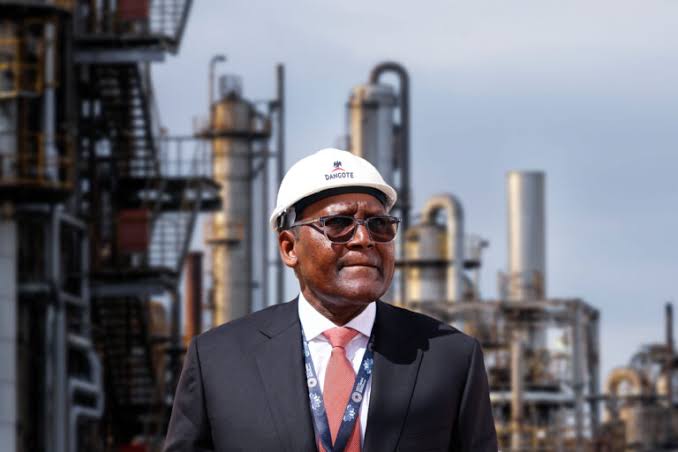
Nigeria, often referred to as the “Giant of Africa,” is a country rich in natural resources, particularly in crude oil. Yet, for decades, Nigerians, including this writer, have watched as their nation has struggled with refining its crude, depending on costly imports to meet its domestic fuel needs. In a country with one of the largest oil reserves in the world, it is ironic that fuel scarcity and high pump prices have become the norm. Enter the Dangote Refinery, an ambitious mega-project that promises to change the game for Nigeria’s energy sector and the economy at large.
As gathered as at July 2024 regarding the capacity of Dangote Refinery, it started operation with 350,000 barrels per day, even as the refinery plans to ramp up production to at least 500,000 barrels by July/August 2024.
Devakumar Edwin, Dangote Industries’ VP of Oil and Gas, confirmed that the refinery will commence production of Premium Motor Spirit (PMS) in July, while international financial analytics corporation, S&P Global officials believe the refinery will reduce Nigeria’s foreign exchange pressures by transforming the country into a net exporter of refined petroleum products.
Regarding its technology, the $20 billion facility uses advanced technology and meets international standards, producing high-quality fuels including petrol, diesel, kerosene, and jet fuel. It aims to meet 100% of Nigeria’s demand, with surplus for export, while the refinery, built by a Nigerian company, adheres to global emission and quality standards and is equipped with a marine facility for large vessels.
The beauty of the commencement of the Refinery is that Nigeria spends trillions on importing petroleum products due to non-operational refineries, a gap the Dangote Refinery seeks to fill, and not a few analysts were unanimous in their views that given the principle.
Applauding the capacity of the refinery in a similar vein, S&P Global, described the 650,000 barrels per day (bpd) Dangote Oil Refinery and Petrochemicals Company as capable of resolving Nigeria’s foreign exchange issues and its huge pressure on the local currency. S&P Global, headquartered in Manhattan, New York City, disclosed this during an onsite visit to the Dangote Refinery at Ibeju-Lekki, Lagos as part of its sovereign credit ratings assessment of Nigeria.
The team from the international rating agency was accompanied by officials from the Federal Ministry of Finance. S&P noted that the largest single-train refinery complex in the world would bolster Nigeria’s oil sector and, more importantly, also have a positive impact on its growing economy.
However, while many see the Dangote Refinery as a monumental blessing to patriotic Nigerians who have long desired energy self-sufficiency and economic growth, others argue that it threatens certain vested interests, often referred to as “cabals,” who have benefitted from Nigeria’s dependence on imported fuel.
The Dangote Refinery, situated in the Lekki Free Trade Zone, Lagos, is Africa’s largest privately-owned refinery and one of the most sophisticated in the world. With a processing capacity of 650,000 barrels of crude oil per day, the refinery has the potential to meet Nigeria’s domestic fuel needs while significantly reducing the country’s reliance on imported refined petroleum products.
Patriotic Nigerians see this development as a major leap forward for the country. The refinery is expected to save billions of dollars annually in foreign exchange, boost local employment, and catalyze the nation’s industrial sector. For decades, Nigeria’s four government-owned refineries have operated below capacity, with frequent shutdowns for repairs, often attributed to corruption and inefficiency. As a result, Nigeria has exported crude oil only to re-import refined products at inflated prices. The Dangote Refinery offers a lifeline, breaking this vicious cycle by providing the capacity to refine locally and stabilize fuel prices.
For many, this project represents a symbol of national pride, showcasing the potential of Nigerian enterprise to resolve long-standing problems. In the long run, the refinery is expected to contribute to the country’s Gross Domestic Product (GDP), and increase local production, thus reducing inflation.
While the Dangote Refinery is heralded as a boon for the country, not everyone is celebrating. Alleged “cabals”, a term frequently used to describe shadowy groups or individuals who wield significant influence over Nigeria’s oil and gas sector, may see this development as a threat to their longstanding grip on the nation’s oil wealth. Aptly put, the refinery is unarguably a curse to them, while it is a blessing to others.
These cabals, often linked to oil importation and the downstream petroleum sector, have allegedly profited immensely from Nigeria’s inability to refine its crude oil. For years, Nigeria has been locked into a system where crude oil is exported and refined products are imported, with a handful of importers reaping billions from government subsidies meant to lower the cost of fuel for Nigerians.
The advent of the Dangote Refinery represents a disruption of this entrenched system. As Nigeria gradually shifts towards refining its own crude and reducing its fuel importation, the cabals stand to lose their stranglehold on the nation’s energy supply chain. The end of fuel subsidies, combined with the refinery’s capacity to meet local demand, effectively reduces the influence of those who have benefitted from fuel import contracts and government payouts.
Despite the optimism surrounding the Dangote Refinery, critics have raised concerns over the monopoly-like position the facility could create in the oil sector. With such enormous refining capacity, there are fears that Dangote may control a significant portion of Nigeria’s energy sector, giving the billionaire industrialist disproportionate economic and political influence. This concern has been raised by economic analysts who believe that while breaking the monopoly of fuel importers is a step forward, it could potentially be replaced by a new form of economic domination.
Moreover, questions linger about whether the refinery will fully serve national interests. The strategic role the government plays in ensuring that the refinery’s output serves Nigeria’s economy, rather than primarily benefiting private shareholders, will be critical.
For Nigeria, the Dangote Refinery is more than just a business venture; it is a symbol of energy sovereignty. By producing gasoline, diesel, and other byproducts locally, Nigeria can finally end the embarrassing cycle of fuel shortages in an oil-rich nation. Patriotic Nigerians, tired of the status quo, are hoping this project will end years of mismanagement and underinvestment in the energy sector.
This refinery stands as a testament to what the private sector can achieve when it steps up to fill gaps left by government inefficiency. It has the potential to turn Nigeria’s oil wealth into real benefits for its citizens, creating jobs, reducing import costs, and fostering local industries that rely on refined petroleum products.
For the majority of Nigerians, the Dangote Refinery is a blessing that could transform the nation’s economic landscape, alleviating fuel scarcity and reducing the pressure on foreign reserves. However, the path to full energy independence is not without its challenges. The alleged cabals, long entrenched in the system of fuel importation, may fight to retain their influence, while the potential concentration of power in a single private entity should not be overlooked.
Ultimately, the success of the Dangote Refinery will depend on the government’s ability to regulate and ensure that the benefits truly reach the Nigerian people. If managed properly, this project can be a win for all, marking a turning point in Nigeria’s energy narrative, a blessing for patriotic Nigerians and a curse to those who have exploited the nation’s oil sector for personal gain.