Opinion
Easter, Peter Obi, and Nigeria: A Nation at Golgotha -By Vitus Ozoke, PhD
Supporters of Bola Ahmed Tinubu and others will, of course, argue their case – as is their democratic right. This is not a denial of plurality, nor a call for blind allegiance. Democracy thrives on contest. But democracy also demands conscience. It requires voters to look beyond slogans and structures, beyond patronage and pressure, and ask a simple question: Who truly serves the future? Nations are not destroyed only by bad and corrupt leaders. They are also undone by the willingness of good people to accept less than they know is possible.

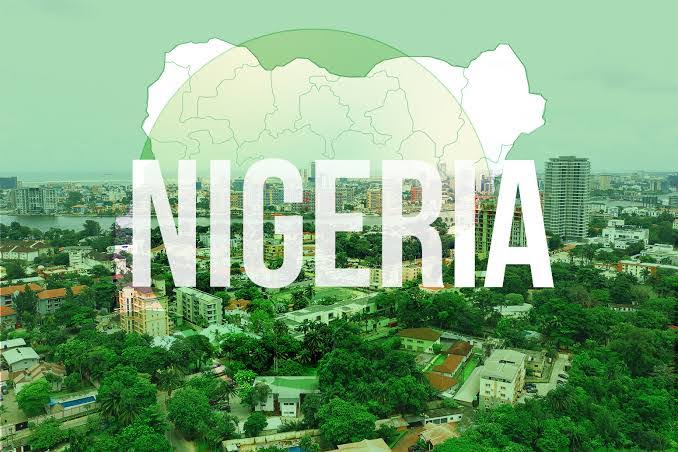
Hurray, it’s Easter! Before Easter, it was Good Friday, and as Christians around the world remember the betrayal, humiliation, and crucifixion of Jesus Christ, Nigeria finds itself at a haunting crossroads – one that eerily echoes the ancient story of Golgotha. At that historic hill, history recorded not just a crucifixion but a choice: a people faced with the truth, yet chose otherwise. It is a story not just of faith but of choice.
A man preached humility, justice, and compassion. He walked among ordinary people, not dressed in the arrogance of power but in simplicity of purpose. He dined with those society looked down on. He crossed boundaries others were afraid to approach. He spoke not the language of domination but of service. And for this, he was mocked, rejected, and ultimately betrayed – not by strangers, but by his own.
Today, many recognize echoes of that story in Peter Obi.
Here is a man who does not fit the typical mold of Nigerian power. No flamboyance. No theatrical display of wealth. No obsession with the trappings of office. A man who governed and left office without scandal, who built rather than took, who saved rather than squandered. A man whose lifestyle does not broadcast his status, but whose record quietly speaks for itself. Yet, like all figures who challenge and threaten entrenched and corrupt systems, he is opposed not by the people, who have embraced him overwhelmingly, but by the shadowy corridors of corrupt power where self-interest prevails over the common good.
So, the real problem is not rejection from the masses; it has never been. The real issue is betrayal by those who know better and still choose otherwise – those driven by greed, ambition, or fear who would rather keep a broken system than surrender it for genuine reform. The true problem is that those who threaten entrenched interests are seldom welcomed. They are tested, attacked, and often undermined. That is the tragedy. Therefore, the question for Nigeria is not just political. It is moral. It is spiritual. It is existential. When faced with a stark choice between integrity and impunity, between stewardship and exploitation, between restraint and excess, what does a nation choose?
History presents us with a disturbing example. When given a choice, the crowd selected Barabbas. They preferred familiarity over righteousness, spectacle over substance, noise over truth. They chose what they knew, even if what they knew was flawed. Are Nigerians ready to admit they might be standing in that same crowd today?
It’s easy – comfortably easy – to dismiss the idea that one person could represent a different path. Cynicism has become a national reflex. “They are all the same,” we say, absolving ourselves of the burden of discernment. But what if they are not the same? What if, in this rare moment, the difference is sharp – and undeniable? And it is.
The danger is not ignorance. The danger is knowing, and still choosing otherwise. For if indeed a candidate represents competence, restraint, and accountability, and yet is undermined and betrayed – not because of lack of merit or integrity but because of tribe, transaction, or tired loyalties – then the consequences will not be accidental. They will be chosen. And choices have weight.
Supporters of Bola Ahmed Tinubu and others will, of course, argue their case – as is their democratic right. This is not a denial of plurality, nor a call for blind allegiance. Democracy thrives on contest. But democracy also demands conscience. It requires voters to look beyond slogans and structures, beyond patronage and pressure, and ask a simple question: Who truly serves the future? Nations are not destroyed only by bad and corrupt leaders. They are also undone by the willingness of good people to accept less than they know is possible.
Again, history is instructive.
The irony of power is that those who seek it the least are often the best suited to wield it responsibly. Conversely, those who crave it the most often misunderstand its purpose. Power, in its purest form, is not for self-glorification but for stewardship, repair, and the quiet, uncelebrated work of building systems that endure beyond individuals. That is precisely why moments like this matter. Because this is not just about one man; it is about what a nation rewards, whether integrity is genuinely valued or only admired from afar, while corruption is tolerated up close.
As we celebrate Easter, the symbolism is impossible to ignore. Betrayal. Denial. Judgment. But also – choice. Nigeria once again faces that choice. Not between perfection and imperfection – no candidate is flawless – but between paths. Between continuing a familiar descent into doom, decay, and destruction that have clearly characterized Bola Tinubu’s politics and power struggles, or pursuing a different and honorable climb toward prosperity, growth, and national greatness – a vision that Peter Obi offers a battered and beleaguered nation.
And if, in the end, the nation knowingly chooses what it knows to be lesser, then it cannot later complain about the outcome. For judgment, when it arrives, will not be mysterious. It will simply be the consequence of what was chosen – clearly, consciously, and collectively. The question, then, is as old as the Easter story itself: When the moment comes, who will you choose? Not in theory. Not in poetry. But in the stark, unavoidable reality before Nigeria today.
Will you choose Bola Tinubu – and all that he has come to represent in the public imagination: the consolidation of rigged and stolen power for its own sake, the normalization of excess, the triumph of political machinery over moral clarity? Will you choose the familiar architecture of influence, patronage, survival, and corruption – the system as it is, perfected in its ability to endure, not to transform?
Or will you choose Peter Gregory Obi – not as a messiah, not as a myth, but as a man whose public record speaks to restraint, accountability, and an almost unfashionable belief that public office is a place for service, not spectacle? A man whose argument is not built on noise, but on numbers; not on entitlement, but on evidence.
This is the choice. Between power as possession and power as responsibility. Between leadership as extraction and borrowing and leadership as investment, stewardship, and building. Between the continuation of a system that exploits and feeds on the nation, and the possibility – however difficult, however imperfect – of one that truly serves it.
And let me be clear: this is not merely a political decision. It is a moral reckoning. Because history does not only remember leaders. It remembers the people who chose them. It remembers whether they acted out of courage or convenience. Whether they stood by what they knew to be right, or surrendered to what was easy, profitable, or expedient. It remembers whether they recognized the moment – or allowed it to pass, cloaked in excuses.
In the Easter story, the crowd was not ignorant. They were present. They saw. They heard. And still, they chose. That is what gives the story its enduring weight. Not that evil existed, but that it was permitted and tolerated. Not that truth stood before them, but that it was ignored and abandoned.
So, when the moment comes for Nigeria, the question will not be clouded. It will not be hidden in ambiguity. It will be as clear as it has ever been: What kind of nation do you believe in – and what are you willing to endorse? Because in the end, the verdict will be written not only in the fate of the candidates but also in the future of the country itself. And when that future arrives – as it surely will – it will carry the unmistakable mark of this choice.
Dr. Vitus Ozoke is a lawyer, human rights activist, and public affairs analyst based in the United States. He writes on politics, governance, and the moral costs of leadership failure in Africa.