Africa
Explainer: Reforms Outline for the African Union -By Kestér Kenn Klomegâh
Following a review of the studies as well as consultations with member states and various stakeholders, the Reforms Advisory team concluded that in order to realize the ambitions of Agenda 2063 and to ensure an impactful and effective manner in delivering on its mandate, the AU needs to reposition itself and ensure it has the requisite institutional capacity and capabilities given the evolving economic, political, and social needs of the continent.

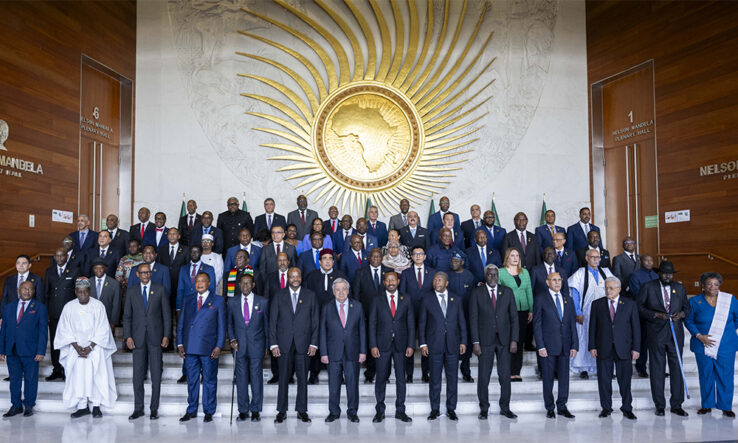
Over the past years, the question for adopting necessary reforms have been raised for the African Union, the continental organization comprising 55 African countries. Concretely, as far back as 2016, African leaders decided that institutional reforms of the African Union (AU) was urgent and necessary given the role the AU is expected to play in driving and achieving Africa’s Agenda 2063 vision of inclusive economic growth and development.
President Paul Kagame of Rwanda, was mandated by the Assembly of Heads of State in July 2016 to lead the process. Interestingly, African leaders have frequently raised loud voices at the United Nations and other foreign platforms calling consistently for reforms of multilateral institutions and organization around the world. Leaders have been adamant to reform their own continental organization, the African Union and other Regional Economic blocs.
Several years have already elapsed without the necessary restructuring excercise of it institutions and organs. During this current period when the world itself is continuously transforming, AU also needs to change, to make it fit for purpose and to address the multifaceted and unprecedented challenges that Africa faces in the emerging multipolar world.
Historical documents pointed to various studies and analyses that the AU faced several major challenges.
i) The AU is highly fragmented with too many focus areas;
ii) The AU’s complicated structure and limited managerial capacity leads to inefficient working methods, poor decision-making and a lack of accountability;
iii) The AU is neither financially independent nor self-sustaining, relying instead on partner funding for much of its financing;
iv) Coordination between the AU and the RECs is limited.
Following a review of the studies as well as consultations with member states and various stakeholders, the Reforms Advisory team concluded that in order to realize the ambitions of Agenda 2063 and to ensure an impactful and effective manner in delivering on its mandate, the AU needs to reposition itself and ensure it has the requisite institutional capacity and capabilities given the evolving economic, political, and social needs of the continent.
The proposed AU reforms have to focus on enhancing the effectiveness and efficiency of the organization. Key areas of reform include:
a) Institutional Restructuring: Streamlining the AU’s institutions to reduce bureaucracy and improve decision-making processes.
b) Financial Independence: Encouraging member states to contribute more significantly to the AU’s budget to reduce reliance on external funding.
c) Peace and Security: Strengthening mechanisms for conflict resolution and peacekeeping operations across the continent.
d) Engagement with Civil Society: Promoting greater involvement of civil society organizations in AU processes to ensure broader representation and accountability.
e) These reforms aim to make the AU more responsive to the needs of African nations and enhance its role in global affairs.
In mid-October 2025, Chairperson of the AU Commission, Mahmoud Ali Youssouf addressed the inaugural virtual meeting of the Ad-Hoc Committee on AU Institutional Reform, convened and chaired by President Williams Ruto of the Republic of Kenya, who is also the AU Champion for Institutional Reform.
According to official reports, the Chairperson thanked President Ruto for his leadership in steering the reform process. President Ruto and the Chairperson reaffirmed Africa’s shared commitment to building a stronger, more coherent, and people-centered African Union. President Ruto announced that the Extraordinary Summit on AU Reforms was planned for 26 November 2025 in Luanda, to be hosted by President João Lourenço of the Republic of Angola.
The reform agenda emphasizes on the need to focus on key priorities with a continental scope, realigning AU institutions to deliver on its objectives, operational efficiency and sustainable self-financing the AU. The Agenda 2063 is a comprehensive development framework for the whole of Africa. The African Union (AU) is an organization uniting independent African states established in 1963, and headquartered in Addis Ababa, Ethiopia.