Africa
Girls’ Education in Nigeria: A Challenge We Can’t Ignore -By Anyichie Princess
Educating girls is a win‑win scenario for individuals, families, and the nation. When girls learn, communities thrive; when girls are valued as students, the future becomes brighter for all. Nigeria cannot afford to ignore this challenge any longer. To build a prosperous, equitable, and progressive society, we must ensure that every girl regardless of background has access to quality education. The future of the nation depends on it.

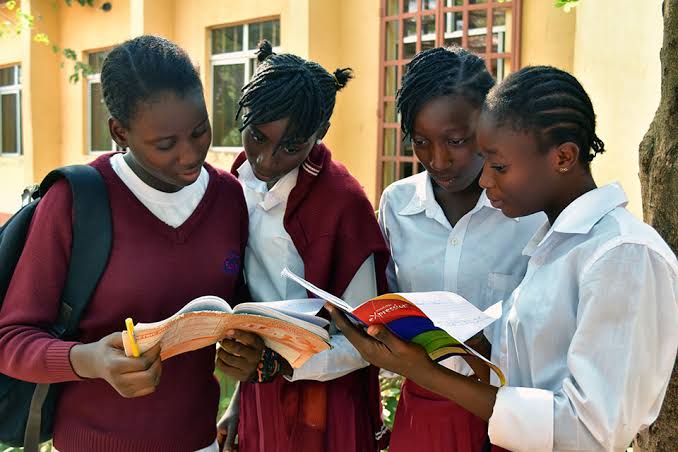
Across Nigeria, millions of girls still see education as a distant dream rather than a lived reality. Despite progress in some regions, entrenched barriers continue to keep girls out of schools, limiting their potential and harming the country’s development.
Poverty, early marriage, insecurity, and long‑standing cultural beliefs remain among the most powerful obstacles to girls’ education. These challenges are especially pronounced in rural areas and parts of northern Nigeria, where traditions and economic hardship often outweigh educational aspirations.
In many households, the education of boys is prioritized. Parents often believe that investing in boys yields greater economic returns, while girls are expected to focus on domestic duties. This mindset deprives girls of equal opportunities to learn, grow, and contribute meaningfully to society.
Poverty is perhaps the most pervasive barrier. When families cannot afford school fees, uniforms, or books, girls are often the first to be withdrawn. Boys may be kept in school in hopes of future financial support, while girls are asked to support household chores or earn income.
Early marriage is another grave threat to girls’ education, particularly in parts of northern Nigeria. Many girls are married off before completing primary or secondary school, ending their education prematurely and exposing them to increased health risks.
Even where education is free, insecurity and fear of violence deter parents from sending their daughters to school. Kidnappings, communal clashes, and threats along school routes have made many families hesitant to allow girls to travel long distances for lessons.
Cultural beliefs continue to influence parental decisions. In some communities, traditional norms dictate that girls should serve their families first, reducing the perceived value of formal education. These beliefs often go unchallenged due to a lack of awareness and community engagement.
Educating girls is not merely a matter of fairness it is a catalyst for national development. Research consistently shows that girls who stay in school are more likely to enter the workforce, earn higher incomes, and contribute to economic growth.
Girls’ education also has profound health benefits. Educated women tend to marry later, have fewer and healthier children, and are more likely to seek medical care. These positive outcomes contribute to stronger, healthier families and communities.
Girls with education are more likely to challenge harmful practices and advocate for gender equality. They become role models and mentors for the next generation, breaking cycles of poverty and marginalization that have persisted for decades.
When girls are denied education, the nation loses not only individuals’ potential but also the collective benefits of an empowered female population. This loss weakens social progress and slows economic transformation.
To change this reality, government action must be bold and deliberate. Policies that ensure free, safe, and compulsory education for all girls should be implemented and monitored effectively. Investments in school infrastructure, female‑friendly facilities, and teacher training are critical components.
Community involvement is equally important. Traditional and religious leaders should be engaged in dialogues that challenge harmful norms and emphasize the value of educating girls. Parent‑teacher associations, civil society groups, and youth advocates can amplify this message and support local solutions.
Programs such as scholarships, mentorship initiatives, and skills development workshops can keep girls motivated and empowered. These interventions not only reduce financial barriers but also help girls see education as a pathway to independence and opportunity.
Educating girls is a win‑win scenario for individuals, families, and the nation. When girls learn, communities thrive; when girls are valued as students, the future becomes brighter for all. Nigeria cannot afford to ignore this challenge any longer. To build a prosperous, equitable, and progressive society, we must ensure that every girl regardless of background has access to quality education. The future of the nation depends on it.
Anyichie Princess



![Gaza has been under heavy Israeli bombardment for weeks [File: Ohad Zwigenberg/AP]](https://www.africansangle.com/wp-content/uploads/2023/10/Gaza-has-been-under-heavy-Israeli-bombardment-for-weeks.jpg)