Africa
Good Governance as a Tool for National Development -By Blessing Matthew
Good governance remains one of the most critical tools for achieving national development. Nations that embrace effective leadership, sound policies, and strong institutions are better positioned to achieve economic prosperity, social harmony, and political stability. This article has examined good governance as a vital tool for national development and underscores the need for African nations to prioritize good leadership as a pathway to progress.

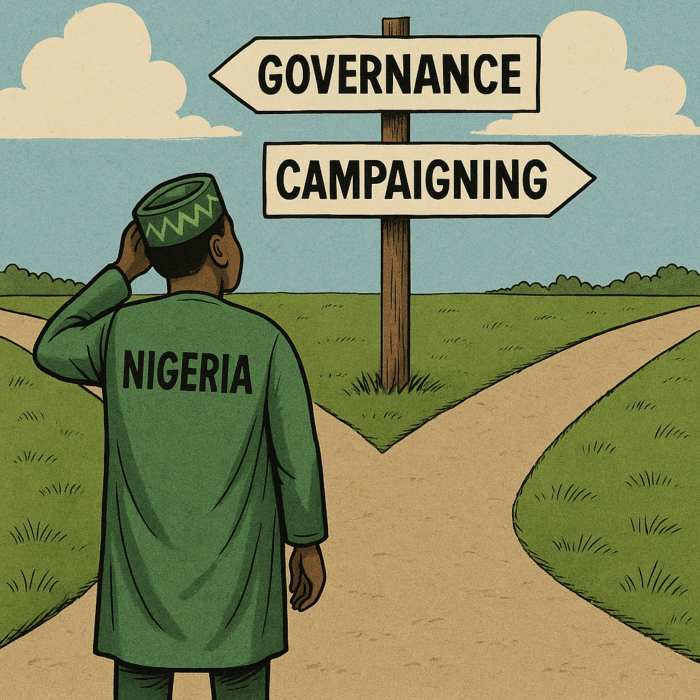
Good governance is widely recognized as a major instrument for national development. Governance, as often stated, is a decisive factor in determining whether a nation progresses or stagnates. While good governance promotes growth and stability, bad governance hinders development and undermines national potential. The level of governance practiced in a country largely determines its economic, social, and political outcomes.
Most developed nations such as the United States of America, the United Kingdom, France, and China did not attain their current status by chance. One of the key factors responsible for their success is good governance. From their early years of independence, these countries were able to establish effective leadership structures, strong institutions, and sound policies that fostered development. Over time, good governance contributed significantly to their economic growth, socio-political stability, and overall national development.
In contrast, Africa—despite being richly endowed with natural and mineral resources, fertile land, and abundant human capital—remains one of the poorest continents in the world. This raises a critical question: why has Africa failed to fully harness its vast potential? The answer largely lies in the absence of good governance. Poor leadership systems, corruption, weak institutions, and lack of accountability have continued to impede development across many African countries. This shows that resources alone are not sufficient for development; rather, effective governance is essential.
Over the years, Africa has battled what can be described as a pandemic of bad governance. Although the continent possesses a rich historical heritage and enormous developmental capacity, poor leadership has slowed its progress. Good governance can only thrive where there is a strong and competent leadership system. When leaders with integrity, vision, and capacity are entrusted with power, governance becomes people-oriented and development-driven.
This idea is aptly captured in the biblical saying, “When the righteous rule, the people rejoice.” This implies that when the right leaders—those with knowledge, competence, and moral uprightness—are in positions of authority, citizens experience peace, growth, and satisfaction. In such circumstances, public policies are people-centered, resources are properly managed, and national development becomes achievable.
Good governance prioritizes the interests and welfare of the people above personal or sectional interests. It encourages transparency, accountability, rule of law, and participation in governance. These elements are fundamental pillars of sustainable national development. Therefore, the role of good governance in national development cannot be overemphasized.
Good governance remains one of the most critical tools for achieving national development. Nations that embrace effective leadership, sound policies, and strong institutions are better positioned to achieve economic prosperity, social harmony, and political stability. This article has examined good governance as a vital tool for national development and underscores the need for African nations to prioritize good leadership as a pathway to progress.