Forgotten Dairies
The Political Economy Of Inducement: Capitalism, Imperial Vestiges, Nepotism And The Architecture Of ‘Egunje’ In Nigeria’s Democratic Experience -By Taiwo David Ashaolu
Civic consciousness must be deepened. Citizens must be educated to understand the long term implications of their political choices. The vote must be seen not as a commodity but as a responsibility. Merit based leadership must be institutionalised. Competence, vision, and integrity must replace patronage as the criteria for public office. National unity must be consciously cultivated. Diversity should be harnessed as a strength rather than exploited as a division.

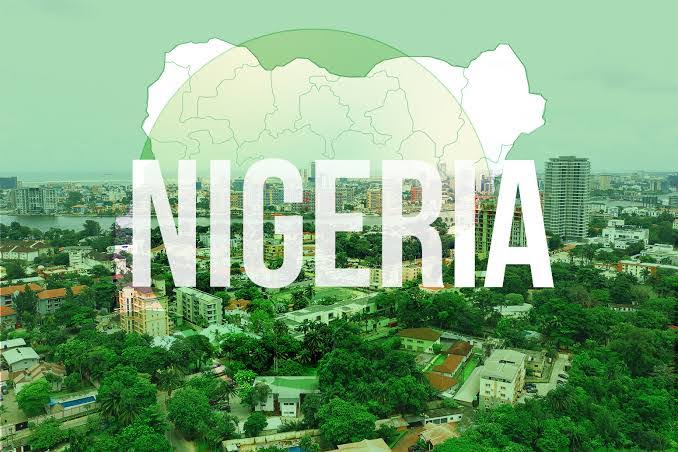
Nigeria’s democratic trajectory, though outwardly embellished with electoral rituals and civilian transitions, is profoundly encumbered by structural contradictions that undermine its very essence. Beneath the façade of participatory governance lies a complex web of inducement, economic vulnerability, and systemic manipulation. What ought to be a reflection of the collective will has increasingly degenerated into a marketplace of survival, where civic agency is subtly traded for momentary relief.
The now popular expression “urgent 2k” has assumed a symbolic status within the political lexicon. It is no longer a mere slang but a metaphor for the commodification of democratic participation. In a society burdened by widespread poverty and economic instability, the electorate is frequently compelled to exchange long term political power for short term subsistence. As the saying goes, “A hungry man has no ears.” In such conditions, rational political engagement is eclipsed by the immediacy of survival.
This reality is deeply intertwined with a distorted form of capitalism that thrives on exclusion rather than inclusion. Instead of fostering broad based prosperity, wealth is concentrated within a narrow elite, leaving the majority in a state of persistent deprivation. This economic imbalance creates a fertile ground for political manipulation. Poverty, in this sense, is not accidental. It is sustained, and at times deliberately reproduced, as a mechanism of control. “He who feeds you controls you,” as the proverb rightly asserts.
Compounding this is the lingering imprint of imperial domination. Though colonial rule has formally ended, its structural residues remain embedded in governance systems, economic arrangements, and institutional frameworks. These vestiges have produced a state that often mirrors extractive tendencies, where public resources are appropriated by a privileged minority while the masses remain marginalised. Democracy, under such conditions, becomes more performative than substantive.
The situation is further exacerbated by the entrenched practices of nepotism and tribalism. Public offices are frequently allocated based on kinship ties, ethnic affiliations, and patronage networks rather than merit and competence. This not only undermines institutional efficiency but also fragments national unity. Nigeria’s diversity, which should ordinarily be a source of strength, is instead manipulated as a tool for political advantage. “A house divided against itself cannot stand.”
Religious fanaticism adds another layer of complexity to this already fragile system. In a nation where religion occupies a central place in social life, its politicisation has proven particularly dangerous. Political actors exploit religious sentiments to mobilise support, often deepening divisions and diverting attention from governance failures. Faith becomes a tool of mobilisation rather than a force for moral guidance.
Insecurity, in its various manifestations, further reflects the failure of the state to fulfil its fundamental responsibilities. From insurgency to communal clashes and widespread criminality, the atmosphere of fear has become pervasive. Yet, even within this climate, political opportunism thrives. A fearful population is easier to pacify, less likely to demand accountability, and more willing to accept symbolic gestures as adequate governance.
At the very core of this dysfunctional system lies corruption, captured in the Yoruba expression Egunje. It is not merely an act but a culture, a deeply entrenched norm that permeates every layer of society. It sustains inefficiency, legitimises impunity, and erodes public trust. As Chinua Achebe poignantly observed, “The trouble with Nigeria is simply and squarely a failure of leadership.” Yet, leadership failure itself is sustained by a system that normalises corruption both at the top and at the grassroots.
The convergence of these forces creates a self perpetuating cycle. Capitalism without equity, imperial residues, nepotism, tribalism, religious manipulation, insecurity, and corruption all interact to produce a democracy that is structurally weak and morally compromised. Within this context, the phenomenon of “urgent 2k” thrives as both a symptom and an instrument of systemic dysfunction.
However, a deeper sociological reflection reveals that these realities are not merely isolated events but interconnected social processes. Through the lens of sociological imagination, it becomes evident that what appears as individual behaviour is largely shaped by structural conditions. The voter who accepts inducement is responding to economic hardship. The leader who engages in nepotism operates within a system that rewards loyalty over competence. The citizen who retreats into ethnic or religious identity is navigating a fragmented social order.
Therefore, any meaningful transformation must address both the structural foundations and the human agency within the system.
Economic empowerment must take precedence. A society that guarantees basic economic security will significantly reduce the vulnerability that makes political inducement effective. Institutional integrity must be restored. Electoral bodies, the judiciary, and anti corruption agencies must function independently and transparently. Without credible institutions, democracy remains hollow.
Civic consciousness must be deepened. Citizens must be educated to understand the long term implications of their political choices. The vote must be seen not as a commodity but as a responsibility. Merit based leadership must be institutionalised. Competence, vision, and integrity must replace patronage as the criteria for public office. National unity must be consciously cultivated. Diversity should be harnessed as a strength rather than exploited as a division.
Above all, there must be a deliberate rejection of Egunje. Corruption must no longer be normalised or excused. It must be confronted at both individual and collective levels. As the elders wisely say, “When the drumbeat changes, the dance must also change.” Nigeria cannot continue to operate within the same dysfunctional patterns and expect different outcomes.
In conclusion, the crisis of Nigeria’s democracy is not merely a failure of leadership but a reflection of deeper structural contradictions and collective complacency. The path forward requires a conscious awakening, a refusal to be subdued by temporary inducements, and a commitment to long term transformation. When citizens begin to assert their agency with clarity and conviction, when they reject exploitation in all its forms, and when they demand accountability as a non negotiable standard, the foundations of true democracy will begin to emerge. Only then will Nigeria transcend the era of urgent handouts, empty promises, and systemic manipulation, and move towards a future defined by justice, dignity, and sustainable development.
Amb. Comr. Taiwo David,ASHAOLU
NCE, B Sc. (A.B.U.,Zaria) TRCN, LL B. (In view)
ashaoludavid0311@gmail.com
Oke-Ero LGA,Kwara state ,Nigeria