
Breaking News
Backlash as Nigeria Moves to Reabsorb 744 Ex-Terrorists After Rehabilitation
Critics warn Nigeria’s reintegration of 744 ex-terrorists could risk security and undermine justice for victims of insurgency.

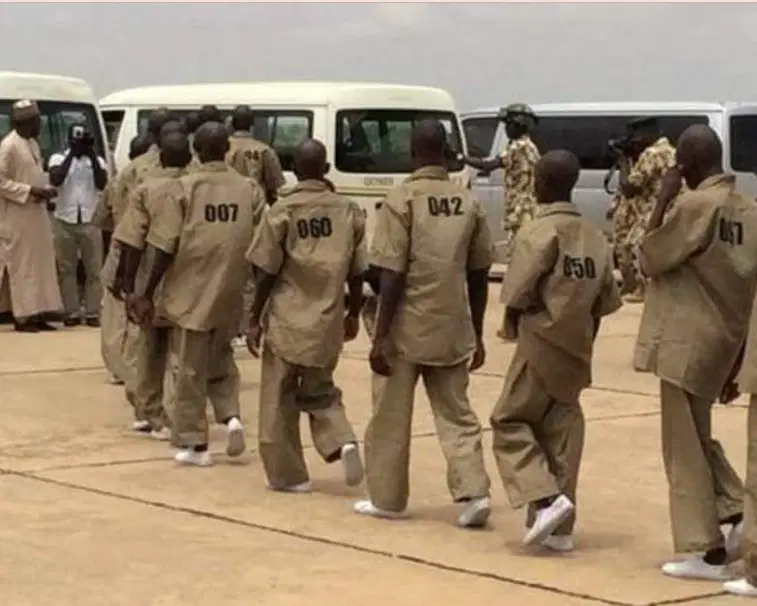
Widespread criticism has followed the Federal Government’s announcement that 744 former terrorists will be reintegrated into society after completing a six-month de-radicalisation programme under Operation Safe Corridor.
Officials say the initiative is designed to dismantle extremist networks through rehabilitation, but many Nigerians fear it could backfire by allowing insurgents to regroup, infiltrate institutions or avoid accountability.
The group—mostly from the North-East, including 597 from Borno State—also includes foreign nationals from neighbouring countries, underscoring the regional scope of the conflict.
Security and legal experts quickly raised concerns.
Rear Admiral Dickson Olisemelogor (retd.) argued that the programme confuses disengagement with true de-radicalisation.
“Deradicalization entails changing the person’s ideology… As far as I am concerned, most of the so-called repentant Boko Haram boys are not de-radicalised,” he said, warning that some may return to violence or infiltrate security agencies.
A senior military officer, speaking anonymously, described the policy as flawed.
“After all that, you want to reintegrate them into the society where they have their former members?” he asked, adding that extremist sympathies exist even within official structures.
Ambassador Mary Abyomi-Fatile called the approach “very wrong,” insisting that justice must come first.
“If the cost is not high enough, others will see it as a loophole rather than a warning,” she said.
Among victims, anger and frustration remain palpable.
“What happens to the families of those killed… Who refunds the ransom paid?” asked Aminat Saudi, who lost relatives in terrorist attacks.
Human rights advocate Okechukwu Nwagunma acknowledged that reintegration is a recognised global strategy but warned of serious gaps in Nigeria’s approach, including lack of transparency, weak accountability mechanisms, and insufficient support for victims.
“Reintegration cannot succeed without community buy-in,” he said.
Legal expert Dr Maxwell Opara strongly criticised the programme, calling it unlawful and announcing plans to challenge it in court.
“Once a crime is committed, our laws are there… This is an epitome of fraud,” he said, questioning its compliance with Nigerian legal standards.
Across the board, critics argue that the policy risks sending the wrong message—that violent offenders may eventually be rehabilitated without facing full consequences—while victims remain in hardship.
However, some stakeholders believe reintegration should not be dismissed entirely. They argue that, if properly managed with strict monitoring, transparency and a focus on justice, it could help reduce insurgency over time.
The debate ultimately reflects a deeper national dilemma: how to balance peace-building with justice in a country still grappling with the human and security costs of a prolonged insurgency.
Africans Angle News























You must be logged in to post a comment Login