Africa
Governor Uba Sani’s Resolute Commitment On Rural Development -By Abdulrashid Sani Gimi
Surpassing its economic significance, the ₦100 million per ward programme carries substantial implications for governance culture. It embodies a leadership philosophy rooted in listening, inclusion, and effective service delivery. By harmonising fiscal allocation with citizen participation, Governor Uba Sani demonstrates that responsive, people-centred governance is achievable and sustainable within the framework of contemporary democratic institutions, strengthening public trust in government initiatives.

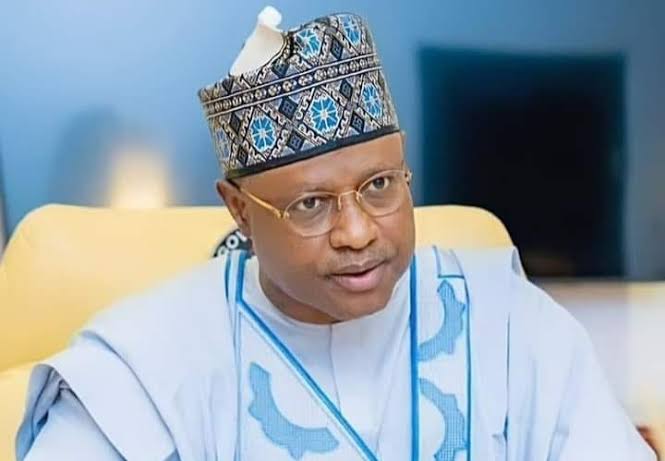
As Kaduna State steadily advances into a transformative phase of socio-economic development, the need for strategies that are inclusive, responsive, and firmly centred on the citizenry has become increasingly evident. At a time when the populace expects not merely policy pronouncements but tangible improvements in their daily lives, governance anchored at the grassroots remains the most reliable pathway to sustainable progress. Within this context, Kaduna State’s 2026 fiscal agenda, under the leadership of Governor Senator Uba Sani, CON, stands as a defining milestone in the state’s developmental journey.
The formal enactment of the ₦985.9 billion 2026 Appropriation Bill signifies far more than the routine passage of a budget. It represents a deliberate reimagining of governance – a philosophy that places communities, rather than distant bureaucratic structures, at the core of public policy formulation and development planning. This approach underscores the administration’s conviction that governance achieves its highest efficacy when citizens actively participate in determining and shaping their own developmental priorities.
The 2026 budget is founded on fiscal prudence and a resolute development-oriented framework. Of the total projected expenditure of ₦985.9 billion, a substantial ₦698.9 billion, equivalent to 70.9%, is earmarked for capital projects. This allocation prioritises the expansion of infrastructure, the stimulation of economic growth, and the enhancement of service delivery across key sectors of the state economy. In comparison, recurrent expenditure is set at ₦287.0 billion, accounting for 29.1% of total outlay. This measured distribution demonstrates the administration’s dedication to long-term productive investment while maintaining careful oversight of routine administrative expenditure.
Central to the 2026 fiscal framework is an unprecedented dedication to decentralised development. At the heart of this initiative is a historic allocation of ₦100 million to each of Kaduna State’s 255 wards, representing a total direct investment of ₦25.5 billion at the community level. As highlighted by the Commissioner for Planning and Budget, Hon. Mukhtar Ahmed Morovia, during a post-budget briefing, this initiative constitutes a marked departure from longstanding centralised models of resource distribution that have often limited the reach and effectiveness of public spending.
More importantly, the programme reflects a profound shift in governance priorities. It elevates principles of equity, participatory governance, and community ownership as fundamental pillars of sustainable development. By empowering wards to identify and implement projects tailored to their unique needs, the administration recognises that development is most impactful when it reflects local realities and is informed by lived experiences. In doing so, it reaffirms the principle that enduring progress is best driven from the grassroots upward, ensuring that every citizen can directly contribute to shaping their environment.
Governor Uba Sani’s leadership philosophy consistently places substance above symbolism. By channelling substantial resources directly to wards, his administration seeks to redress historical imbalances that have long marginalised grassroots communities in budgetary processes. Under this model, development is no longer solely mediated through central administrative layers but is firmly anchored in the immediate needs and aspirations of local populations, offering a practical demonstration of democratic decentralisation in action.
A critical institutional support for this decentralised approach is the Ward Development Committee (WDC) system. Through these committees, communities are empowered to deliberate, prioritise, and recommend projects for funding. The ₦100 million assigned to each ward will be deployed transparently, with implementation governed by clearly defined procedures and oversight from relevant Ministries, Departments, and Agencies (MDAs). This framework enhances accountability, strengthens community ownership, and ensures the long-term sustainability of development interventions while fostering civic engagement.
The design of the ward-level intervention is intentionally strategic and socially responsive. Allocated funds are channelled towards vital sectors such as education, healthcare, agriculture, and social development, all of which bear direct consequences for human welfare and economic resilience. At the macro level, these priorities are reinforced by the broader budgetary structure, with education receiving the largest single allocation – 25% of total expenditure – in accordance with global best practices and the administration’s firm belief that human capital development underpins sustainable growth.
Surpassing its economic significance, the ₦100 million per ward programme carries substantial implications for governance culture. It embodies a leadership philosophy rooted in listening, inclusion, and effective service delivery. By harmonising fiscal allocation with citizen participation, Governor Uba Sani demonstrates that responsive, people-centred governance is achievable and sustainable within the framework of contemporary democratic institutions, strengthening public trust in government initiatives.
In the long run, the 2026 fiscal strategy transcends conventional budgetary practice. With a total outlay of ₦985.9 billion, a pronounced emphasis on capital investment, and a historic ₦25.5 billion dedicated to direct ward-level allocations, the administration is redefining the interface between government and citizens. Kaduna State is not simply allocating resources; it is institutionalising trust, civic participation, and shared responsibility within governance structures. Kaduna is rising, one ward at a time, and the approach promises to inspire other states to adopt similar people-centred developmental strategies.
Governor Uba Sani’s resolute commitment to rural development highlights the transformative potential of decentralised governance. By prioritising local realities, empowering communities, and ensuring that fiscal policies directly impact citizens’ lives, the administration sets a benchmark for inclusive, sustainable development. This approach underscores the principle that enduring progress is best achieved from the grassroots upwards, where the voices and needs of citizens shape public policy and investment, fostering a culture of accountability and civic pride.
Abdulrashid Sani Gimi, PhD, is a Kaduna-based political communication expert and public affairs analyst.