Forgotten Dairies
How Governor Abba Yusuf humbled Kwankwaso: A Turning Point in Kano Politics -By Abba Dukawa
Leaders are judged by outcomes, not slogans. Governor Abba Kabir Yusuf’s decisions reflect engagement with the present and investment in the future, not a desire to erase the past. When service replaces ego and intention is clear, change is not betrayal. It is progress.


In every democratic society, the essence of representation lies not in the title of office but in the responsibility it carries. A truly effective representative understands that public office is not a privilege to be enjoyed, but a trust to be honoured—one bestowed by the people and sustained through service, accountability and results. Citizens, in turn, measure public servants not by rhetoric but his outcomes. His look for visible development, thoughtful advocacy and prudent management of public resources. These are the enduring benchmarks of quality representation.
Yet, democracy sometimes produces what may be described as the “accidental public servant”—individuals who attain office without the preparation, vision or commitment required for meaningful governance. In such instances, leadership becomes reactive rather than purposeful, often resulting in missed opportunities, weak engagement with constituents and stagnation in addressing pressing community needs.
In the annals of Kano politics, few events have signaled a shift in power and moral authority as clearly as Governor Abba Kabir Yusuf’s emergence as an independent political force, challenging the long-standing dominance of Senator Rabiu Musa Kwankwaso. Once the undisputed “godfather” of Kano politics, Kwankwaso saw his authority humbled as Abba Yusuf asserted his mandate directly from the people, refusing to be constrained by the expectations of patronage politics.
Kwankwaso’s political machinery, known as Kwankwasiyya, thrived on loyalty and personal allegiance. That state Governor, legislators, and appointees were expected to defer to his directives, subordinating democratic mandates to the desires of their patron.
Abba Yusuf, elected on his own merits and vision for Kano, refused to operate as a proxy. By governing according to his own judgment and the explicit interests of his constituents, he silently challenged the godfather system head-on, proving that electoral authority resides not in patrons, but in the will of the people.
The Scholarship Paradox Revisited
Kwankwaso’s scholarship program, long hailed as a crowning achievement, exemplified his method of converting gratitude into political obligation. Beneficiaries were often expected to act as instruments of his continued control.
Abba Yusuf, however, rose above this culture of conditional loyalty. By appointing capable individuals based on merit rather than patronage, he exposed the transactional nature of Kwankwaso’s legacy, demonstrating that genuine service and governance could exist without coercive moral leverage.
Yusuf’s leadership also redefined political success in Kano. Where Kwankwaso measured influence through obedience and orchestrated loyalty, Yusuf showed that credibility and moral authority stem from transparency, accountability, and service to the electorate.
By making decisions in the public interest even when they contradicted Kwankwaso’s expectations he proved that a leader’s moral compass is validated not by followers’ gratitude, but by the alignment of governance with the welfare of the people.
The Decline of the Political Godfather: the rise of Abba Kabir Yusuf signals a crucial lesson for Kano: the era of unquestioned political godfathers is waning.
Kwankwaso’s long held influence has been tested, and the electorate has seen the efficacy of principled leadership over patronage politics. Yusuf’s success humbled the former godfather not with attacks or rhetoric, but through governance itself a quiet yet unmistakable demonstration of moral and political superiority.
In this unfolding chapter of Kano’s democracy, Abba Yusuf has shown that leadership is earned not by manipulating loyalty, but by honoring the trust of the people—a lesson Kwankwaso, for all his political skill, now confronts starkly.
“If Abba cannot humble him, how can Senator Kwankwaso, the self-styled godfather of Kano politics, now escort former Deputy Governor Nasiru Gawuna—the very man he once disparaged, ridiculed, and publicly insulted for remaining loyal to the APC—to his ward to register as a member of the ADC.
The spectacle is not merely ironic; it is a vivid illustration of political opportunism at its rawest. A man who spent years undermining and vilifying a former ally now seeks to parade him as a symbol of influence, as if loyalty and principles can be bought or rewritten at will.
For the people of Kano, this is more than hypocrisy it is a betrayal of the trust and moral authority Kwankwaso claims to embody.
Ironically, Kwankwaso is no stranger to political betrayal. Many accuse him of perfecting the very conduct he now condemns. Abba Yusuf dismantled Kwankwaso’s arrogance, and history appears to be repeating itself: a leader who once relied on alliances has repeatedly discarded them after consolidation, leaving critics to question his moral authority.
This pattern extended beyond Kano. In 2019, Kwankwaso was accused of distancing himself from Atiku Abubakar after securing his political interests—a move widely seen as a breach of trust. His long history of party switching from PDP to APC, back to PDP, then to NNPP, and now ADC further undermines his credibility when criticizing defections, especially when his protégés have followed the same path.
Governor Yusuf’s silence since leaving the NNPP speaks volumes. While he denies being controlled by anyone, few dispute that Kwankwaso shaped his political career. His loyalty was once unwavering, often at personal cost.
Yet loyalty to Kwankwaso has rarely guaranteed lasting trust, as many former allies eventually broke away after enduring marginalization.
Kwankwaso would do well to avoid coded messages that might provoke damaging disclosures. Allegations of procurement irregularities in Kano State have already raised public concern. Though investigations continue and denials have been issued, lingering silence only fuels suspicion. Political battles fought through insinuation and intimidation often spiral beyond control.
Ultimately, the erosion of Kwankwaso’s political dominance seems driven less by external enemies than by internal decay. Movements built on control rather than mutual respect rarely endure. What is unfolding in Kano may not be betrayal at all it may simply be karma, delayed but decisive.
Leaders are judged by outcomes, not slogans. Governor Abba Kabir Yusuf’s decisions reflect engagement with the present and investment in the future, not a desire to erase the past. When service replaces ego and intention is clear, change is not betrayal. It is progress.
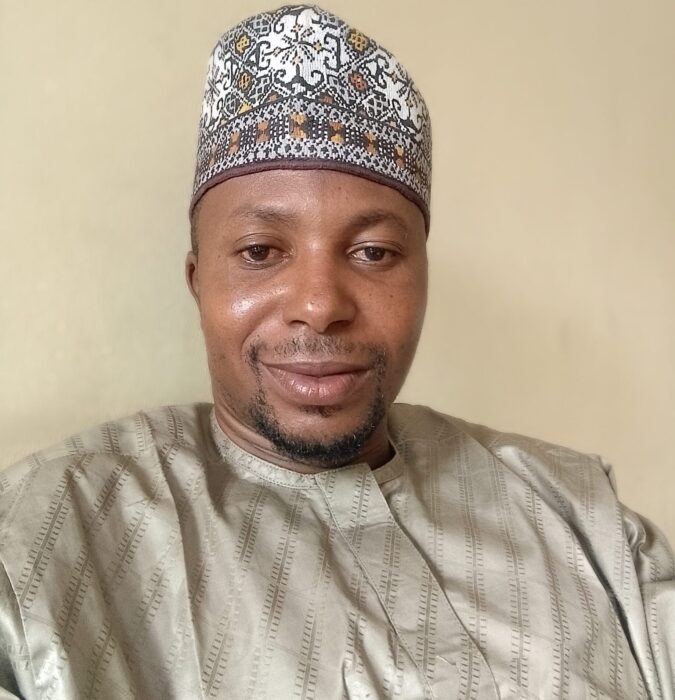
Dukawa write it from Kano can be reached at abbahydukawa@gmail.com