Africa
How Not To Impeach A Governor: Further Reflections On Rivers’ Lawmakers’ Move To Impeach Fubara -By Isaac Asabor
If impeachment must happen, it must be done right, soberly, transparently, and with unmistakable constitutional justification. What Rivers is currently witnessing is the opposite. And that is precisely why this moment will likely be remembered not as a triumph of accountability, but as a cautionary tale in how not to impeach a governor.

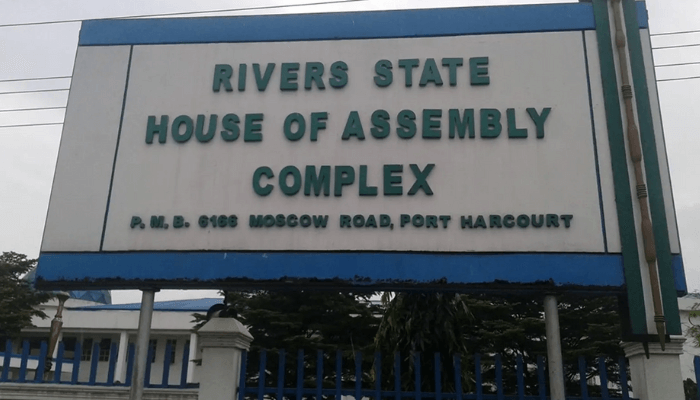
Impeachment is not a matter of political convenience, nor is it a bargaining chip or a weapon to be brandished whenever a legislature feels slighted or a political godfather feels ignored. It is the Constitution’s last resort, a grave and disruptive mechanism reserved strictly for clear cases of gross misconduct, not for settling scores or enforcing personal loyalty. Judged by this standard, the latest move by the Rivers State House of Assembly against Governor Siminalayi Fubara offers a textbook example of how impeachment should not be conducted, and it provides ample justification for a reflective opinion such as this on how not to impeach a governor.
This is not a defence of Fubara’s policies or personality. It is a defence of constitutional seriousness. What is unfolding in Rivers State is not a principled attempt at accountability; it is a political spectacle that cheapens impeachment, weakens democratic norms, and exposes the legislature as an arena for factional warfare rather than public service.
First, context matters. This is not the first time impeachment has been dangled over Fubara’s head. It is not even the second. Repeated impeachment attempts tell a story on their own. Genuine constitutional violations do not require multiple rehearsals to be convincing. When lawmakers must keep returning to the same weapon, it suggests not the persistence of justice, but the persistence of a political agenda looking for the right moment to strike.
Impeachment, by design, is extraordinary. It is meant to be rare because of the instability it introduces into governance. A legislature that toys with it casually sends a clear signal: impeachment is no longer about law, but leverage. Once that threshold is crossed, every governor becomes a hostage to legislative moods and external political pressures.
The grounds being floated for Fubara’s impeachment only deepen this concern. Allegations revolving around budgetary disputes, procedural disagreements, and institutional friction fall squarely within the normal, if messy, workings of democratic governance. Disagreement between the executive and legislature is not misconduct; it is politics. To stretch such disagreements into “gross misconduct” is to weaponize ambiguity and invite abuse.
If procedural infractions and political disagreements qualify as impeachable offences, then no governor in Nigeria is safe. Every budget delay, every veto, every dispute over legislative authority becomes a potential trigger for removal. That is not constitutional accountability; it is legislative tyranny.
The Rivers saga also cannot be separated from the broader political struggle surrounding the state. The shadow of former governor and current power broker Nyesom Wike looms large over the crisis. Attempts at reconciliation brokered by President Bola Tinubu have repeatedly collapsed, each failure reopening old wounds and escalating tensions. In this context, the impeachment move appears less like an independent legislative judgment and more like an extension of a wider power struggle.
This is where the process loses whatever moral authority it claims. Impeachment driven or even perceived to be driven, by external political interests is dead on arrival in the court of public opinion. Legislators are elected to represent constituencies, not to serve as foot soldiers in elite feuds. When impeachment becomes a proxy war between political heavyweights, the constitution becomes collateral damage.
Public reaction in Rivers State underscores this legitimacy crisis. Civil society groups, elders, traditional rulers, and political organizations have openly warned against the impeachment move. Some have gone further, threatening recall processes against lawmakers who persist. This backlash is not accidental. It reflects a widely held belief that the impeachment effort is disconnected from public interest and rooted instead in elite maneuvering.
Legislators often forget a basic truth: constitutional power without public legitimacy is fragile. Yes, the House of Assembly has the authority to initiate impeachment. But authority exercised recklessly erodes trust, and trust is the currency that sustains democratic institutions. When the people view impeachment as a political ambush rather than a moral necessity, the legislature loses moral standing, even if it ticks procedural boxes.
Supporters of the impeachment argue that stopping the process undermines the rule of law. That argument is dishonest. The rule of law is not upheld by rushing through a flawed process; it is upheld by restraint, clarity, and fairness. Due process is not a slogan, it is a discipline. It requires clear allegations, credible evidence, impartial investigation, and a genuine opportunity for defense. Anything less is rule by technicality, not rule of law.
Against the backdrop of the forgoing, it is germane to recall in this context that Nigeria’s post-1999 political history is littered with gubernatorial impeachments that appeared decisive at the time but were later undone by the Courts. For instance, in 2006 alone, three governors, Peter Obi of Anambra State, Rashidi Ladoja of Oyo State, and Joshua Dariye of Plateau State, were removed in controversial circumstances, only for appellate courts to nullify the impeachments after finding that constitutional procedures were brazenly violated.
In each case, lawmakers either ignored due process or invented shortcuts to achieve predetermined political outcomes. A similar fate befell the impeachment of Adamawa State Governor, Murtala Nyako, in 2014, which the Court of Appeal, and later the Supreme Court, struck down for denying him fair hearing. These rulings underscored a consistent judicial position: impeachment is not validated by legislative enthusiasm or political consensus, but by strict compliance with the Constitution.
In a similar vein, deputy governors have been even more frequent victims of this abuse, with the Courts repeatedly stepping in to reverse their unlawful removals. In Ondo State, Ali Olanusi was reinstated after the Court of Appeal nullified his impeachment; in Enugu, the removal of Sunday Onyebuchi was declared unconstitutional by the High Court; while Sani Abubakar Danladi’s impeachment in Taraba and Jude Agbaso’s in Imo suffered the same judicial fate.
Most recently, the impeachment of the then Edo State Deputy Governor, Philip Shaibu, who is now the Director-General and Chief Executive Officer of the National Institute For Sports (NIS), was voided by the Federal High Court and upheld on appeal, reinforcing the point that deputy governors are not expendable political casualties. Together, these cases expose a troubling pattern of legislative excess and serve as a standing warning that impeachment, when stripped of constitutional rigor, is merely a political stunt waiting to be overturned by the courts.
Given the foregoing cases, it is germane to recall that governors returned to office vindicated, while legislatures were left exposed as reckless and partisan. To put it in a cautionary tone in this context, it is expedient to remind the lawmakers that are hell bent on impeaching Fubara that Rivers risks walking straight into that same judicial quagmire.
Beyond Rivers, the implications are national. If impeachment is normalized as a tool for political enforcement as governors across the country will govern defensively, constantly appeasing legislatures and godfathers rather than focusing on policy and service delivery. Thus, executive authority will weaken, legislative overreach will expand, and governance will grind into permanent crisis mode.
Democracy cannot survive that environment. Stability does not mean the absence of accountability; it means accountability exercised with discipline and integrity. A legislature that truly wants to hold an executive accountable has many tools at its disposal, oversight hearings, audits, legislative inquiries, public reporting. Impeachment is the final step, not the opening gambit.
If Rivers lawmakers believe Governor Fubara has committed impeachable offences, the burden is on them to prove it beyond political rhetoric. That means stating specific constitutional violations, backing them with verifiable evidence, insulating the process from partisan interference, and allowing transparency at every stage. Anything short of that confirms what many already suspect that this is not about misconduct, but control.
There is also a moral dimension lawmakers must confront. Rivers State is not just a chessboard for elite politics; it is home to millions of citizens who want stability, development, and competent governance. Endless political brinkmanship serves none of those interests. It drains administrative energy, scares away investment, and deepens public cynicism about democracy itself.
In fact, impeachment, when mishandled, does not strengthen democracy, it corrodes it. It teaches citizens that elections are provisional, that mandates can be revoked by backroom deals, and that constitutional language can be bent to suit raw power. That lesson is dangerous, especially in a country still struggling to build faith in democratic institutions.
The Rivers State House of Assembly still has a choice. It can either proceed down this path or further entrench the perception that impeachment is a political weapon, or it can step back, de-escalate tensions, and recommit to serious, evidence-based oversight. Failing to the fair and just over the impeachment, it is germane to remind them in this cautionary piece that history will not be kind to lawmakers who confuse power with wisdom.
If impeachment must happen, it must be done right, soberly, transparently, and with unmistakable constitutional justification. What Rivers is currently witnessing is the opposite. And that is precisely why this moment will likely be remembered not as a triumph of accountability, but as a cautionary tale in how not to impeach a governor.