National Issues
I Stand With IGP Egbetokun, We Can’t Afford To Have Violent Protests In Nigeria, by Adewole Kehinde

“If you want to make peace with your enemy, you have to work with your enemy. Then he becomes your partner.” — Nelson Mandela
In Nigeria, nonviolent protest is allowed and protected under the constitution. However, questionable protests include those that are undefined, have anarchist undertones and have anonymous organisers. Please make sure this message is understood.
While it’s true that the economy is difficult, it would be foolish to let people who wish to see the system fall prey to this pretence.
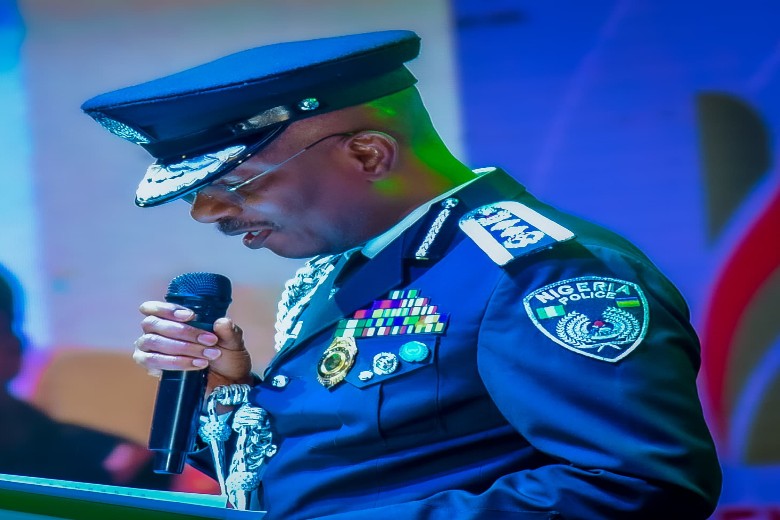
On Monday, the Inspector General of Police, IGP Kayode Egbetokun, rolled out the negative effects of violent protests while reiterating that the country cannot afford violent protests again.
According to a press statement by the Force PRO, ACP Adejobi, he quoted the IGP to have said, “It is not only in Nigeria that there is hardship. It is a global meltdown. Is the government doing anything about it? Yes! This is what a responsive government will do.”
I quite agreed with the Inspector General of Police that the Federal Government has been responsive to the hardships faced by Nigerians.
In the past year of his administration, President Tinubu signed the 2023 Electricity Bill into law to decentralize electricity generation, transmission, and distribution in Nigeria. President Tinubu also signed the Nigeria Data Protection Law in 2023, establishing a legal framework for safeguarding personal information and promoting data protection practices in Nigeria.
The Nigerian government also demonstrated political will and prioritized the rehabilitation of Nigeria’s seaports and the implementation of policies and programmes that delivered direct and targeted economic relief to Nigerians. Through such initiatives as grants and cash transfers, President Tinubu approved N50 billion as nano-grants of N50,000 each to 1,300 small businesses in all the 774 local government areas in Nigeria.
The president also approved the Renewed Hope Infrastructure Fund to bridge Nigeria’s funding gap of $25bn per year in infrastructure. The fund will focus on road, rail, agriculture, ports, and aviation.
On social investment, President Tinubu repositioned the National Social Investment Programme (NSIP, to ensure it delivers maximum value to the intended beneficiaries by eliminating middlemen in the process. He approved the takeoff of the first phase of the Consumer Credit Scheme that will enable Nigerians to access goods and services upfront and pay over time. This is to facilitate crucial purchases, such as homes, vehicles, education, and healthcare essentials to pursue life aspirations.
This vision of targeted economic relief also led to the enactment of the Student Loans Access to Higher Education law this year. This is in keeping with President Tinubu’s declaration that no Nigerian student, regardless of his background, will be excluded from obtaining quality education.
Targeting increased gas production to ensure the supply of about 500 million standard cubic feet of gas per day, the Tinubu administration resuscitated three out of the seven gas processing plants across the country to improve value from the nation’s gas assets while eliminating gas flaring. This policy will provide gas to the market by the middle of this year for electricity generation and industrial needs.
The Tinubu administration’s Presidential Compressed Natural Gas Initiative offered more affordable alternatives to petrol and diesel for transporters and commuters to ease the burden of the increase in petrol cost after the removal of subsidies.
In the health sector, President Tinubu directed the redesigning of the Basic Health Care Provision Fund as the foundational basis for sector-wide reforms that attracted the infusion of $2.5 billion into the financing of the national primary health care system in the country.
Also, on Monday at the State House in Abuja, in the presence of Senate President Godswill Akpabio and other National Assembly leaders, President Bola Tinubu signed the new minimum wage bill into law. The new law provides a national minimum wage of N70,000 for both the public and private sectors.
These various interventions by President Tinubu in their first year in office created an emerging consensus among Nigerians that President Tinubu has a clear intention on the path he is taking Nigeria.
I must commend the Inspector General of Police for reaffirming the Nigeria Police Force’s commitment to protecting the rights of citizens while maintaining law and order.
Adewole Kehinde is the publisher of Swift Reporters and can be reached via 08166240846. email: kennyadewole@gmail.com

![Gaza has been under heavy Israeli bombardment for weeks [File: Ohad Zwigenberg/AP]](https://www.africansangle.com/wp-content/uploads/2023/10/Gaza-has-been-under-heavy-Israeli-bombardment-for-weeks.jpg)