Africa
If You Live in a Glass House, Don’t Throw Stones: Nemesis and the Legal and Political Battles Surrounding Nasir El-Rufai -By Daniel Nduka Okonkwo
The unfolding drama reflects the ancient concept of nemesis, not merely as an enemy, but as an inevitable reckoning. In political life, nemesis may take the form of legal scrutiny, public judgment, or the erosion of influence once thought permanent. Whether El-Rufai’s current challenges represent political persecution, legitimate accountability, or some combination of both remains a matter for the courts and the historical record.

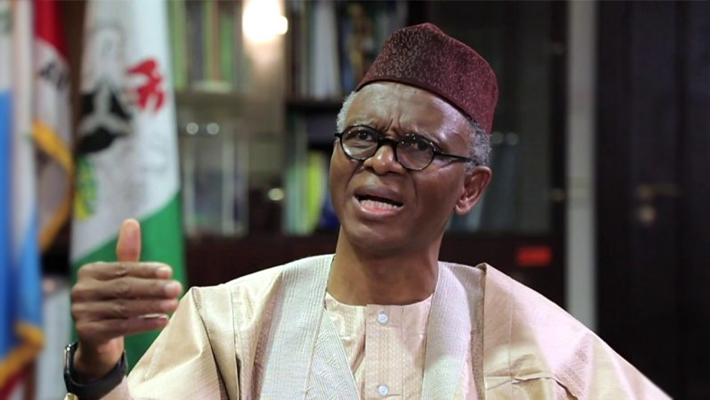
Nothing lasts forever, a truth as old as time, reminding humanity that both joy and suffering are fleeting. Yet in the corridors of power, permanence is often pursued through deception. Spin, that polite word for manipulation, cloaks itself in respectability while bending facts into propaganda designed to sway the masses. History has repeatedly shown that when leaders abandon empathy for ambition, when power becomes an end in itself, governance risks mutating into tyranny. Such figures, whether vindicated or condemned by history, often become symbols of a deeper struggle between authority and accountability.
These tensions now converge around Nasir El-Rufai, the former governor of Kaduna State, whose career remains one of the most consequential and controversial in contemporary Nigerian politics. His legacy, once defined by reformist zeal and administrative assertiveness, is now overshadowed by a web of legal challenges, political accusations, and counter-accusations that reemphasize the fragile balance between power and justice.
At the center of the latest developments is El-Rufai’s application before a Nigerian court seeking to quash criminal charges filed against him by Nigeria’s Department of State Services (DSS). In his motion, he asked the court to strike out the charge dated February 16, 2026, arguing that it discloses no offence known to law and constitutes a gross abuse of judicial process. He further requested to be discharged because the allegations fail to establish a prima facie case.
In a dramatic escalation, the former governor is also seeking ₦2 billion in damages against the DSS, accusing the agency of abusing and misusing the criminal justice system to harass and embarrass him. His legal team contends that the charges represent not legitimate prosecution but unconstitutional persecution, reflecting what they describe as the weaponization of state institutions.
The case has unfolded against the broader backdrop of longstanding allegations tied to El-Rufai’s tenure as Kaduna State governor from 2015 to 2023. Over the years, victims’ groups, political opponents, and civil society organizations have accused his administration of human rights violations, financial misconduct, and political intimidation. El-Rufai has consistently denied these allegations, describing them as politically motivated attempts to tarnish his reputation.
Among the most serious and internationally scrutinized incidents was the December 2015 Zaria clash between the Nigerian Army and members of the Islamic Movement of Nigeria (IMN), which resulted in the deaths of hundreds of followers of the group and relatives of its leader, Ibrahim El-Zakzaky. The incident, which occurred during El-Rufai’s tenure, was submitted to the International Criminal Court, raising questions about state responsibility, although the governor himself was not criminally convicted in connection with the killings.
His administration was also criticized over persistent violence in Southern Kaduna, where communities experienced cycles of deadly communal clashes. Critics accused his government of failing to protect vulnerable populations, particularly Christian communities. El-Rufai rejected claims of genocide, arguing that the violence reflected longstanding communal conflicts rather than deliberate state policy.
Other controversies included the disappearance of political activist Abubakar Idris, widely known as Dadiyata, in 2019, an incident that remains unresolved and continues to generate public concern. His administration was further accused of suppressing protests and dissent through force, allegations that authorities at the time denied or justified as necessary for maintaining order.
Financial allegations have added another layer of legal jeopardy. A 2024 report by an ad hoc committee of the Kaduna State House of Assembly accused El-Rufai’s administration of misappropriating ₦423 billion through the diversion of public funds, abuse of office, and money laundering. The committee also alleged reckless borrowing practices that left Kaduna State burdened with significant debt obligations and claimed that contracts were awarded without due process.
Following these recommendations, Nigeria’s Economic and Financial Crimes Commission launched an investigation and reportedly detained the former governor for questioning. El-Rufai has denied wrongdoing and has not been convicted of any financial crimes.
His tenure was also marked by controversial urban renewal policies that involved widespread demolition of homes, markets, and informal settlements, actions the government defended as necessary for modernization but which critics said displaced vulnerable citizens without adequate compensation or regard for court orders. His administration also dismissed thousands of public workers and traditional rulers, decisions that supporters described as reforms but opponents characterized as arbitrary and unjust.
Yet the legal battles surrounding El-Rufai extend beyond retrospective scrutiny. In recent weeks, he has launched explosive allegations against senior figures in Nigeria’s national security establishment. He claimed that individuals linked to the Office of the National Security Adviser tapped the phone of National Security Adviser Nuhu Ribadu and alleged that the office imported dangerous chemical weapons. He further accused Ribadu of conspiring with Kaduna State Governor Uba Sani to destroy his political career and imprison him for life.
Even though these claims, which have not been substantiated in court, represent a dramatic escalation in what observers see as a widening political conflict. They also underline how personal rivalries and institutional power struggles can blur the line between legal accountability and political contestation.
The unfolding drama reflects the ancient concept of nemesis, not merely as an enemy, but as an inevitable reckoning. In political life, nemesis may take the form of legal scrutiny, public judgment, or the erosion of influence once thought permanent. Whether El-Rufai’s current challenges represent political persecution, legitimate accountability, or some combination of both remains a matter for the courts and the historical record.
As Bob Marley once warned, “Man to man is so unjust… your worst enemy could be your best friend, and your best friend your worst enemy.” His words resonate beyond music, capturing the fragile and often treacherous nature of power.
For Nigeria, Africa’s most populous nation and one of its most influential democracies, the stakes extend beyond one man. The outcome of these cases will test the strength of its institutions, the independence of its judiciary, and its commitment to the principle that no individual, however powerful, stands above the law.
Daniel Nduka Okonkwo is a Nigerian investigative journalist, publisher of Profiles International Human Rights Advocate, and policy analyst whose work focuses on governance, institutional accountability, and political power. He is also a human rights activist and advocate. His reporting and analysis have appeared in Sahara Reporters, African Defence Forum, Daily Intel Newspapers, Opinion Nigeria, African Angle, and other international media platforms. He writes from Nigeria and can be reached at dan.okonkwo.73@gmail.com.