Forgotten Dairies
Imagining What Nigeria Might Have Become If Murtala Mohammed’s Vision Had Lived -By Isaac Asabor
As Nigerians prepare once again to remember Murtala Mohammed, the most fitting tribute is not another wreath or slogan. It is an honest reckoning with the values he embodied, and the uncomfortable truth that Nigeria did not fail because he ruled too briefly, but because it chose, repeatedly, not to live by the standards he tried, however briefly, to impose.

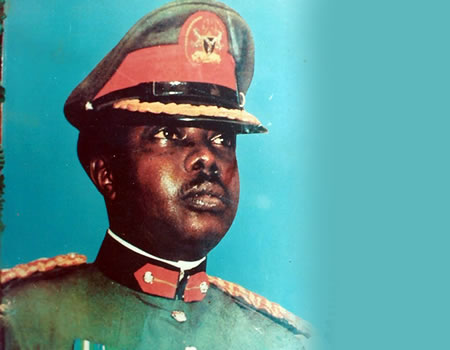
In less than a month from today, Nigerians will once again mark the memorial of General Murtala Ramat Mohammed. As wreaths are laid and tributes repeated, the occasion will invite more than ceremonial remembrance. It should provoke a harder, more uncomfortable reflection: not merely who Murtala Mohammed was, but what Nigeria might have become had his vision survived him. In just 200 days in office between 1975 and 1976, Mohammed attempted a radical reset of the Nigerian state. His assassination did not only end a life; it abruptly terminated a governing philosophy anchored on discipline, urgency, accountability, and national purpose. Had that philosophy been sustained, refined, and institutionalized by his successors, Nigeria today might be almost unrecognizable, in the best possible sense.
This is not nostalgia masquerading as history. It is a sober examination of a national path briefly taken and then deliberately abandoned.
When Murtala Mohammed assumed power in July 1975, Nigeria was awash with oil money but drowning in indiscipline. The civil war had ended, yet the peace dividend had produced complacency rather than renewal. The civil service had grown bloated, corruption was spreading unchecked, and leadership had lost its sense of urgency. Mohammed’s response was blunt and uncompromising: shock the system back to life.
He rejected gradual reform, convinced that delay only deepens decay. Within weeks, his government dismissed or compulsorily retired over 10,000 public officials for incompetence, corruption, or abuse of office. The purge was crude, legally imperfect, and deeply unsettling, but that was precisely its intent. For the first time in years, the Nigerian state sent a clear message: public office is not a birthright.
Had this ethos been embedded in law and practice rather than treated as a one-off spectacle, Nigeria might have built a durable culture of accountability. Instead, the purge became an isolated episode. The old order soon returned, wiser, more cautious, and far more entrenched. Today’s Nigeria, where corruption is often rationalized rather than punished, reflects what happens when discipline is introduced briefly and then abandoned.
Murtala Mohammed’s personal example mattered. He lived modestly, spoke plainly, and governed with urgency. Leadership at the top sets the moral temperature of a nation. Had his successors maintained that standard, corruption might never have evolved into the sophisticated, systemic enterprise it later became.
In such an alternative Nigeria, public funds would more often translate into public infrastructure rather than private wealth. Ministries would function as institutions, not personal estates. Procurement scandals would be rare exceptions, not routine headlines. Public trust, now dangerously eroded, might have endured.
In fact, Nigeria’s failure was not Mohammed’s decisiveness; it was the refusal of those who followed him to convert decisiveness into institutions.
Economically, Mohammed showed a foresight Nigeria would later abandon. Despite booming oil revenues, he warned against waste, inflation, and unchecked expansion of the public sector. His policies pointed toward fiscal discipline and private-sector-led growth.
Had that economic direction been sustained, Nigeria might have diversified long before oil price volatility exposed its fragility. Agriculture could have remained a central pillar rather than a neglected sector periodically rediscovered during crises. Manufacturing might have developed depth and competitiveness. Nigeria’s economy today could have been productive, resilient, and far less vulnerable to crude oil shocks.
Instead, oil rents became a shortcut around hard reforms. The result is a country that imports excessively, produces insufficiently, and repeatedly stumbles into foreign exchange crises that undermine planning and growth.
One of Mohammed’s least celebrated but most consequential plans was the restructuring of the Nigerian military. After the civil war, the armed forces had expanded to around 250,000 personnel, far too large for peacetime and dangerously influential politically. Mohammed planned to reduce the force to fewer than 150,000, professionalize it, and return it firmly to its constitutional role. Had this reform been completed and entrenched, Nigeria might have avoided decades of coups, counter-coups, and prolonged military rule. A leaner, professional military is less tempted by power and more focused on defence. Instead, Nigeria endured years of soldiers-as-governors, soldiers-as-ministers, and soldiers-as-presidents, with institutions weakened and civil liberties stunted.
Ironically, the failure to reform the military early ensured that it would later become one of the biggest obstacles to Nigeria’s democratic development.
Mohammed’s expansion of Nigeria from 12 to 19 states was driven by a desire to decentralize power, curb regional dominance, and bring governance closer to the people. The objective was balanced development, not endless fragmentation. Had that logic guided future state creation, Nigeria’s federal system might function more effectively today. Instead, state creation became a political bargaining tool, producing units that survive largely on federal allocations and struggle to generate independent economic activity. In fact, Mohammed saw decentralization as empowerment, Nigeria unfortunately converted it into dependency.
On the international stage, Murtala Mohammed projected an unapologetically confident Nigeria. His “Nigeria First” posture and strong support for African liberation movements positioned the country as a serious continental leader. His declaration that “Africa has come of age” was not rhetoric, it was policy.
Had that assertive, principled foreign policy been sustained, Nigeria’s leadership role in Africa might today rest on moral authority as well as economic weight. Instead, Nigeria’s diplomacy has often been cautious, inconsistent, and undermined by domestic weakness. Mohammed understood that global influence flows from internal coherence.
Critics argue, with some justification, that Mohammed’s impulsive style and rapid reforms could have produced instability if sustained without checks. History offers enough examples of radical leaders whose methods ultimately undermined their goals. But Nigeria’s failure was not excessive radicalism. It was chronic timidity. Rather than refine Mohammed’s firmness with due process and institutional safeguards, his successors abandoned firmness altogether. In doing so, they normalized mediocrity and rewarded caution over conviction.
Had Murtala Mohammed’s vision been followed, adapted, democratized, and sustained, Nigeria today might be a country where public service commands respect rather than suspicion; where the economy creates value instead of excuses; where the military protects democracy rather than interrupts it; and where Nigeria’s continental leadership is matched by domestic credibility.
As Nigerians prepare once again to remember Murtala Mohammed, the most fitting tribute is not another wreath or slogan. It is an honest reckoning with the values he embodied, and the uncomfortable truth that Nigeria did not fail because he ruled too briefly, but because it chose, repeatedly, not to live by the standards he tried, however briefly, to impose.
Until that reckoning happens, the question will remain unresolved and deeply unsettling: not what Nigeria is today, but what it might have become.