Africa
In Search Of Olu Olagoke’s Incorruptible Judge -By Isaac Asabor
Against the foregoing factual backdrop, it is germane to opine that the judiciary must clean itself. Lawyers must reject the culture of “fixers.” The public must stop glorifying corrupt judges because they delivered favourable judgments. And government must stop weaponizing law as a tool for political conquest.

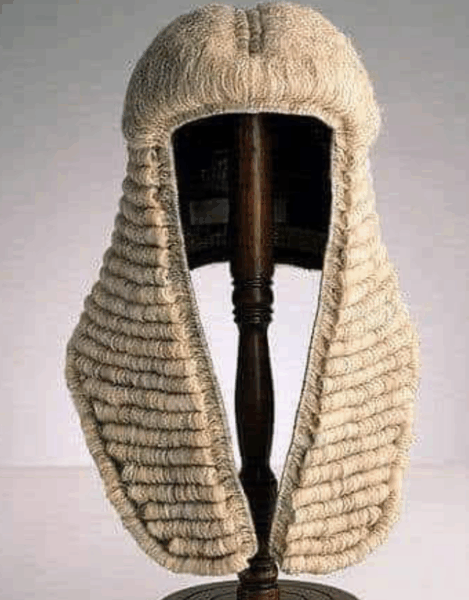
Nigeria has never lacked laws, lawyers, or lofty constitutional provisions. What this country has lacked, stubbornly, consistently, and painfully, is justice. Not the performative variety dressed in flowing robes and ceremonial wigs, but the kind that cuts through intimidation, bribery, political pressure, and societal rot. The kind that stands alone, unmoved. The kind Professor Olu Olagoke dramatized decades ago in his play ‘The Incorruptible Judge’, a literature many Nigerians read in secondary school, admired momentarily, and then forgot as soon as they entered the real world where corruption is not an exception but the operating manual.
Today, the question practically asks itself: Where is that incorruptible judge? Does he still exist, or has he become a fictional relic? And if Olagoke’s archetype once lived among us, is he now extinct?
This country has reached a stage where the search for principled arbiters of justice has become a national emergency. And it is not because Nigeria suddenly discovered wrongdoing, wrongdoing has always been here. The problem is that corruption has grown bolder, fatter, and more shameless, while integrity has become scarce, endangered, and in some quarters, mocked. Every day, headlines show courts issuing judgments that align suspiciously with the interests of the powerful. Every election season showcases the judiciary as the final battleground where winners are manufactured, losers are legitimized, and the public’s faith in justice is further eroded.
Yet, Nigeria pretends. We act as if everything is normal, as though the justice system still has a moral backbone. But deep down, everyone knows the truth: The distance between an average Nigerian and justice is longer than the distance between Abuja and Jupiter.
The rot did not start today, but it has deepened dangerously. When Olagoke wrote The Incorruptible Judge, he intended it as a moral mirror, an uncomfortable reminder that society collapses when those entrusted with justice compromise their souls. Back then, bribery existed, yes, but not with today’s theatrical arrogance. Corruption was a shameful thing, a vice people committed in dark corners. Today, it is a badge of influence, a tool for survival, a weapon for the politically connected.
Judges are not spared. Some are threatened. Others are seduced. Too many are bought. And the system that should shield them is itself hostage to political and economic elite interests.
This is why Nigeria continues to hemorrhage credibility, in elections, in governance, in policing, in anti-corruption fights, and in the moral standing of the state. When justice is compromised, every other pillar collapses.
People often say the judiciary is the last hope of the common man. But the judiciary in Nigeria sometimes feels like the last disappointment of the common man. Time and again, we witness outcomes in court that defy logic, morality, popular mandate, and common sense.
For instance, cases involving powerful individuals drag on until the public loses interest, even as cases involving the poor are resolved with ruthless speed and disproportionate punishment. In a similar vein, cases involving elections have become mathematical puzzles that distort the peoples’ will, while cases involving financial crimes become soap operas until they are quietly withdrawn.
At this juncture, it is germane to ask, “How can a system function when justice becomes a commodity, and judgments become negotiable goods?” Olagoke’s incorruptible judge would be horrified as we are today in a society that rewards corruption, and cannot produce incorruptible judges
Judges come from society; they are not hatched from an egg at the Supreme Court. They grow up in a culture where influence is currency, shortcuts are valued, and honesty is mocked as naivety. They live in a country where public servants earning modest salaries send their children to schools that cost millions, build mansions that defy their pay grade, and fraternize with politicians who treat justice like a bargaining chip.
To expect incorruptibility to bloom in such soil is to expect roses to sprout from concrete. Still, we must insist. Because the alternative is total collapse, what would an “incorruptible judge” look like in today’s Nigeria? He, or she would be the type who rejects money no matter the source, size, or subtlety; refuses to bow to political godfathers; delivers judgments based on law, not on fear or favour; does not attend private meetings with politicians, businessmen, or their proxies; writes rulings that strengthen democracy and not destroy it; understands that legitimacy is more valuable than appointments or privileges; and prefers honour to comfort, integrity to influence, and truth to tribe.
Such a judge would instantly become a threat to the powerful. In fact, that is one way you will know them, those in high places will unite to fight them. But they will also become a hero to the society that desperately needs redemption.
The judiciary is not just a branch of government. It is the anchor that holds democracy in place. Once judges become political appointees in black robes, society is finished. Elections become meaningless rituals. Corruption becomes uncontrollable. Human rights become fictional. The state becomes a predator rather than a protector.
We are already seeing signs of this decay. From questionable interpretations of electoral laws, to selective prosecution of corruption cases, to conflicting court orders issued the same day by courts of the same rank, it is clear that the judiciary is drifting toward dangerous waters.
At this juncture, it is not out of place to opine that Olagoke’s message remains painfully relevant, and to explain that he wanted society to see that true justice is not cheap, and incorruptibility is not convenient. It comes with sacrifice. It invites enemies. It requires standing alone. But it is the only hope for a society drowning in moral decay.
The tragedy is that Nigeria has replaced the ideal with excuses. We celebrate judges who “manage to be fair” as if fairness is a miracle and not a job requirement. We applaud courage only when it is rare. We accept questionable judgments because “that is Nigeria.” We reward dishonesty because honesty no longer pays.
This is why the search for the incorruptible judge is no longer literary, it is existential.
Now the real question. The issue now is not whether Olagoke’s incorruptible judge exists. The issue is whether Nigeria still has the moral space, societal will, and institutional backbone to produce one. Because if the day comes when incorruptibility becomes impossible, when every principled judge is compromised, threatened, or silenced, then Nigeria will collapse under the weight of its own sins.
Against the foregoing factual backdrop, it is germane to opine that the judiciary must clean itself. Lawyers must reject the culture of “fixers.” The public must stop glorifying corrupt judges because they delivered favourable judgments. And government must stop weaponizing law as a tool for political conquest.
We must rebuild the value of integrity, slowly, painfully, deliberately. Because the day Nigeria finds Olagoke’s incorruptible judge, not in literature but on the bench, will be the day this country starts healing.
In the end, Olagoke did not merely write a play. He wrote a prophecy. And Nigeria must decide whether it will fulfill that prophecy by producing judges who stand firm, or continue sinking into the swamp of judicial compromise. Right now, the search continues, and it is a search Nigeria cannot afford to abandon.