Africa
Inadvisability Of Politicizing Tinubu’s Misstep In Ankara -By Isaac Asabor
Opponents can, and should, do better. Nigerians deserve better. Democracy demands better. History will not remember how smoothly a president descended a step in Ankara. It will remember policies enacted, crises managed or mishandled, institutions strengthened or weakened, and lives improved or ignored. Everything else is noise.

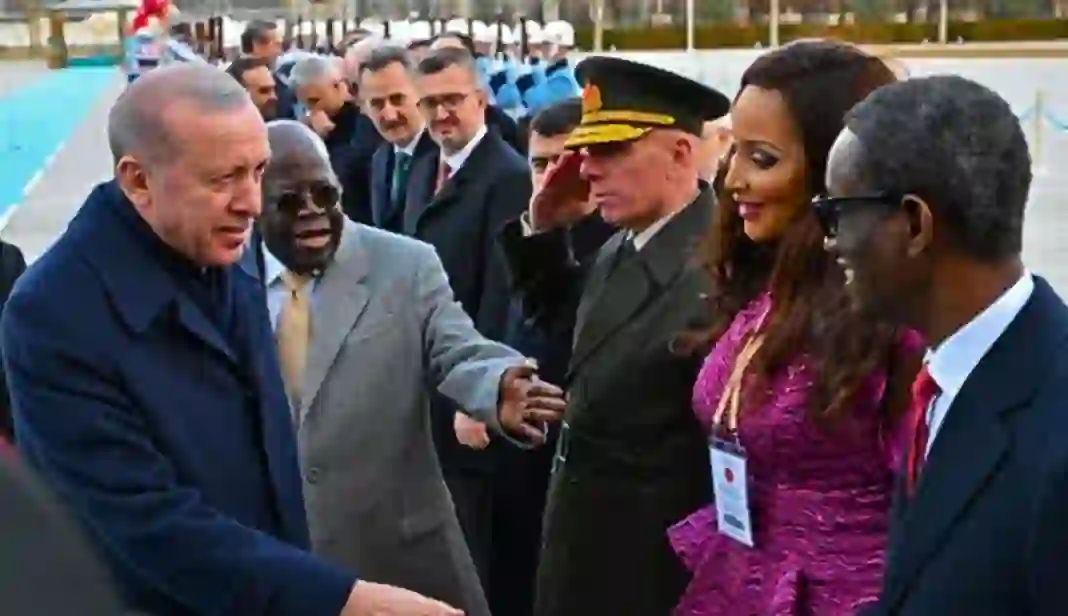
By the time reports emerged on Tuesday that President Bola Ahmed Tinubu had briefly missed a step during a welcome ceremony in Ankara, Turkey, Nigeria’s political ecosystem had already reverted to a regrettably familiar script: converting a harmless human moment into a crude political weapon. Within hours, a minor incident, one that should have merited no more than a passing mention, was inflated into a carnival of mockery, conjecture, and ill-disguised hostility parading as opposition analysis.
Let us be clear, without pretense or manufactured outrage: the President is human. He stumbled momentarily. He did not collapse. He did not withdraw from his duties. He did not truncate his schedule. He regained his footing and proceeded, without drama, to the work he was elected to do.
The Presidency confirmed that Tinubu “missed his step very briefly” during the ceremony on January 27, 2026, and immediately went on to hold bilateral talks with Turkish President Recep Tayyip Erdoğan at the Presidential Palace. A live joint press conference followed. In practical terms, nothing of consequence was disrupted. Nigeria’s diplomatic engagement continued as planned. That, by any reasonable standard, should have closed the matter.
But reason rarely thrives in Nigeria’s hyper-partisan climate. Here, a stumble is never just a stumble. It must be stretched into a symbol, repackaged as a metaphor, and deployed as an indictment of an entire administration. Opponents of Tinubu and the All Progressives Congress (APC) did not merely comment; many reveled in the moment. Some mocked outright. Others wrapped their glee in performative concern. A few went further, hinting darkly at incapacity, illness, or impending disaster. At that point, opposition ceases to be democratic engagement and slides into moral emptiness.
No leader is immune from a physical misstep. Joe Biden has tripped on stairs and bicycles. Donald Trump has struggled with ramps and simple gestures. Emmanuel Macron has lost his balance in public view. Pope Francis has stumbled more than once. Even Queen Elizabeth II, in her final years, occasionally faltered. None of these moments defined their leadership, nor were they mined with the ferocity now commonplace in Nigerian politics. Why, then, should Tinubu’s case be treated as an existential event?
The answer lies not in the stumble itself, but in the desperation of a political culture that has exhausted ideas and replaced substance with ridicule. When opposition politics fixates on a leader’s physical moment rather than his policies, it is no longer about accountability. It is about cruelty. It is not about presenting Nigerians with better alternatives; it is about scraping the bottom of the barrel for cheap applause.
Opposition is not a nuisance in a democracy; it is essential. Power must be questioned. Policies must be challenged. Governments must be held to account. Tinubu’s administration is no exception. Inflation, security concerns, economic reforms, and governance choices all deserve rigorous, indeed relentless, scrutiny.
But a momentary misstep is not policy. It is not governance. It is not ideology. And it is certainly not proof of incapacity.
There is something troubling about a society that finds amusement in the perceived frailty of its leaders while ignoring the substance of their actions. It reveals a poverty of discourse and an erosion of empathy. It says far more about the spectators than about the subject of their mockery.
Let us be honest: many who circulated the videos, memes, and snide remarks were not genuinely concerned about the President’s health. They were hoping, some loudly, others quietly, that the stumble signaled something worse. That is not opposition. That is wishful malice. Politics should never demand the abandonment of basic human decency.
Tinubu is in his seventies. That fact was neither hidden nor disguised during the campaign. Nigerians voted with full knowledge of his age, history, and physical presence. Age, by itself, is not a disqualifier. Experience and mental capacity do not evaporate because a foot slips. The real measure of leadership is what happens after a stumble, and in Ankara, what followed was continuity of duty.
He stood up, composed himself, and carried on with engagements central to Nigeria’s foreign policy and economic interests. That is the story that matters. Leadership is defined by responsibility, not flawless choreography.
There is also a dangerous precedent in politicizing health, whether real or imagined. Today it is Tinubu. Tomorrow it could be someone else. Once we normalize mocking vulnerability, we institutionalize a politics that is vicious, unserious, and ultimately corrosive. Leaders are human. They age. They falter. They recover. Democracies are not strengthened by pretending otherwise.
More importantly, this fixation on physical moments distracts from the questions Nigerians should actually be asking. What tangible outcomes emerged from the Turkey visit? What agreements were discussed? How do they advance Nigeria’s trade, industrial capacity, or strategic interests? These are the issues worthy of attention, not the angle of a step or the timing of a stumble. Those who genuinely care about Nigeria should focus their energies there.
There is also an ethical cost to this brand of politics. Turning health, actual or speculative, into a tool of mockery reinforces stigma around ageing and illness. It teaches that weakness, real or imagined, is an invitation for ridicule rather than a reminder of shared humanity.
Tinubu does not need sympathy, and he certainly does not need sainthood. He needs to be judged, firmly and fairly, on his leadership, his decisions, and his results. Reducing a presidency to a misstep is intellectually bankrupt and morally shallow.
Opponents can, and should, do better. Nigerians deserve better. Democracy demands better. History will not remember how smoothly a president descended a step in Ankara. It will remember policies enacted, crises managed or mishandled, institutions strengthened or weakened, and lives improved or ignored. Everything else is noise.
A misstep is not a mandate. A stumble is not a scandal. And a fleeting moment of human vulnerability should never be converted into a political weapon.
If anything, the episode in Ankara should prompt collective introspection, not about Tinubu’s footing, but about the shaky footing of our politics.