Africa
Inadvisability Of Scapegoating GTB In VDM’s Case With The EFCC -By Isaac Asabor
Social media may thrive on heat, but newspapers, and history, must favor light. The truth is simple and unembellished: GTBank did not arrest VeryDarkMan. And that should be the end of it.

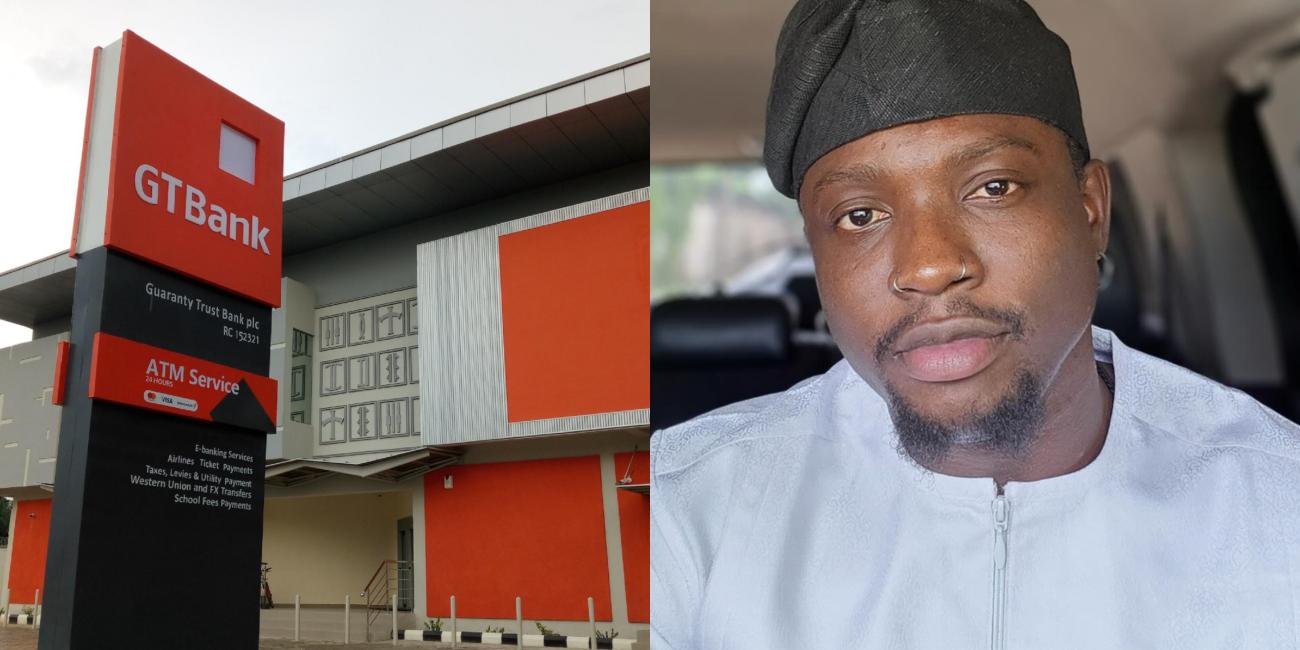
In the age of social media, it has become far too easy for misinformation to spread like wildfire, and in the process, facts are trampled, reputations are dragged, and innocent entities are often scapegoated. The recent arrest of popular Nigerian social media activist Martins Vincent Otse, widely known as VeryDarkMan (VDM), is a clear case study of this disturbing trend.
Since the news of his arrest broke, many Nigerians on social media have been quick to point fingers, and unfortunately, one of the first institutions to fall under the weight of public outrage was Guaranty Trust Bank (GTBank). The basis of this backlash? VDM had earlier visited one of the bank’s branches in Abuja to lodge a complaint regarding alleged unauthorized transactions from his mother’s bank account.
Let us pause here and consider the logic behind this outrage. A citizen walks into a bank to make a complaint, a right guaranteed by his status as a customer. He is attended to and then exits the premises. Sometime after that, he is arrested by officers of the Nigeria Police Force. Yet somehow, without evidence or an official statement linking the two events, the bank becomes the villain in the eyes of the public. If that is not a textbook example of scapegoating, what is?
Thankfully, in this case, we are not operating in an information vacuum. VDM’s own legal representatives, Barrister Deji Adeyanju, a well-known human rights lawyer, have publicly clarified the sequence of events as he explicitly stated that his client was not arrested inside or outside any GTBank branch. According to Adeyanju, the arrest occurred in Area 3, a different part of Abuja, hours after the bank visit.
Furthermore, the legal team later discovered that VDM was being detained by the Economic and Financial Crimes Commission (EFCC), not GTBank, not private security operatives, and certainly not on bank premises. These are not speculations; they are statements made by legal professionals actively involved in the case.
So, what exactly did GTBank do wrong? Listen to a customer’s complaint? Allow a citizen to use their platform to seek help over suspected fraud on an account? Since when did being present at a location prior to an arrest translate to complicity?
What we are seeing here is a classic case of narrative manipulation, the kind that thrives in the absence of critical thinking and journalistic rigor. Because VDM is a public figure and his arrest was unexpected, people wanted an explanation, and they wanted it fast. Social media users, in a rush to identify the “culprit,” made GTBank an easy target simply because it was part of the last known chain of events. But this kind of deductive shortcut is both intellectually lazy and ethically dangerous.
Institutions like GTBank operate under strict regulatory frameworks. Any collaboration with law enforcement, especially involving the arrest or detention of an individual, would require formal procedures, not whispers in corridors or nods from bank managers. There is absolutely no evidence to suggest that any such procedures were invoked. As far as the facts go, GTBank was merely a stop on VDM’s personal journey that day, not a conspirator in his arrest.
This issue goes far beyond one bank and one influencer. It speaks to a broader societal challenge in Nigeria and, indeed, across the world: our collective tendency to jump to conclusions, weaponize assumptions, and lash out at convenient targets. This behavior is amplified by not a few social media buffs who consume information in fragments, and who see outrage as more valuable than truth.
The speed at which GTBank was dragged into this controversy should alarm anyone who values fairness and due process. In a society already struggling with misinformation, disinformation, and a growing distrust of institutions, we must be more careful with how we frame our narratives. It is neither responsible nor just to destroy reputations based on conjecture.
It is common to see Nigerian institutions, banks, telecoms, hospitals, even public offices, come under attack when something goes wrong. Some of this criticism is well-deserved, no doubt. Many institutions need to do more to earn public trust. But when an entity is wrongfully accused or made to suffer reputational damage due to events beyond its control, the society must rise to its defense, not just for the institution’s sake, but for the sake of justice and accountability.
GTBank has spent decades building its brand as one of Nigeria’s leading financial institutions. Like any large organization, it has had its fair share of criticism, but this particular situation, the arrest of a customer who visited one of its branches, is not its fault, and should not be made to seem like it is.
To allow this misinformation to fester unchallenged is to participate in the erosion of corporate integrity. Tomorrow, it could be another bank, another school, another public institution, all falsely accused because they happened to be in the wrong place at the wrong time.
There are more important questions that deserve the public’s attention: Why was VDM arrested? What charges, if any, have been formally filed against him? Was due process followed in his arrest and detention? What role is the EFCC playing, and how transparent has it been in its handling of this matter?
These are the real issues that demand scrutiny. Redirecting anger toward an uninvolved party not only derails the conversation but also lets the real actors off the hook. Exonerating GTBank in this context is not a recourse to shield institutions from criticism, rather, it is an act of advocating for fairness, truth, and focus.
It is said that in times of confusion, facts are our best compass. That compass is clearly pointing in the direction of GTBank’s innocence in the arrest of VeryDarkMan. The bank neither instigated, facilitated, nor benefited from the event. The arrest was a state action, carried out in a different location, and connected, according to legal sources, to entirely different matters.
Let us not make GTBank the scapegoat for an incident in which it played no role. Let us be mature enough to separate presence from participation, and coincidence from conspiracy.
Social media may thrive on heat, but newspapers, and history, must favor light. The truth is simple and unembellished: GTBank did not arrest VeryDarkMan. And that should be the end of it.