
Africa
If Burkina Faso Can Offer Scholarships From Primary To University, What Is Nigeria’s Excuse? -By Isaac Asabor
Nigeria must stop punching below its weight. With all our resources, intellect, and economic advantage, we have no business being outclassed by smaller economies when it comes to basic human development goals. If Burkina Faso can give its children a fighting chance at a better future through free education, then so can Nigeria. The only thing standing in the way is our unwillingness to do the right thing. Let Burkina Faso’s bold move serve as a wake-up call.

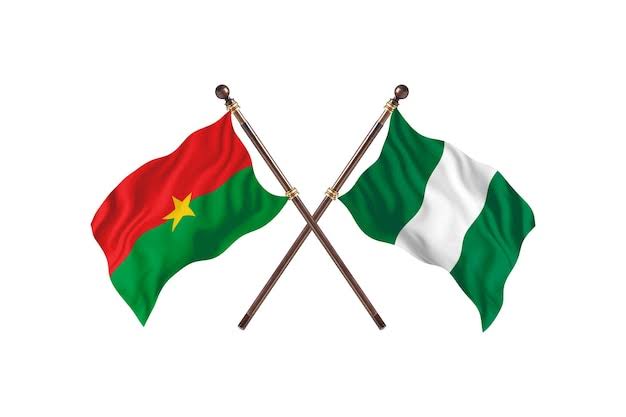
In the face of escalating poverty, mounting insecurity, and a spiraling economy, the Nigerian government continues to feed its people the same worn-out excuses about why critical investments in education remain elusive. This is why recent developments in Burkina Faso, a relatively poor and conflict-prone West African country, should shake the conscience of every Nigerian policymaker. In a bold and people-oriented move, the Burkinabe military-led government announced a sweeping policy to provide free scholarships from primary school through university for all its citizens. For a country whose GDP is cannot be said to be sustainable compared to Nigeria’s, and whose economy is constantly under siege from both terrorism and climate shocks, this is nothing short of revolutionary.
In fact, when comparing the economic strengths of Burkina Faso and Nigeria, the contrast is stark and largely influenced by scale, natural resources, and regional dominance. Nigeria stands as Africa’s largest economy by GDP, driven by its vast oil and gas reserves, a large population exceeding 200 million, and a relatively diversified economy that includes agriculture, telecommunications, and services. In contrast, Burkina Faso, a landlocked West African nation with a population of about 22 million, has a much smaller and agrarian-based economy. Its main economic activities are cotton farming and gold mining, and its GDP is significantly lower, hovering around $20 billion, compared to Nigeria’s over $450 billion.
Despite Nigeria’s apparent economic might, the strength of an economy is not determined by size alone. Burkina Faso, though poorer, has made some strides in improving public financial management, maintaining relative stability in inflation, and expanding access to mobile banking. Its gold mining sector has also grown steadily, contributing significantly to its foreign earnings. However, political instability, insecurity from extremist insurgencies, and limited infrastructure continue to choke economic progress. Nigeria faces similar issues but on a much larger scale, chronic corruption, fluctuating oil prices, poor power supply, and a weak manufacturing base all undermine its vast potential. Moreover, the gains from its oil wealth have not translated into broad-based development for the majority of its citizens.
In a head-to-head judgment of which country has the better economic strength, Nigeria clearly has the upper hand in terms of resources, GDP size, and regional influence. However, if judged by how effectively economic resources are managed and how evenly economic benefits are distributed, neither country performs well. Nigeria’s economy is stronger on paper, but it is plagued by deep inefficiencies and mismanagement. Burkina Faso may have a smaller economy, but its simplicity allows for potentially quicker gains if reforms are sustained. Ultimately, Nigeria is economically stronger, but whether that strength is meaningful to its citizens is still up for debate.
The question, therefore, arises: if Burkina Faso can afford to educate its people for free from cradle to career, what exactly is Nigeria’s excuse?
Let us be honest, Burkina Faso is not an economic powerhouse. It is a country with a comparative low per capita income compared to Nigeria’s, and it is also a nation battling insurgents across more than 40% of its territory, and one that relies heavily on international aid. Yet, despite these limitations, it has shown that political will, not economic might, is the real driver of inclusive policies. The leadership in Ouagadougou has made it clear that investing in its human capital is a non-negotiable priority, even in times of uncertainty. They understand that an educated citizenry is their best bet for long-term peace, economic resilience, and national unity.
Nigeria, on the other hand, with all its wealth and resources, remains stuck in a loop of misplaced priorities. While children in Burkina Faso are being told that their future is worth investing in, millions of Nigerian children roam the streets hawking pure water, washing windshields in traffic, or forced into child labor because their parents cannot afford basic school fees. The out-of-school children population in Nigeria is estimated at over 10 million, the highest in the world. This is a national disgrace for a country that proudly calls itself the “Giant of Africa.”
The problem in Nigeria is not the lack of money; it is the deliberate mismanagement of resources and an embarrassing lack of empathy by those in power. While universities rot and teachers go unpaid, lawmakers receive some of the highest salaries and allowances in the world. Governors build vanity projects, state-of-the-art flyovers, and glass-domed government houses, yet cannot allocate meaningful budgets to education. The federal budget consistently underfunds the sector, often allocating less than 7%, far below the UNESCO-recommended 15–20%. Meanwhile, ghost schools, budget padding, and bloated payrolls remain the order of the day.
It is not just about funding, it is about policy direction. While Burkina Faso is scrapping tuition fees and investing in school infrastructure, Nigeria is doing the opposite. The introduction of student loans under the Student Loan Act, while seemingly progressive on the surface, is a veiled admission that the government is shifting its educational responsibility to already impoverished citizens. Students are being asked to borrow their way through school in a country where jobs are not guaranteed after graduation and interest rates are high. This is not empowerment; it’s systemic punishment.
Some may argue that Nigeria is too large or too complex to replicate Burkina Faso’s model. But that is a lazy argument. Countries like Ghana and Rwanda, also smaller than Nigeria, have implemented free secondary education and are rapidly expanding access to tertiary education. Ghana’s Free SHS (Senior High School) policy has seen increased enrollment across the country, while Rwanda’s government has heavily subsidized education and linked it to digital skills. These are countries with fewer resources but a clear understanding that human capital development is the bedrock of national development.
Nigeria should stop looking at its size and start looking at its will, or lack thereof. The truth is that there are enough resources within the Nigerian economy to fund free education at all levels, if only the leakages can be plugged. If billions can be spent on fuel subsidies, luxury convoys, and unproductive international trips, then billions can also be allocated to fund education. What is lacking is visionary leadership that is willing to make sacrifices and put the people first.
There is also the moral angle to this. A country that refuses to educate its youth is condemning itself to a future of chaos, dependency, and stagnation. Insecurity, unemployment, and underdevelopment are all directly linked to the lack of education. Every Nigerian child kept out of school today is a potential recruit for criminality tomorrow. Investing in education is not just an economic decision, it is a national security strategy.
Nigerian leaders must remove their heads from the sand and begin to look around them. Inspiration does not always have to come from the West. It is high time they drew lessons from smaller, poorer African nations that are doing big things with little means. Burkina Faso’s bold scholarship policy is a clear challenge to Nigeria: if we, with our meager economy, can do this, what’s stopping you?
As a journalist, I believe leadership is not just about wielding power; it is about using power to build a legacy. Nigeria needs a leadership class that is inspired by the right things, by the hunger for social justice, by the urgency of equitable development, and by the moral obligation to uplift the masses. The leaders must begin to look beyond party interests and embrace people-centered governance. What is happening in Burkina Faso should not be ridiculed or dismissed simply because of its political context. It should be studied, adapted, and if possible, improved upon.
In conclusion, Nigeria must stop punching below its weight. With all our resources, intellect, and economic advantage, we have no business being outclassed by smaller economies when it comes to basic human development goals. If Burkina Faso can give its children a fighting chance at a better future through free education, then so can Nigeria. The only thing standing in the way is our unwillingness to do the right thing. Let Burkina Faso’s bold move serve as a wake-up call.
Against the backdrop of the foregoing views, it is expedient to ask at this juncture: “If Burkina Faso can offer scholarships from primary to university, what is Nigeria’s excuse?”
Nigeria, the time to act is now.

























You must be logged in to post a comment Login