Forgotten Dairies
Interview: Mayya Nikolskaya Assesses Russia-Africa Relations Ahead of Valdai’s 3rd Conference in Pretoria -By Kestér Kenn Klomegâh
In this shifting international context, I do hope African leaders can leverage their continent’s unique asset. And it’s not gold, or diamonds, or platinum or something else ranking high on the periodic table of elements. The true wealth of Africa lies in its people. This human capital, fostered and harnessed strategically, can provide Africa the resilience, agency and development it long deserves. And this is where Russia, with its humanitarian goals and an effective education system, would be willing to partner up.

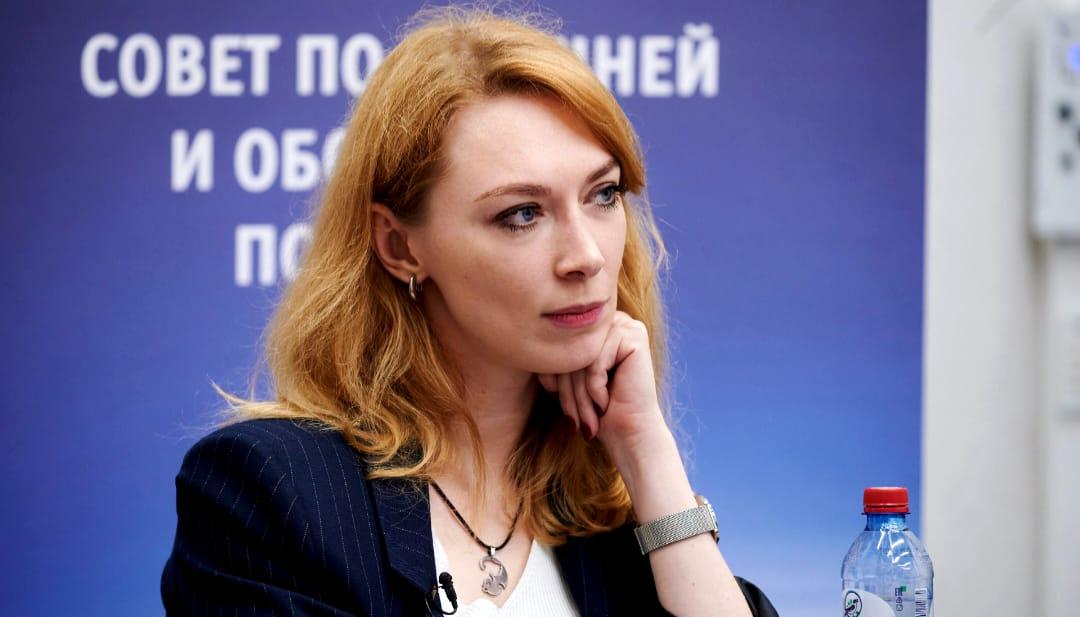
The South African Institute of International Affairs (SAIIA), one of South Africa’s key think tanks on international issues, prepares to hold the 3rd Russian-African Conference of Valdai Discussion Club in Pretoria, South Africa.
During the conference, Russian and African researchers and policy experts will examine various topics including the “G20 and BRICS: assessing strategic roles in the changing global order”, and “Russia’s relations with South Africa and other African countries”. In addition, an international team of authors has prepared a new Valdai report especially for the 3rd Russian-African Conference: “South Africa and Russia: A Long-Lasting Legacy of Strategic Cooperation”.
Mayya Nikolskaya, Head of Africa Program, Institute for International Studies at MGIMO University, previewed the current Russia-Africa relations in the context of geopolitical changes in an exclusive interview late July 2025. Here the interview excerpts:
In the first place, how would you characterize the forthcoming 3rd Valdai conference in South Africa, especially in the context of geopolitical shift?
Mayya Nikolskaya: The choice of the host nation by Valdai underscores South Africa’s growing importance as both a diplomatic arena and a platform for examining the power dynamics internationally. It is the second time for the Valdai Club to hold such a meeting on African soil, following a conference in Tanzania in 2024. This also highlights Russia’s intent to reinforce academic dialogue with the strong school of IR that South Africa has and to engage on issues beyond its usual “partners-in-expertise”.
South Africa, the host country, coincidentally has a multitude of hurdles including internal economic difficulties, to bilateral trade issues with the United States and its alliance with BRICS+. Briefly how are these influencing the current bilateral relations between South Africa and Russia?
Nikolskaya: The top shared concern for both countries is navigating the sanction regimes, which represent a significant threat but also an impetus for finding innovative ways to sustain and deepen cooperation. Besides, trade between South Africa and Russia remains relatively modest, at around US$1 bn annually, which falls short of its potential and should definitely grow.
Politically, South Africa’s often heated domestic scene adds complexity to the country’s bilateral engagements. Nevertheless, we can see a strong intention in Russia and South Africa to enhance ties, exemplified by high-level visits, participation in forums such as the SPIEF, a joint permanent committee to deal with specific projects, with a meeting held as recently as March 2025, and a drive to carry out regular business council meetings.
Do you think South Africa’s presidency of G20 could help as a unique platform to straighten its position among G20, and particularly relations with Russia and across Africa (AU)?
Nikolskaya: While the G20 remains a complex, sometimes fragmented forum, South Africa can leverage this platform to advocate for development-oriented policies and address Africa’s shared concerns such as protectionist tariffs and trade barriers imposed by the more advanced economies. Success, however, depends on smart coalition-building and articulating a cohesive vision that would resonate well with other Global South economies. I feel that there may even be a chance for Pretoria to counter the economic blackmail coming from the US.
Further to above indepth discussion, what else would you suggest as the main parameters for strengthening strategic economic cooperation between Russia and Africa?
Nikolskaya: One, for both Russia and South Africa, clean energy stands out as a critical area. Russia’s advanced nuclear and other types of technology has the potential of assisting South Africa in resolving its chronic energy shortages and transitioning to sustainable alternatives.
Two, building reliable and sanction-resilient payment systems is yet another vital pillar to facilitate trade and investment. Overall, the countries need to address regulatory uncertainties for businesses to operate on both sides. Naspers, for example, already has a history of investing in Russia.
Lastly, perhaps one not so obvious track to explore would have to do with women empowerment. Women exceed men both in Russia (about 54% of the population) and South Africa (approximately 52%). This gender distribution aligns well with initiatives to harness women’s business leadership, entrepreneurship, and workforce participation: a pressing economic need rather than just a technical KPI to clear. Women like Sibongile Sambo or Tatiana Kim can and should become the new face of economic diplomacy, both bilateral and multilateral – in BRICS and other platforms.
What challenges still exist at the bilateral cross-road, both for Russia and Africa? What should African leaders do, under the shifting circumstances, in this changing world?
Nikolskaya: The road ahead is no pleasure cruise. Other major international actors will try to undo the Russia-South Africa partnership, and we need to brace for impact. Institutions that we desire to fix will resist the change. Regulatory barriers and bureaucracies are certain to impede our companies from going at full speed. But one thing is certain: where there is political will, there will be a way. This is the golden rule the two countries should live by.
In this shifting international context, I do hope African leaders can leverage their continent’s unique asset. And it’s not gold, or diamonds, or platinum or something else ranking high on the periodic table of elements. The true wealth of Africa lies in its people. This human capital, fostered and harnessed strategically, can provide Africa the resilience, agency and development it long deserves. And this is where Russia, with its humanitarian goals and an effective education system, would be willing to partner up.