Forgotten Dairies
Katsina’s N3.8 Billion Hajj Loan: Religion Turned Upside Down -By Abdulkadir Salaudeen
Yet our rulers, after turning religion on its head, neglect the captives to rot in kidnappers’ dens or be killed. They fail to feed and educate our stunted children but provide excessively for pilgrims. This is not Islam. This is nonsense. But since there is a Day of Reckoning, we shall see how they will defend their actions before the Creator.

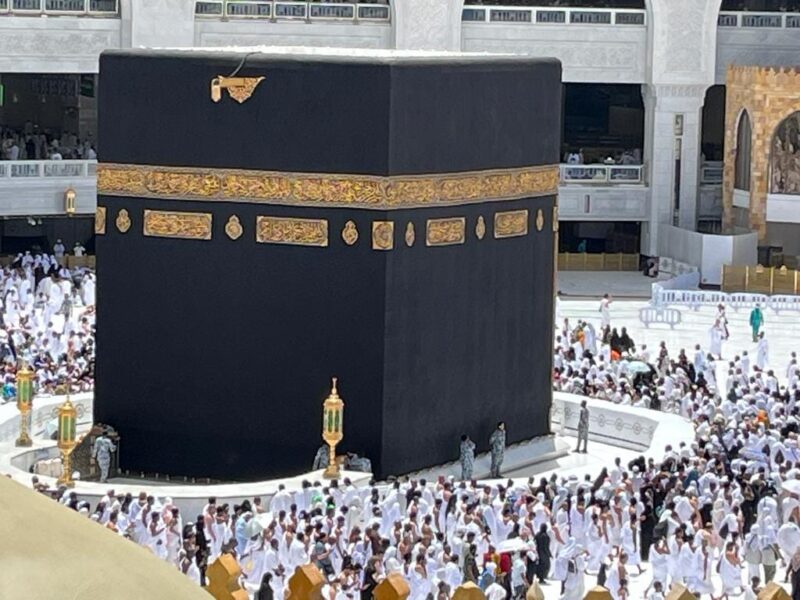
Religion is not merely good practice; it is an excellent one. To call it merely “good” and stop there is to diminish its merit. It has been the foundation of many civilizations in the past, and its allure continues to endure today despite the growing wave of anti-religious sentiment.
Those who reject religion, and by extension deny the existence of God, often fail to study it properly. More often, they study it hastily because they are eager to confirm a conclusion they had already reached. In other words, they approach it with a preconceived notion and then skim through it just to validate that bias.
Max Weber, the German sociologist, historian, and political economist, rightly argues that religion inculcates moral values through education, which in turn shape economic behaviors like discipline, diligence, and frugality—traits that can enhance economic development.
I am aware that some pastors and imams misuse religion to extort their followers. Cases of sexual abuse by religious leaders in churches and mosques are increasingly being reported. However, these abuses do not strip religion of its inherent virtues. Those who abuse religion only make fools of themselves.
I think I should quote Weber verbatim. In his book titled “The Protestant Ethic And The Spirit Of Capitalism” Weber wrote: “Religion must necessarily produce both industry and frugality, and this cannot but produce riches” (p. 118). Like Weber, Barro and McCleary in their 2003 working paper titled “Religion And Economic Growth” argue that religious beliefs accelerate economic growth because they reinforce behaviors that increase productivity.
However, these scholars are not Nigerians and do not live in Nigeria to witness how religion has been abused to undermine development and entrench poverty.
In the hands of charlatans and politicians in Nigeria, religion has failed to produce industry and frugality. It has also not sustained any aspect of human behavior that increases productivity. For instance, religion was used to justify a Muslim-Muslim government in Nigeria, which is now synonymous with widespread poverty, hardship, darkness, unprecedented insecurity, and the wanton destruction of lives and property.
What the ruling class practices in Nigeria is a politicized religion capable only of blowing an ill wind. This explains why the Katsina State Government prioritizes funding wealthy pilgrims over feeding the hungry and dying masses.
The United Nations Children’s Fund (UNICEF) has revealed that no fewer than 300,000 children are currently out of school in Katsina State. According to UNICEF’s 2025 report, Katsina, Kano, and Jigawa states account for 16% of Nigeria’s 10.2 million out-of-school children—over 1.6 million in total—with Katsina accounting for 300,000.
A separate report by the National Demographic and Health Survey (NDHS 2024) shows that 64.6% of children in Katsina are stunted, higher than the rates in Kano at 51.9% and Jigawa at 55.7%.
The Katsina State Department of Girl Child and Child Development also disclosed that at least 61,495 adolescent girls were out of school across the state’s 34 local government areas three years ago. That number has likely increased, given the growing number of villages and communities under the control of bandits.
The government, however, does not seem to lose sleep over this. What keeps it awake is its inability to secure the state’s Hajj slot, prompting it to provide a ₦3.8 billion loan as if the heavens would fall if the slot were lost.
Rahama Farah, Chief of UNICEF’s Kano Field Office, made this observation during a media dialogue on child-sensitive budgeting and planning in Katsina last year. He regretted that the government’s approved social sector budget had continued to decline, from 38.57% in 2016 to 12.98% in 2020.
He said UNICEF was worried in light of unflattering statistics that work against Katsina’s 4.5 million children. This is the point where sanity should dictate behavior. Any sane person who knows the scale of the calamities befalling Katsina and other northern states should be worried. The government, however, is not. It is worried about the welfare of pilgrims who can take care of themselves and are religiously required to do so.
According to the UNICEF chief, one in six children in Katsina dies before their fifth birthday. Three in four children—75.5%—are multi-dimensionally poor, lacking access to essential services such as health, education, and adequate nutrition. Religion should have made them multi-dimensionally rich. But because religion is turned upside down in Katsina and other northern states, its practice seems geared toward making the already rich even happier and richer, while leaving the poor and helpless stunted children to wait for God to intervene.
Governor Dikko Radda, after approving a ₦3.8 billion loan, announced that the government would sponsor _Hadaya_ for all pilgrims and each pilgrim would receive a $500 allowance to cover basic needs in Saudi Arabia—that’s roughly ₦700,000. Because we have lost our sense of responsibility, courtesy of a skewed understanding of religion, many will applaud the governor for doing “the work of God” and “promoting” Islam.
Pay attention again to these grim statistics from UNICEF. Over 6 in 10 children—61.2%—live in monetary poverty, which severely limits households’ ability to meet basic needs. One-third of children—33.3%—are out of school at the primary level, undermining the state’s future human capital and economic growth.
Because we have lost our integrity, one wonders if a single pilgrim has the self-awareness to realize there is no dignity in accepting this gift from the government. Can’t our pilgrims find a polite way to say no to this humiliating gesture? Can’t they say, “We are grateful, sir. Channel these funds to health and education, which are critical to the future of the state”? Can they advise the government to address the most pressing needs of these out-of-school children?
Do our rulers understand that out-of-school children pose an irreversible calamity in this knowledge-driven age? Does the Katsina State Government realize that dishing out billions for Hajj in the face of these statistics is self-inflicted harm?
Furthermore, only 23.4% of children aged 6–23 months receive the minimum acceptable diet. This is a major barrier to healthy growth and brain development. As if that were not bad enough, more than half—51.3%—of children under five are stunted, indicating chronic malnutrition with long-term consequences for health, learning, and productivity.
With such a glaring barrier to brain development, how can these development-starved children not grow up to become bandits? Unless they are fortunate by Providence, many are likely to think and act like bandits, or even become more dangerous than them. Is this the future we are dreaming of?
UNICEF chief Rahama Farah concludes: “Children represent over half of Katsina’s population, and investing in children—in their health, nutrition, education, protection, and participation—is not charity; it is the most strategic investment Katsina State can make.” I couldn’t agree more.
But our rulers continue to invest in Hajj, which brings no direct benefit to the state. Hajj is a once-in-a-lifetime religious obligation meant only for those who have the means. Our rulers have turned this simple, unambiguous Qur’anic injunction upside down in an attempt to teach God how to practice His religion.
The path to spiritual good is clearly explained in the Qur’an by the Omniscient in Chapter 90, verses 11–16:
“But he has not made his way through the steep path. And what will make you know what the steep path is? It is the freeing of a captive; or feeding on a day of hunger an orphan of near relationship, or a poor person in misery—not funding pilgrims.”
Yet our rulers, after turning religion on its head, neglect the captives to rot in kidnappers’ dens or be killed. They fail to feed and educate our stunted children but provide excessively for pilgrims. This is not Islam. This is nonsense. But since there is a Day of Reckoning, we shall see how they will defend their actions before the Creator.
Abdulkadir Salaudeen
salahuddeenabdulkadir@gmail.com