
Global Issues
Geopolitical Uncertainty Is Exposing Gaps in Indonesia’s National Strategy -By Fransiscus Nanga Roka
This means Indonesia still has time to refine its approach. This can reinforce strategic planning across ministries, align economic and security goals, more substantively invest in maritime capabilities/diversify critical dependencies and set clearer red lines to protect national interests. But this requires political candor. It requires an acknowledgment that the old formulas might be no longer sufficient. Most importantly, it has to recognize that in the era of geopolitical fracture caution combined with vagueness is not wisdom. It is drift.

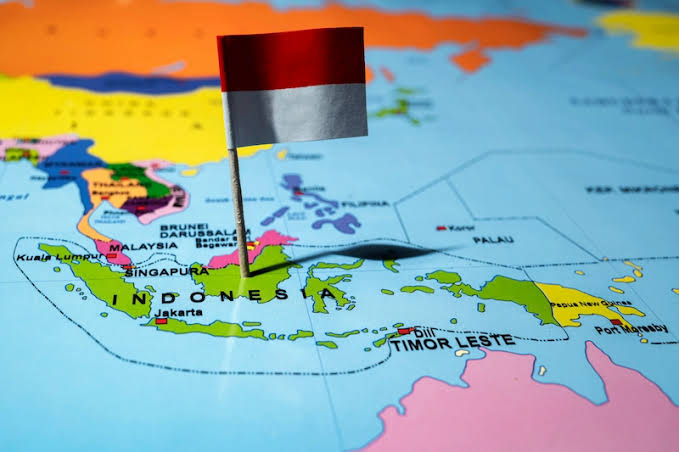
In international relations Indonesia is also proud of being seen as an emerging power, playing a strategic timeout role without either alignment nor entanglement regionally That narrative was compelling in less stormy waters. If anything, in the world we now live in it is starting to look dangerously unfinished. Indonesia’s strategic ambiguity is no longer the mark of wisdom as global tensions boil, alliances harden, trade routes become weapons and economic security converges with national security. It is beginning to resemble hesitation with a masquerade of prudence.
The days of cushy non involvement are quickly coming to an end. The world is not merely going through turbulence, it is experiencing a structural reordering. Everything from energy prices and semiconductor supply chains to maritime security and digital infrastructure has come under the shadow of great-power rivalry. In this climate, nations that confuse passivity for balance are likely to find themselves bystanders in a contest that will shape their future. Indonesia cannot afford that illusion. For too long though, its strategic demeanor remains reactive and fragmented reliant on the notion that external instability can be solved with little more than wordplay.
This is the core problem. By virtue of geography, demography and regional influence, Indonesia bears enormous geopolitical weight. It lies at the intersection of critical sea routes, has a central position in Southeast Asia and its resources will be significant for the future global economy. What it divines as strategically important is not in fact what it’s clear about. It is possible for a nation to be the first of its size in history and dangerously unprepared. This is the contradiction which has become more and more difficult to mask now.
Indonesia has been relying on its old foreign policy style of pragmatism, non-alignment and consensus for years. This allowed Jakarta to breathe and avoid unnecessary complications. However, something that once seemed sophisticated can deteriorate in a more dynamic external context than the guidebook. Strategic vagueness has a higher price tag Constructed on weaponized interdependence, coercive commerce and military precision Logs world-wide tech fragmentation up, now as opposed to out of atk. Small and medium sized nations must make clear what their interests are, otherwise the larger powers will define them.
The economic dimension is most telling. Indonesia tends to preach resilience, but resilience is more than hoping for the best; it involves planning a way out. It necessitates a national strategy that integrates trade policy, industrial planning, energy independence and security of technologies with defense preparedness, all within the same framework. These types of areas seem to function separately, rather than together far too often. What emerges is an uncomfortable mosaic: audacious aspirations in some areas, guardedness elsewhere and a strategic canvass overall that lacks the steeliness needed for an increasingly perilous globe.
All of which, takes us to the pressures now bearing upon Indonesia. Rivalry between the US and China is no longer just a distant diplomatic issue, it is altering structures of investment flow as well reshaping decisions in manufacturing locations and regional security calculations. Short term domestic repercussions of conflict in key areas might be evident through food prices, shipping costs and commodity markets. Maritime tensions test the credibility of regional norms in the Indo-Pacific. Resource competition is taking place in a context characterized by the intensification of climate shocks. Digitally dependence is creating new vulnerabilities. These are not separate challenges. They are overlapping pressure points. Unless a nation has an integrated strategic doctrine, it will react to fundamentally related threats in pieces.
What is perhaps most frightening, however, is the propensity to mistake symbolic action for good strategy. You can host summits, issue calibrated statements and ring the centrality bell all you want but it is not a replacement for preparedness. Diplomatic performance is important, but it cannot compensate for either thin institutional coordination or poorly honed long-term planning or the failure to bite hard trade-offs. Strategy is not branding. It is prioritization under pressure. And wait till this era hits : there will be plenty of pressure.
The leaders of Indonesia may think that flexibility keeps options open. Sometimes it does. However, excessive vagueness can also invite misjudgment from opponents, skepticism from partners and uncertainty in investors. But if it is not evident to anyone what Indonesia will protect, who its friend and enemy in the region are or why those countries should be any of either, then Indonesia looks strategically underwhelming rather than balanced. In geopolitics obscurity is not a protection. Sometimes it is an exposure.
Here we are not in the most serious danger that Indonesia will pick a wrong side of a polarized world. That it will be unable to delineate, on its own terms a sufficiently tough strategy. The country would be exposed not because it lacks alternatives, but coherence. You cannot improvise national strategy in the middle of cascading crises. Before not during a storm, and it needs to be built.
This means Indonesia still has time to refine its approach. This can reinforce strategic planning across ministries, align economic and security goals, more substantively invest in maritime capabilities/diversify critical dependencies and set clearer red lines to protect national interests. But this requires political candor. It requires an acknowledgment that the old formulas might be no longer sufficient. Most importantly, it has to recognize that in the era of geopolitical fracture caution combined with vagueness is not wisdom. It is drift.
The world is becoming tougher, more transactional and less forgiving. In such a world countries which continue to seek solace in comforting tales rather than pragmatic precision will come to realise too late that relevance is not security. Indonesia can not afford to drift through this century on autopilot: it is too important fear of an indolent elite and will be far too exposed. In the meantime, a geopolitical uncertainty is already testing those gaps. The real question is whether Indonesia will shut them down before those gaps turn into liabilities that no speech can gloss over.
Fransiscus Nanga Roka
Faculty of Law University 17 August 1945 Surabaya Indonesia























You must be logged in to post a comment Login