Forgotten Dairies
Laws Are Like Jonathan Swift’s Cobwebs In Nigeria -By Isaac Asabor
The system is deliberately structured this way. It favours those with money to hire senior advocates, influence to pressure institutions, and political capital to bargain their way out of accountability. Meanwhile, ordinary Nigerians, those without godfathers, connections, or resources, bear the full weight of the law.

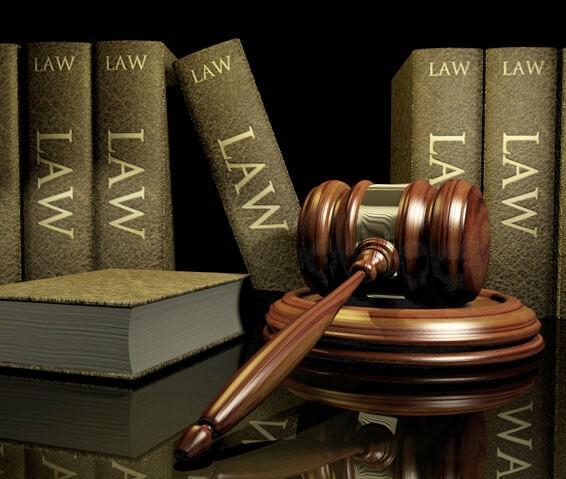
I recently found myself reflecting on a quotation authored by the Anglo-Irish writer Jonathan Swift. The quote, which invariably dwells on law inequality says, “Laws are like cobwebs, which may catch small flies, but let wasps and hornets break through”.
Without sounding hyperbolical in this context, Jonathan Swift’s metaphor of the cobweb could not have found a more fitting modern theatre than Nigeria’s political space. In theory, the law is meant to be blind, firm, and impartial. In practice, however, particularly in Nigeria, it behaves exactly as Swift warned: fragile before power, but sticky and unforgiving to the weak. While petty thieves are paraded before cameras and hurried through the criminal justice system, some Nigerian politicians stroll freely through airports, social events, and party meetings despite facing grave allegations of corruption involving billions of naira. Their freedom is not accidental; it is engineered by influence, delay tactics, and a legal system that bends under political weight.
What deepen public cynicism are not merely the allegations themselves, but the contrast in consequences. A civil servant accused of stealing a fraction of public funds is swiftly suspended, shamed, and sometimes jailed, while politically exposed persons exploit endless adjournments, technicalities, and selective prosecutions to remain untouchable. Anti-corruption agencies announce arrests with fanfare, yet years pass without convictions, reinforcing the belief that the law exists mainly to discipline “small flies.” The “wasps and hornets”, armed with wealth, connections, and loyal institutions, routinely tear through the legal cobwebs without consequence.
Without a doubt, this reality corrodes faith in governance and weakens the moral authority of the state. When alleged looters are celebrated, recycled into government, or protected by party machinery, the message to citizens is blunt: justice is negotiable, and accountability is optional for the powerful. Swift’s observation, though centuries old, reads less like literature and more like a judicial report on Nigeria, a reminder that until the law can restrain the mighty as effectively as it punishes the powerless, corruption will continue to walk freely in broad daylight.
Without a doubt, Swift’s metaphor, more than three centuries later, fits Nigeria like a custom-made garment. In this country, the law is rigid, merciless, and unforgiving, provided you are poor, powerless, or politically irrelevant. But once wealth, influence, or proximity to power enters the picture, the same law suddenly becomes elastic, negotiable, and, in many cases, invisible. Every Nigerian knows this reality, even if few dare to say it loudly.
We see young men remanded in prison for months, sometimes years, for stealing a phone, a loaf of bread, or a goat. We see petty traders jailed for hawking without permits. We see drivers brutalized for minor traffic infractions. These are the flies, easy prey for the cobwebs of the law.
Yet, at the same time, public officials, particularly politicians, accused of looting billions of naira walk freely, grant interviews, attend state functions, defect across political parties, and are warmly received as “leaders” and “stakeholders.” These are the wasps and hornets, too heavy, too powerful, and too connected to be trapped.
Nigeria’s corruption cases tell this story better than any theory ever could. We all know of scandals involving missing defence funds, inflated contracts, oil subsidy fraud, pension theft, and monumental abuse of public trust. Investigations are announced with fanfare. Committees are set up. White papers are promised. But convictions are rare, punishments rarer still.
Files disappear. Witnesses recant. Judges are transferred. Cases drag on endlessly until public attention fades. And eventually, the accused emerge smiling, vindicated not by innocence but by the system’s exhaustion. Some alleged corrupt politicians even go as far picking forms to context for an electoral position; even when alleged corrupt cases still hangs on their necks.
A lawyer once explained this injustice using a simple but powerful illustration, one that captures Nigeria’s dilemma perfectly.
He explained by imagining three circles. The largest circle represents all actions that are morally wrong, acts universally recognized as evil, unjust, or wicked. Bribery, theft of public funds, abuse of office, betrayal of public trust, and negligence that leads to loss of life all fall into this category. Nigerians may argue about politics, but on these things, there is no confusion. Everybody knows they are wrong.
Inside the imagined large circle is a smaller one: acts that are legally wrong. These are behaviours that Nigerian laws, crafted by military regimes, civilian governments, and legislatures, explicitly prohibit. On paper, Nigeria has no shortage of laws against corruption, abuse of power, terrorism, negligence, and financial crimes.
But inside that legal circle lies an even smaller one, the smallest of all. This final circle represents acts that are not only morally and legally wrong, but for which perpetrators are actually investigated, prosecuted, convicted, and punished. That circle is tiny.
In Nigeria, doing wrong does not mean you will face consequences. Even being caught does not guarantee punishment. And being prosecuted does not necessarily lead to conviction.
The system is deliberately structured this way. It favours those with money to hire senior advocates, influence to pressure institutions, and political capital to bargain their way out of accountability. Meanwhile, ordinary Nigerians, those without godfathers, connections, or resources, bear the full weight of the law.
This is why prisons are filled with the poor, while corruption literarily wears designer suits and lives in gated estates. It is also why Nigerians are hardly surprised when powerful figures accused of grave failures or national disasters appear before investigative panels, deny everything, shift blame, and walk away unscathed.
When insecurity claims hundreds of lives, when intelligence failures lead to mass casualties, when preventable tragedies occur due to negligence or power struggles at the top, the public already knows how the story will end. Committees will sit. Reports will be written. Apologies may be issued. But accountability will stop short of the powerful.
Everyone knows what happened. Everyone knows who failed. But knowing is not enough to push offenders into that smallest circle where justice actually happens. And so, like Swift warned centuries ago, Nigeria’s laws remain cobwebs, strong enough to trap the weak, fragile when tested by the powerful.
Until the law begins to catch hornets as easily as it catches flies, justice in Nigeria will remain selective, credibility will remain broken, and public trust will continue to erode.
In the end, the greatest tragedy is not that wrong is done, but that everyone knows it is done, and nothing happens.