National Issues
Mr. President, SGF Akume’s Miscalculation: Escalating Tensions at a Critical Time with a Grave Accusation of Treason, by John Egbeazien Oshodi
In light of these developments, there is a growing chorus of voices calling for Akume to reconsider his words and for the government to approach the negotiations with a renewed sense of purpose and respect for the law and the rights of workers. The path to a resolution requires a delicate touch, a commitment to dialogue, and a recognition that the nation’s workforce deserves to be treated with dignity and respect.

In the high-stakes arena of Nigeria’s labor negotiations, a grievous misstep by Secretary to the Government of the Federation (SGF), George Akume, has sent shockwaves through the nation’s workforce. Akume’s wild accusation of treason against labor unions, leveled at a critical juncture in the minimum wage talks, has been met with a mix of disbelief and defiance. This psychological gambit, intended perhaps to assert government authority, has instead stoked the flames of tension and raised serious questions about the government’s true intentions and its grasp of the law.
In a bold and controversial statement that has sent shockwaves through Nigeria’s industrial landscape, Secretary to the Government of the Federation (SGF), George Akume, accused labor unions of committing treason. Speaking at a meeting with the National Executive Council (NEC) of the Christian Association of Nigeria (CAN) in Abuja on Thursday, Akume leveled a grave charge against the unions, claiming that their orchestration of the shutdown of the national grid during a recent nationwide strike constituted an act of economic sabotage. He went further to term this action as a treasonable felony, a charge that carries with it severe legal and political implications.
Akume’s accusation is not merely inflammatory; it delves into a realm of legal and psychological complexity that is both profound and perilous. Treason, a charge of the gravest nature, is traditionally reserved for those whose actions are aimed at the overthrow of the government or the subversion of state authority. By branding the labor unions’ actions as treasonous, Akume has catapulted the discourse to an unparalleled level of intensity, shrouding what is essentially a legitimate industrial protest in the dark cloak of criminality.
“Nowhere in the world has labor ever tampered with the national grid. It is treason! Treasonable felony is economic sabotage; you don’t do that,” Akume asserted with a tone that brooked no ambiguity. His words, laden with the weight of accusation, serve to underscore the seriousness with which he views the unions’ activities. By emphasizing the unprecedented nature of the act—the tampering with the national grid—Akume positions it as an act of economic sabotage, a deliberate and malicious attempt to undermine the nation’s economic stability.
This characterization is fraught with implications. It not only casts the labor unions in the role of antagonists to the state but also raises questions about their motives and the broader ramifications of their actions. Akume’s assertion challenges the very essence of the labor movement’s objectives, suggesting that their actions are not merely about advocating for workers’ rights but are instead aimed at destabilizing the government’s efforts to rebuild the economy.
The psychological impact of such a charge is immense. It has the potential to alienate the unions from the government and the wider populace, painting them as enemies of the state rather than as stakeholders in the national dialogue. This could lead to a hardening of positions on both sides, making it significantly more difficult to find common ground and resolve the underlying issues that led to the industrial action in the first place.
Moreover, Akume’s accusation opens a legal Pandora’s box. Treason is not a charge to be made lightly, as it carries with it the full force of the law and the potential for severe legal consequences. The assertion that the unions’ actions constitute economic sabotage sets a dangerous precedent, one that could have chilling effects on the exercise of workers’ rights and the conduct of future labor protests.
In essence, Akume’s words are a call to arms, a declaration that the government views the labor unions’ actions as an act of war against the state. This escalation of rhetoric and the legal implications it entails place the labor unions in a precarious position, forcing them to defend not only their actions but also their very legitimacy as representatives of the workforce. The path forward will require careful navigation, as the nation teeters on the brink of a confrontation that could have far-reaching consequences for industrial relations and the social fabric of Nigeria.
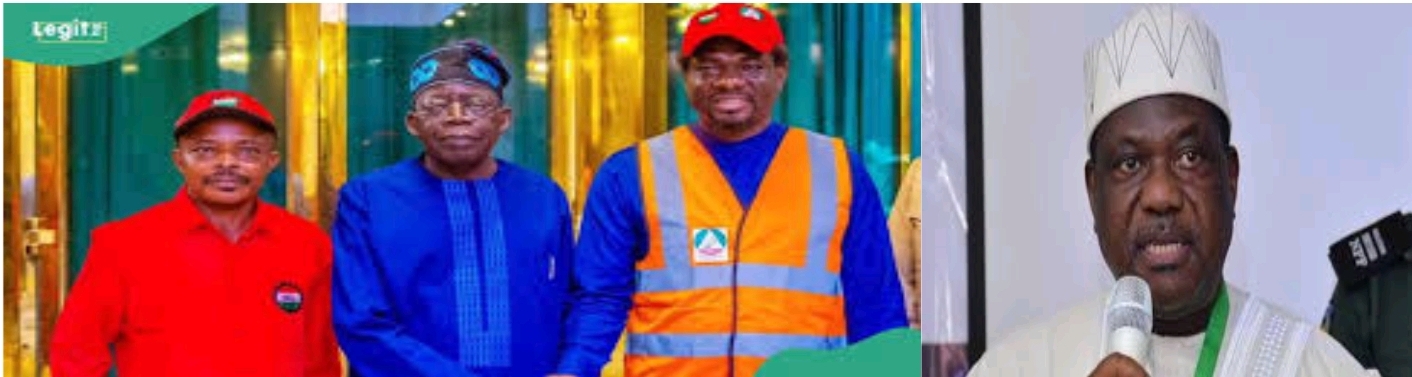
While Akume’s anger and concern as Secretary to the Government of the Federation are understandable, the timing of his statement could not have been more ill-advised. The nation’s workers, represented by the Nigeria Labour Congress (NLC) and the Trade Union Congress of Nigeria (TUC), had just shown a commendable gesture of goodwill by suspending their strike. Expectations were high for a breakthrough in negotiations as the unions paused their action to give the government, specifically the Minister of Finance and President Bola Tinubu, time to present a new minimum wage proposal. This was a moment that called for de-escalation, mutual respect, and understanding, not incendiary rhetoric.
The labor unions, in a bold move, decided to suspend the strike for five days to allow the government to submit a new wage proposal. This gesture was made in good faith, following a meeting with government officials, including Akume, and it was hoped that this would lead to a breakthrough in the negotiations.
Instead, Akume’s words have been perceived as an attempt to intimidate and bully the very workers who are the backbone of the nation’s economy. Nigerian workers, far from being cowed by the accusation, have responded with a resolve that underscores their determination not to be swayed from their demands for fair compensation and decent working conditions. The psychological impact of Akume’s statement has been the opposite of what might have been intended; it has galvanized the workforce and reinforced their unity in the face of what they see as an unwarranted attack.
Akume’s accusation reveals a troubling miscalculation about the legal and psychological implications of labeling a labor action as treason. Treason is a charge that is not only legally complex but also carries with it a heavy burden of proof. It is a term typically reserved for acts that seek to overthrow the government or undermine its authority, not for workers advocating for better wages and working conditions. Akume’s use of such a severe and legally fraught term without clear legal basis has raised eyebrows and led to calls for him to retract his statement.
Moreover, Akume’s role as the SGF does not grant him the authority to make definitive legal pronouncements, especially on matters as serious as treason. This is the purview of the Attorney General of the Federation and Minister of Justice, who is responsible for legal matters pertaining to the federation. Akume’s overstepping into this domain not only muddies the legal waters but also places the President and the country in a precarious position, potentially undermining the government’s credibility and its ability to negotiate in good faith. This miscalculation raises alarming questions about the separation of powers and the appropriate channels for legal determinations, casting a shadow over the government’s commitment to upholding the rule of law.
The implications of Akume’s statement are profound and deeply troubling. It has the potential to set a dangerous precedent, criminalizing industrial action and chilling the exercise of workers’ rights. This could lead to a climate of fear and repression, where legitimate labor protests are viewed through the lens of criminality. Moreover, it could derail the negotiation process, further straining the already tense relationship between the government and labor unions. The risk is that this inflammatory rhetoric could ignite further unrest, pushing the nation towards a crisis that could have been averted with more careful and considered communication. The government must tread carefully to ensure that its actions do not undermine the very foundations of industrial peace and democratic governance.
In light of these developments, there is a growing chorus of voices calling for Akume to reconsider his words and for the government to approach the negotiations with a renewed sense of purpose and respect for the law and the rights of workers. The path to a resolution requires a delicate touch, a commitment to dialogue, and a recognition that the nation’s workforce deserves to be treated with dignity and respect.
As Nigeria stands at this crossroads, the government must tread carefully. Any accusations of criminal behavior, especially those as serious as treason, should be made with the utmost caution and within the proper legal channels. The nation’s leaders must navigate this complex situation with a commitment to upholding the rule of law, respecting the rights of workers, and fostering an environment conducive to peaceful and productive negotiations.
Mr. President, as we traverse the intricate landscape of labor negotiations, it is crucial that we pursue a course that aligns the interests of all parties involved, maintains the integrity of legal frameworks, and is underpinned by a genuine dedication to crafting a mutually advantageous accord. This agreement should not only uphold but also enhance the dignity and secure the well-being of every Nigerian worker.
The strategy adopted by Secretary to the Government of the Federation (SGF), Akume, which has led to heightened tensions through unsubstantiated allegations, is not only hazardous but also poorly judged. It threatens the stability and unity of our nation at a moment when what we desperately need is solidarity and a profound mutual comprehension. Actions motivated by frustration, rather than thoughtful deliberation, can only serve to deepen the divisions within our society, rendering the achievement of a peaceful and fair outcome even more challenging.
It is crucial to address and temper such inflammatory rhetoric, ensuring that the government’s approach to labor negotiations is grounded in respect for the law and the legitimate rights of the workforce. The future of Nigeria’s industrial peace and economic stability depends on it. The nation’s leaders must navigate this complex situation with a commitment to upholding the rule of law, respecting the rights of workers, and fostering an environment conducive to peaceful and productive negotiations.
The stakes could not be higher. Any failure to manage this situation with the required care and respect for legal and moral boundaries threatens to ignite further unrest and destabilize the fragile peace. Mr. President, the stability and unity of Nigeria hang in the balance, and it is crucial that actions taken now reflect a commitment to justice, dialogue, and the well-being of all Nigerians.
Oga Akume, calm down ooo, e go better, we are still very young even though a very troubled democracy. So, calm down.
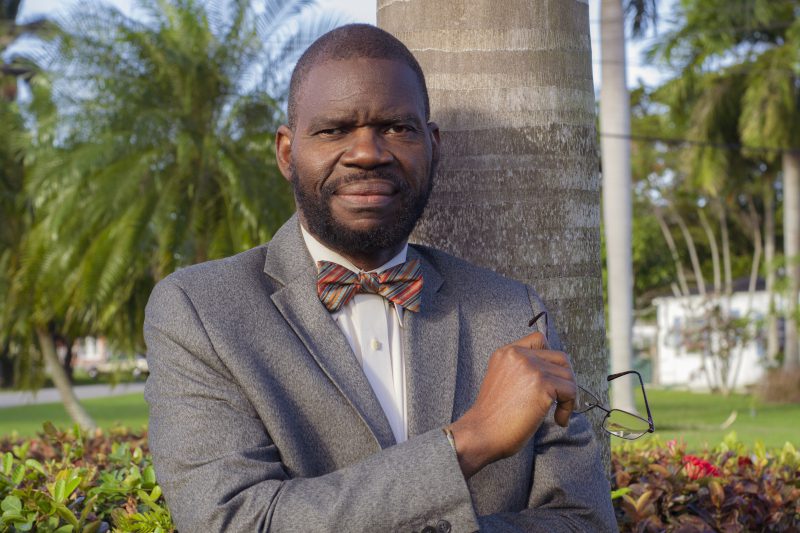
Professor John Egbeazien Oshodi, born in Uromi, Edo State, Nigeria, is an American-based police and prison scientist, forensic psychologist, public policy psychologist, and legal psychologist. He’s a government advisor on forensic-clinical psychological services in the USA and the founder of the Dr. John Egbeazien Oshodi Foundation for Psychological Health. With a significant role in introducing forensic psychology to Nigeria through N.U.C. and Nasarawa State University, he’s also a former Secretary-General of the Nigeria Psychological Association. He’s taught at esteemed institutions like Florida Memorial University, Florida International University, Nova Southeastern University, and more, and is currently an online faculty member at Weldios University, Nexus International University, and Walden University. John.Oshodi@mail.waldenu.edu