Africa
Navigating the Tensions: The Resilience of Democracy Amid Recent Military Controversies, by John Egbeazien Oshodi
The protesters, numbering about 50, blocked the entrance to the ministry and denied everybody access to the premises, except the Minister, Mohammed Badaru, whom they requested should address them anytime he reports for work. The minister was reportedly at the Presidential Villa when the protest was in progress.

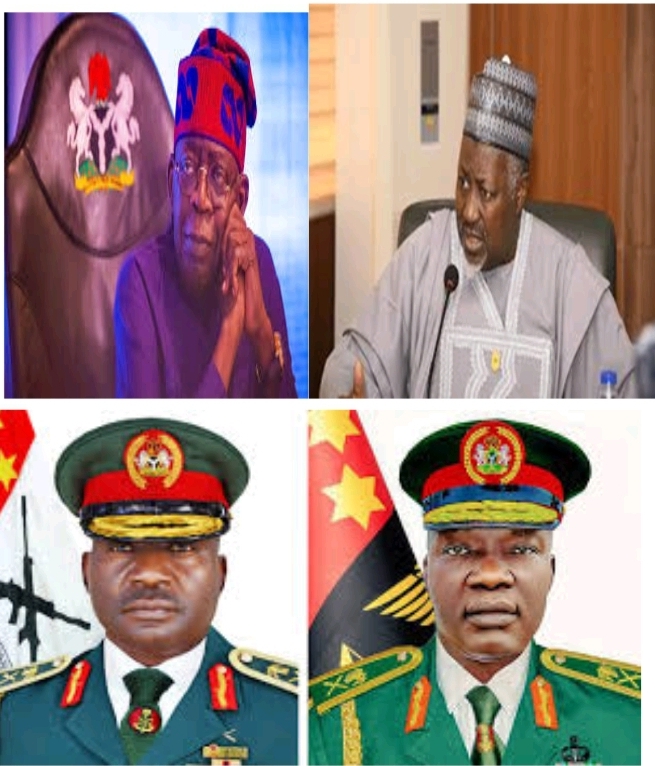
As Nigeria commemorates the 25th anniversary of unbroken democracy, President Bola Tinubu’s address to the nation serves as a poignant reflection on the sacrifices made by the heroes and heroines of our democratic struggle. However, the shadows of military brutality and the protests that have ensued remind us that the journey towards a mature democracy is fraught with challenges that must be confronted with resolve and a steadfast commitment to democratic principles.
The recent incidents of military personnel engaging in actions that contravene the values of democracy, such as the brutalization of civilians, including staff of the Ministry of Defence, have cast a pall over our celebrations. These actions not only violate the rights of individuals but also inflict deep psychological wounds on the fabric of our society. The trauma of such incidents can erode trust in our democratic institutions and undermine the social cohesion that is essential for a healthy democracy.
As a psychologist, I am acutely aware of the profound impact of these events on the collective psyche of our people. The psychological resilience of a nation is as crucial to its well-being as the strength of its democratic institutions. The trauma inflicted by these incidents can lead to a sense of helplessness and disillusionment, threatening the very foundation of our democratic society.
The protest by the Ministry of Defence’s civilian staff, in response to the allegations of military brutality, is a powerful manifestation of the democratic spirit. It is a testament to the psychological strength and courage of these individuals, who have chosen to stand up for their rights and demand accountability. This collective action is not only a call for justice but also a therapeutic process that can begin to heal the psychological wounds inflicted by such incidents.
The protesters, numbering about 50, blocked the entrance to the ministry and denied everybody access to the premises, except the Minister, Mohammed Badaru, whom they requested should address them anytime he reports for work. The minister was reportedly at the Presidential Villa when the protest was in progress.
The workers chanted songs and displayed placards with different inscriptions such as “Stop killing civilians”, “We are of equal state, that you hold a gun does not make you superior”, and “This is part of the intimidation we were talking about.”
Elijah Ajunda, the chairperson of one of the workers’ unions in the ministry, expressed the painful concerns of the civilian staff. He highlighted the history of threats, brutality, and even killings by men and officers of the Nigerian Army and the Nigerian Navy, with little to no justice being served despite reports of these incidents.
Mr. Ajunda mentioned a staff member named Richard who was killed by some Navy officers in Lagos in April, and how the matter was swept under the carpet. These incidents are a stark reminder of the painful reality that some within the military, who are meant to protect our democratic way of life, are instead threatening its very fabric.
The psychological impact of these challenges cannot be overstated. The dissonance between the ideals of democracy and the reality of military misconduct creates a sense of cognitive dissonance among the populace. This dissonance can lead to a crisis of confidence in our institutions and a sense of alienation from the democratic process.
To address this, President Tinubu must take a decisive stance in checking the military leadership. The numerous complaints and unjust involvement of the military in civilian matters are a clear indication that there is a need for a thorough review of the military’s role and conduct within a democratic society. Nigeria is no longer under military rule, and it is imperative that the military operates within the bounds of democratic principles and the rule of law.
The president must ensure that the military leadership understands the importance of respecting civilian authority and the rights of citizens. This includes holding those responsible for misconduct accountable and implementing reforms to prevent such incidents from occurring in the future.
Moreover, there is a pressing need for psychology-based civilian-military interaction training, especially in a context where soldiers and other military personnel are frequently seen in public spaces, whereas they should ideally be a rare sight, primarily stationed in barracks. This training is crucial for fostering mutual respect, understanding, and cooperation between the military and civilian populations, which is essential for a harmonious and democratic society.
Furthermore, we must not overlook the recent stories of soldiers being killed by malevolent individuals within the community. These incidents are equally distressing and highlight the complex nature of the relationship between the military and the civilian population. It is a stark reminder that the military, while tasked with protecting the nation, is also vulnerable to the dangers that lurk within society.
These incidents underscore the need for a comprehensive approach to addressing the challenges that beset the military-civilian relationship. It requires not only training and reforms but also a concerted effort to build a culture of peace, understanding, and mutual respect between all segments of society.
As we move forward, let us take President Tinubu’s words to heart and work towards a Nigeria where democracy is not just celebrated in speeches but is lived in the daily actions of its people and its protectors. Let us navigate the tensions between rhetoric and reality with a steadfast commitment to the democratic values that have been the cornerstone of our nation’s progress.
In conclusion, the resilience of our democracy is not just measured by the longevity of our democratic institutions but also by our ability to confront challenges, uphold values, and heal psychological wounds. As we celebrate our silver jubilee of democracy, let us recommit to the ideals of freedom, justice, and equality that have guided us thus far. Together, we can ensure that Nigeria’s journey towards a more perfect union continues for generations to come.
It is with a heavy heart that we must also address the tragic case of Wisdom Hashimu, a 13-year-old boy from Kaduna who took his own life after being brutally tortured by a soldier and members of the civilian Joint Task Force (JTF) over an allegation of stealing ₦10,000. This incident is a stark reminder of the devastating consequences of military misconduct on the most vulnerable members of our society.
The death of Wisdom Hashimu is a call to action for all of us to demand accountability and justice. It underscores the urgent need for the military to operate within the framework of democratic principles and to respect the rights and dignity of every Nigerian.
Let us stand together in solidarity with Wisdom’s family and all those who have suffered at the hands of military brutality. We must ensure that such tragedies are not repeated and that the perpetrators are held accountable for their actions.
As we navigate the complexities of our democratic journey, let us remember that the resilience of our democracy depends on our collective ability to confront injustice, uphold the rule of law, and protect the rights of all citizens. Together, we can build a Nigeria where democracy thrives, and where every individual, regardless of age or circumstance, is valued and protected.
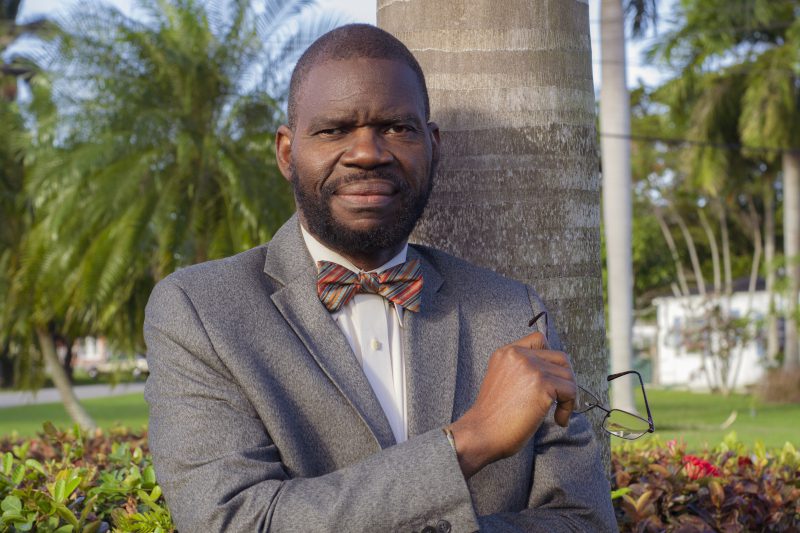
Professor John Egbeazien Oshodi, born in Uromi, Edo State, Nigeria, is an American-based police and prison scientist, forensic psychologist, public policy psychologist, and legal psychologist. He’s a government advisor on forensic-clinical psychological services in the USA and the founder of the Dr. John Egbeazien Oshodi Foundation for Psychological Health. With a significant role in introducing forensic psychology to Nigeria through N.U.C. and Nasarawa State University, he’s also a former Secretary-General of the Nigeria Psychological Association. He’s taught at esteemed institutions like Florida Memorial University, Florida International University, Nova Southeastern University, and more, and is currently an online faculty member at Weldios University, Nexus International University, and Walden University. John.Oshodi@mail.waldenu.edu