Africa
Nigeria’s North and its Leadership Mirage -By Usman Muhammad Salihu
Leadership is not about occupying an office—it is about securing justice, progress, and dignity for all. So, the question lingers: Will Northern Nigeria continue to be ruled by leaders in the North who exploit suffering, or will true leaders of the North emerge to break this cycle of failure?

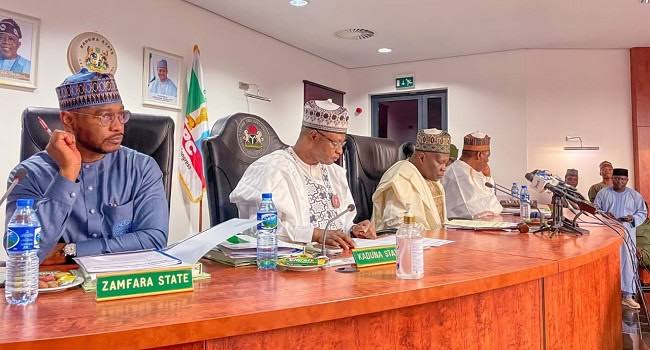
Northern Nigeria stands at a defining moment in its history. Once the bastion of strong leadership and cultural resilience, the region is now plagued by a crisis of governance.
The distinction between “leaders of the North” and “leaders in the North” has never been more pronounced. Leaders of the North are those who carry the burden of the region’s progress on their shoulders, while leaders in the North are mere seat-fillers—occupants of political positions without a true sense of duty.
Unfortunately, today’s reality leans heavily towards the latter. The region is flooded with individuals who wear the titles of governors, senators, ministers, and traditional rulers, yet their leadership amounts to little more than self-interest, political survival, and personal ambition.
The result? Northern Nigeria remains stuck in a cycle of poverty, illiteracy, and insecurity, trailing behind the rest of the country on almost every developmental index.
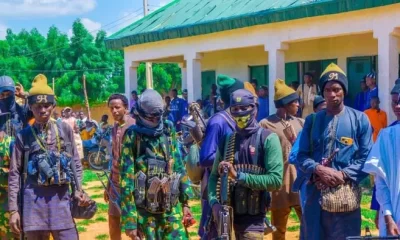
Banditry, kidnapping, and insurgency have become rampant, turning villages into ghost towns and leaving countless families in mourning. Youth unemployment and economic hopelessness have skyrocketed, while education continues to suffer with millions of children out of school.
Rather than prioritizing sustainable policies, these so-called leaders dish out empty rhetoric, making grand promises while doing little to uplift the people they claim to serve.
Hunger has become a political tool—wielded not as a crisis to be solved, but as a mechanism of control. Those who once enjoyed three square meals now struggle to afford even one.
Yet, instead of confronting the root causes of poverty, many politicians prefer the optics of distributing bags of rice. They would rather keep the people hungry and dependent than invest in mechanized agriculture, industrialization, or skills development.
A well-fed, independent populace questions leadership. A starving one is easier to manipulate. Beyond economic woes, northern lives have become increasingly devalued—even beyond the region.
The recent horrific killing of at least 16 northern travelers in Edo State is a chilling reminder of the dangers of mob justice and ethnic profiling. These victims—mostly Hausa hunters heading for Sallah festivities—were mistaken for kidnappers and brutally lynched.
Their truck was torched, their bodies consumed by fire in a scene reminiscent of a lawless state. Such tragedies expose the colossal failure of leadership at all levels.
A country with strong institutions and responsible governance would not permit the extrajudicial slaughter of innocent citizens. Figures like former Vice President Atiku Abubakar and activist Omoyele Sowore have rightly condemned the killings, while Edo State Governor Monday Okpebholo has ordered investigations.
But the crucial question remains: Will justice be served? Or will this atrocity, like so many before it, fade into oblivion? Meanwhile, traditional institutions that once provided stability and moral guidance in the North have been hijacked by political interests.
The reckless creation of new emirates and first-class chiefdoms is no longer about strengthening governance—it is about settling scores, wielding influence, and fracturing the region further.
Northern Nigeria is rich in potential, yet without sincere leadership, it will remain shackled to poverty, insecurity, and stagnation. The people must awaken to their power—demanding accountability, choosing leaders based on competence rather than ethnicity, religion, or political patronage.
A true leader does not throw food at his people; he empowers them to produce their own. He does not buy votes with handouts; he builds an economy where citizens can thrive without begging.
The North needs statesmen who will champion food security, support industrial growth, and create jobs—not politicians who prey on hunger for electoral gain.
Above all, northern lives must matter—not just to those in power, but to the nation as a whole. If the cycle of mob justice and ethnic profiling continues unchecked, Nigeria risks deepening its fractures beyond repair.
Leadership is not about occupying an office—it is about securing justice, progress, and dignity for all. So, the question lingers: Will Northern Nigeria continue to be ruled by leaders in the North who exploit suffering, or will true leaders of the North emerge to break this cycle of failure?
The answer lies in the hands of the people.
Usman Muhammad Salihu is a PRNigeria Fellow.