Forgotten Dairies
“Nothing Can Be Done?”-Tell That to Kainji, Shiroro and Every Engineer -By Engr. Chris Ebia
What must change is not the science. What must change is the decision to act. Because the moment we accept that nothing can be done, we stop trying. And when a nation stops trying, darkness is no longer just a condition, it becomes a decision.

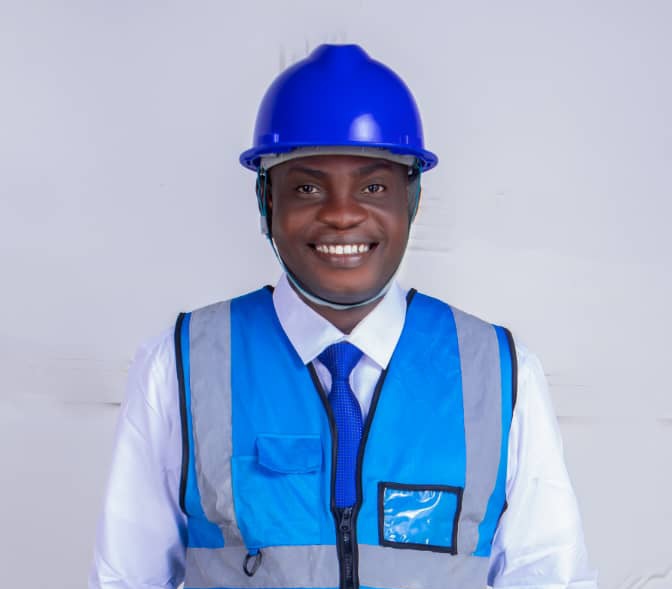
I recently came across a statement attributed to Nigeria’s Minister of Power: “There’s nothing we can do about the current electricity situation in Nigeria. It is beyond our control.” It is the kind of statement that stops you in your tracks-not because it explains anything, but because of what it quietly concedes. It suggests that a problem rooted in engineering, planning, and execution has somehow escaped human control. And that is a dangerous place for any nation to stand.
Electricity is not abstract. It is not governed by chance, emotion, or political mood. It is governed by laws; clear, consistent, and universal laws of physics. Ohm’s Law defines how current flows through a system. The principles of electromagnetic induction explain how generators produce electricity. Electromechanical energy conversion governs how turbines in dams and thermal plants translate motion into electrical power. In power systems, stability itself is not a guess, it is a balance: generation must match demand, or frequency will deviate and systems will trip. These are not optional guidelines; they are fixed realities. They work the same way in Nigeria as they do anywhere else in the world.
So when we are told that nothing can be done, what we are really being asked to accept is not a failure of electricity but that of a systems built around it.
Because there was a time in Nigeria when something was done.
There was a time when this country had no meaningful electricity infrastructure; no national grid, no interconnected transmission backbone, no widespread generation capacity. Yet, through deliberate planning, technical expertise, and political will, a system was built from the ground up. The Kainji Dam did not emerge by accident; it was conceived, engineered, and executed. The Shiroro Dam followed, strengthening hydroelectric output. The Oji River Thermal Power Station represented early thermal generation, while more modern facilities like the Geregu Power Station integrated gas-powered electricity into the national mix.
Transmission lines were constructed across forests, rivers, and long distances, connecting regions and enabling energy flow across the country. Substations were installed to manage voltage and distribution. Networks were extended into homes, markets, and industries. None of this was easy. None of it was done under perfect conditions. But it was done because there was a belief shared by engineers, policymakers, and institutions that progress was possible.
So what changed?
The laws of physics have not changed. Generators still work on the same principles. Transmission lines still carry power according to the same electrical properties. Distribution systems still deliver energy based on known engineering designs. What has changed is not science, it is approach.
Nigeria’s electricity challenges today are real, but they are not mysterious. Generation is constrained not only by installed capacity but by inconsistent gas supply to thermal plants. Transmission infrastructure is fragile, often operating close to its limits, making it vulnerable to disturbances that lead to grid collapse. Distribution systems struggle with technical losses, poor infrastructure, and an inability to efficiently deliver available power. Beneath all of this lies a financial imbalance—revenue collection gaps that weaken the entire value chain, leaving generation companies underfunded and unable to sustain optimal operations.
These are serious problems. But they are not unsolvable.
Engineers understand these issues. Solutions are not hidden in textbooks or locked away in foreign laboratories. They are known, practical, and already implemented in power systems around the world. Strengthening transmission redundancy can prevent widespread grid failures. Decentralizing generation through embedded and regional systems can reduce pressure on the national grid. Closing the metering gap can improve accountability and restore financial stability. Enforcing a culture of maintenance can extend the life and reliability of infrastructure. Aligning policy decisions with engineering realities can eliminate many of the inefficiencies that currently exist.
So again, the question is not whether something can be done. The question is whether there is willingness to do it.
Because if practical, well-established solutions are presented today, will they move beyond discussion into implementation? Or will they remain part of reports, committees, and conversations that never quite translate into action?
Over time, Nigerians have adapted not by fixing the system, but by working around it. Generators have become part of daily life. Inverters and solar systems are no longer luxuries; they are necessities. Households and businesses have learned to manage uncertainty, switching between multiple power sources just to maintain basic operations. Entire economic activities are structured around unreliable electricity.
And yet, within that adaptation lies a powerful contradiction: Nigerians are already solving the problem individually.
People manage their loads. Businesses invest in alternative energy. Communities create shared solutions. On a smaller scale, the same principles of reliability, redundancy, and planning that govern large power systems are being applied every day. So how can a nation claim that nothing can be done when its citizens are constantly proving otherwise?
The danger of such a statement goes beyond the power sector. It shapes mind-set. It lowers expectations. It shifts responsibility away from action and toward acceptance. It risks creating a culture where failure is no longer challenged, but endured. And when that happens, progress slows, not because it is impossible, but because urgency disappears.
A power system does not collapse overnight. It deteriorates gradually; through years of inconsistent policy, inadequate investment, weak enforcement, and a disconnect between technical needs and administrative decisions. But recovery is also gradual. It requires deliberate, sustained effort, guided by knowledge and driven by commitment.
Nigeria does not need to rediscover electricity. The science is settled. The engineering is well established. The infrastructure, though strained, still exists. The human capacity-engineers, technicians, planners-is present. What is required is alignment: leadership that accepts responsibility, policies that reflect technical realities, and a long-term commitment to doing the work that must be done.
Electricity demands order. Generation must match demand. Systems must be maintained. Networks must be strengthened. Where this order is absent, failure occurs. Where it is restored, stability follows.
So no, the situation is not beyond control. It is beyond neglect. It is beyond complacency. It is beyond statements that attempt to redefine solvable problems as permanent conditions. But it is never beyond solution.
Nigeria has done it before. From the first turbines that spun in Kainji to the expansion of plants and transmission networks across the country, this nation has demonstrated that progress is possible when effort meets intention. The same laws of physics that made electricity possible then are still in effect today.
What must change is not the science. What must change is the decision to act. Because the moment we accept that nothing can be done, we stop trying. And when a nation stops trying, darkness is no longer just a condition, it becomes a decision.
Engr Chris Ebia
Electrical Engineer & MD, MyDream Engineering Solutions ltd
Enugu State, Nigeria
07067115709
engrebia@gmail.com