Connect with us

Breaking News

Inside the Strait of Hormuz Crisis: Shipping Collapses as War Tightens Grip

Traffic in the Strait of Hormuz collapses as Iran restricts access, with just 158 crossings recorded and over 40% involving sanctioned vessels.

Published

on

Iran

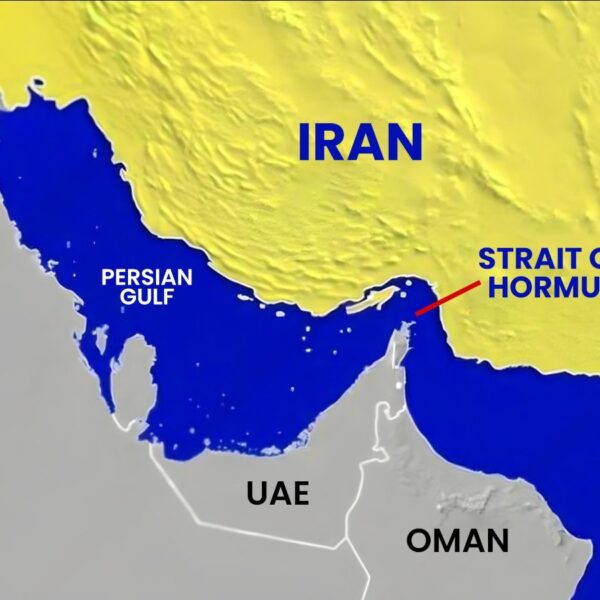
The Strait of Hormuz—one of the world’s most critical energy corridors—has been nearly paralysed, with maritime traffic collapsing under the strain of escalating conflict in the Middle East.

Under normal circumstances, the narrow passage handles about 20 percent of global oil and LNG flows. But since February 28, when the United States and Israel began bombing Iran, the region has descended into a cycle of retaliation and disruption.

Tehran’s response has included tight restrictions on access to the strait, effectively reshaping shipping patterns.

A Narrow ‘Tehran Toll Booth’ Emerges

Most vessels still attempting the crossing are now funneled through a limited corridor near Larak Island, informally dubbed the “Tehran toll booth” by Lloyd’s List.

More than 26 ships—primarily Greek- and Chinese-owned, alongside Indian, Pakistani and Syrian vessels—have been tracked using this route.

Advertisement

Since mid-March, no ships have been recorded using the traditional passage outside the corridor.

Traffic Plunges, Risk Rises

The scale of disruption is stark. Daily crossings, which usually average about 120, have dwindled to a fraction of that.

From March 1 to 26, only 158 crossings were logged—a 95 percent drop, according to Kpler. Just two ships were seen heading west on Thursday, both carrying corn to Iran.

Meanwhile, security risks remain high. The UKMTO reports 24 incidents involving commercial vessels since early March, though none have been recorded since the Phoenix explosion in Emirati waters on Sunday.

Some attacks claimed by Iranian forces have yet to be independently confirmed.

Advertisement

Human and Strategic Costs

The human toll is mounting. The International Maritime Organization says at least eight maritime workers have died, with others missing or injured, and roughly 20,000 seafarers affected.

At the same time, sanctioned vessels are playing an outsized role in the limited traffic that continues. According to AFP data, more than 43 percent of crossings involve ships under US, EU or UK sanctions—rising to 56 percent among oil and gas carriers.

Despite reduced movement through the strait, over 2,000 vessels—including nearly 300 tankers—remain active in surrounding Gulf waters, highlighting the ongoing strategic importance of the chokepoint even amid disruption.

Africans Angle News


Advertisement
Continue Reading
Advertisement
Click to comment

You must be logged in to post a comment Login

Leave a Reply

Trending Contents

Topical Issues

Kator Ifyalem Kator Ifyalem
Forgotten Dairies49 minutes ago

The Burden of Hope, by Kator Ifyalem

If there is anything to say honestly to that frustration, it is not reassurance, false comfort insults the scale of...

small-banner-election-law-Nigeria-US-UK-Legal small-banner-election-law-Nigeria-US-UK-Legal
Opinion10 hours ago

Property Acquired In The Name Of A Spouse: Presumption Of Advancement And Resulting Trust Under Nigerian Law -By Jobs Joseph

The acquisition of property in the name of a spouse raises important questions concerning legal and beneficial ownership under Nigerian...

BOLA AHMED TINUBU BOLA AHMED TINUBU
Forgotten Dairies14 hours ago

Tinubu’s 66th Independent Day Speech And The Stark Reality Of The Nigerian Present Situation, by Hajia Hadiza Mohammed

Tinubu said his administration would leverage Nigeria’s large youthful population as an engine of production by making jobs, enterprise and...

Prof. Mojisola Christianah Adeyeye Prof. Mojisola Christianah Adeyeye
Forgotten Dairies23 hours ago

Blaming the Public for Systemic Failures: Why Moji Adeyeye Has Lost the Moral Authority to Lead NAFDAC, and Why Her 56% Illiteracy Claim Has No Evidentiary Basis, by Daniel Nduka Okonkwo

The question is not whether Nigerians have literacy challenges. They do. The question is whether the head of NAFDAC can...

Malami Malami
Politics24 hours ago

Abubakar Malami And The Northwest Regional Campaign Manifesto, by Hajia Hadiza Mohammed

It is a progressive idea that will promote synergy, cooperation and accelerate regional development and transformation. It shows clearly that...

Prabowo-Subianto-President-Indonesia-2024 Prabowo-Subianto-President-Indonesia-2024
Forgotten Dairies24 hours ago

Indonesia’s Constitutional Court Must Answer for Its Ambiguity, by Fransiscus Nanga Roka

And also four questions had to be distinguish by the Court — whether there is a qualification existed or not,...

Buba Galadima Buba Galadima
Breaking News1 day ago

2027 Elections: Galadima Accuses APC Government of Blocking Opposition Campaigns

Buba Galadima accuses the APC-led Federal Government of blocking opposition campaigns ahead of the 2027 elections and restricting political freedoms.

Nigerian pensioners and pension scheme-africans-angle Nigerian pensioners and pension scheme-africans-angle
Breaking News1 day ago

Nigeria’s Pension Industry Plans $250m Infrastructure Investment

PenCom says Nigeria’s pension industry will commit $250m to infrastructure over 10 years as monthly pension payments rise to N14.83bn.

Diezani Alison-Maduekwe Diezani Alison-Maduekwe
Breaking News1 day ago

EFCC: Diezani’s UK Acquittal Has No Bearing on Nigerian Forfeiture Case

The EFCC has urged an Abuja court to disregard Diezani Alison-Madueke’s UK acquittal, saying it has no bearing on Nigeria’s...

Climate change Climate change
Forgotten Dairies2 days ago

Environmental Crime: The World’s Profitable War Against Nature, by Fransiscus Nanga Roka

Profits generated by environmental crime can travel freely while its victims have great difficulty in obtaining justice. Governments that maintain...