Africa
O God Of Creation, Deliver Your Children From The Hands Of Tribal Jingoists, by Isaac Asabor

Our heavenly father, before I begin to ask for your divine intervention on the issue which I have brought to your throne of Grace, permit me to thankfully say that in every corner of the world, humanity thrives on the rich tapestry of diversity, a mosaic colored by different cultures, beliefs, and traditions. Yet, as we stand together beneath the vast skies which you, in your divine inspiration, created for all, an unsettling shadow looms: tribal jingoism. This fervent nationalism, which glamorizes one’s ethnic or tribal identity at the expense of others, has taken a disturbing hold, particularly targeting marginalized groups. Currently, the #IgboMustGo hashtag trends online, a clarion call that echoes tribal disdain among some Nigerians toward the Igbo people residing in rural and urban communities that spread across the length and breadth of Western Nigeria.
O God of all creation, come and help your children in this part of Nigeria. Our father in heaven, as my prayer and that of other sojourners like this writer in Lagos in particular are resonating deeply during this threatening times, come down and help us. I am pleading for divine intervention, and praying for a transcendence beyond the confines of tribal allegiance and jingoistic fervor. Indeed, I ask at this point of prayer, why must one’s identity come at the cost of another’s humanity? Father Lord, tribal jingoists in this part of Nigeria have reduced the Igbos, and anyone who neither speaks nor understands their language, Yoruba, to mere stereotypes, stripping away the shared experiences and innate dignity that bind us as Nigerians and as human beings. They fail to see that you created the land we inhabit, and the very air we breathe, for heterogeneity, not division.
Our heavenly father, without recourse to being faithless to your divine truth that you are omniscience, still give me the grace to explain in this context that #IgboMustGo represents a modern iteration of tribal rejection, essentially calls for the expulsion of a people, echoing the painful historical memories of ethnic tribalism and exclusion. The phrase has sparked debates, highlighting deep-rooted animosity towards the Igbo people who have woven themselves into the fabric of southern Nigeria. This antagonism is not only unjust but a stark reminder that humanity must take precedence over tribal lines. Father Lord, having heard my prayers, and assuring me that you will accede to them, I am hereby thanking you in for the divine acknowledgment, and looking forward to the day of testimony as your name would on that day be glorified. Thank you our heavenly father.
Having left this contextual throne of grace, it is not out of place to opine that tribal jingoism feeds off fear and insecurity, often distorting perceptions and engendering a sense of superiority among specific groups. Its impact is especially harsh on vulnerable communities like the Igbo, who are by each passing day vibrantly contributing to Nigeria’s cultural and economic landscape. As God’s children, they deserve safety, respect, and acknowledgment of their inherent humanity in a country that belongs to all who live in it.
Therefore, in these tumultuous times, we must not allow tribal jingoism to betray the essence of our shared existence. It is time to confront the narratives that encourage division and perpetuate fear. For in the heart of each person, regardless of ethnicity, there lies a story worth hearing, a life deserving of dignity, and a dream longing for realization.
Let us raise our voices in solidarity against the tide of jingoistic tribalism, embracing the message encapsulated in the phrase, “O God of all creation.” Let it pivot our awareness toward the transformative power of unity, compassion, and understanding. Let our actions reverberate the cry for inclusivity, fostering safe spaces for all individuals, particularly those unjustly targeted like the Igbo in these precarious times.
In the words associated with modern contexts, let the #IgboMustGo sentiment turn from a cry for exclusion to a rallying cry for acceptance and solidarity. May we come together, transcending tribal boundaries and standing shoulder to shoulder, hand in hand, as children of the earth in a world meant for all. O God of creation, we implore you: help us see each other as we truly are, human beings deserving of respect and love amidst the challenges we face.
At this juncture, it is expedient to note that tribalism is like a stubborn weed that has taken root in Nigeria’s social fabric. It thrives on division, perpetuating stereotypes and preventing unity.
As defined, tribalism refers to the strong identification with one’s ethnic group, often leading to prejudice against other tribes. It manifests as favoritism, stereotypes, and exclusion.
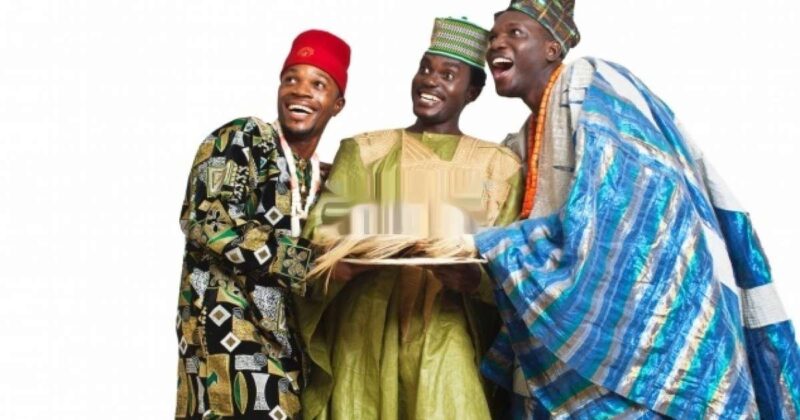
Despite the fact that Nigeria boasts of a rich tapestry of tribes, including the Igbo, Yoruba, and Hausa, with each tribe having distinct customs, culture, and beliefs, these differences have for ages been leading us to misunderstandings and tensions.
Analyzed from historical perspective, tribalism traces back to the era of slavery when colonial powers exploited ethnic divisions, sowing seeds of discord that persist today, and as it seems, the baton has literarily being passed to the political elites. This is as Nigerian politicians often exploit tribal sentiments for their gain as can evidently be seen in the perpetuation of divisions to secure votes, undermining national unity.
Not only that, in this part of the world, tribalism is passed down through generations, compelling children to learn it from their families, thereby perpetuating stereotypes and mistrust.
Without a doubt, the impact of tribalism has over the years been manifesting in missed opportunities as competent individuals are overlooked due to tribal identity, thereby hindering progress in education, business, and governance.
Not only that, it also result to social fragmentation, compelling communities to be isolated, and hindering cross-cultural understanding and cooperation.
Analyzing the negative impact on national development, tribalism diverts attention from critical issues like poverty, healthcare, and infrastructure.
Given the foregoing retrogressive manifestation of tribalism, it is expedient in this context to call for unity, and to attain unity as Nigerians, schools should begin to promote cultural exchange, teaching students about Nigeria’s diverse heritage.
In a similar vein, Journalists should, more than ever before, begin to play a crucial role. They must avoid sensationalizing tribal conflicts and instead highlight stories of unity and cooperation.
Also, politicians should prioritize national interest over tribal affiliations, even as policies should benefit all Nigerians, regardless of tribe.
Without any iota of exaggeration, Nigeria’s strength lies in its diversity. So, let us shed the shackles of tribalism and embrace brotherhood. Together, we can build a united, prosperous nation, one where tribe matters less than our shared humanity.