Africa
Open Universities And Part-Time Education: Nigeria’s Untapped Lifeline -By Isaac Asabor
Education is not about physically sleeping and waking up within the four walls of a university. In today’s fast-paced, technology-driven world, knowledge can be acquired through diverse methods, online platforms, audiovisual resources, and hybrid learning. Across America, Europe, and even in emerging economies, flexible learning systems are now the norm. Nigeria must not lag behind.

Over a decade ago, precisely on June 12, 2012, I wrote an opinion article published in PM News. Views expressed in the article revolve around about the plight of Nigerians who struggled to balance work, family responsibilities, and the pursuit of higher education. More than ten years later, the story remains the same, if not even more pressing, given the rising cost of living, the unpredictability of the job market, and the ever-increasing demand for workers to upgrade their skills to remain competitive.
Take the case of Mr. X. After completing his primary education, his parents urged him to learn a trade, as the family was living well below the poverty line. But he refused. Instead, he moved to Lagos, where he endured years of menial jobs and near-starvation just to save enough money to sit for his General Certificate of Education (GCE). Eventually, he passed, secured a clerical job in a bank, and advanced professionally through the Chartered Institute of Bankers.
However, he soon encountered a bitter reality that continues to plague Nigeria’s labour market: discrimination between professional and academic qualifications. Just like the long-standing and unfair divide between HND and B.Sc. holders, Mr. X discovered that his professional certifications could not take him far. To compete fairly and move up the ladder, he needed a university degree to complement his professional certificate in banking.
Herein lay his dilemma. Resigning from his well-paying job to pursue a full-time degree was risky. Without any guarantee of re-employment after graduation, such a move would have been reckless, especially for someone with family responsibilities.
Mr. X’s plight is not isolated; it mirrors the silent struggle of countless Nigerians. Many workers, already stretched thin, find themselves agonizing over whether to abandon their livelihoods in pursuit of education. For married individuals or breadwinners, the idea is almost unthinkable. As a friend of mine once remarked, “The fear of joblessness is the beginning of wisdom.”
This is precisely why part-time and distance learning programmes matter. They allow Nigerians to improve themselves academically while keeping their jobs, supporting their families, and contributing to society. Indeed, many, including this writer, who embraced part-time education years ago are today better off for it.
Thankfully, Nigerian universities have expanded opportunities for part-time and distance learning. Institutions now run external campuses in major cities, while global universities have fully embraced online platforms that connect students from anywhere in the world. Even more encouraging, technology, through e-learning portals, virtual classrooms, and online libraries, has revolutionized access to education in ways that were unimaginable twenty years ago.
I speak not only as an observer but also as a beneficiary. I passed through part-time education; both at the University of Lagos and Olabisi Onabanjo myself, and I have never been made to feel inferior in intellectual or professional circles when compared with full-time graduates. If anything, the resilience, discipline, and real-world experience that part-time students bring often make them more grounded than their full-time counterparts.
Historically, many of Nigeria’s leaders and professionals studied through correspondence colleges such as Rapid Results College, Walton Tutorial College, and Exam Success Correspondence College, long before e-learning became fashionable. Some even obtained law qualifications from prestigious universities such as Cambridge and Oxford through external study. If this model was good enough for leaders of the past, why then should part-time and distance education be stigmatized today?
This is why I found it troubling when, years ago, the National Universities Commission (NUC) dismissed part-time programmes as damaging to Nigeria’s education system. Such a blanket condemnation was shortsighted. Poor regulation, not the concept of part-time education itself, is the problem. After all, even full-time students are not immune to mediocrity, with many amassing “carry-overs” semester after semester.
Education is not about physically sleeping and waking up within the four walls of a university. In today’s fast-paced, technology-driven world, knowledge can be acquired through diverse methods, online platforms, audiovisual resources, and hybrid learning. Across America, Europe, and even in emerging economies, flexible learning systems are now the norm. Nigeria must not lag behind.
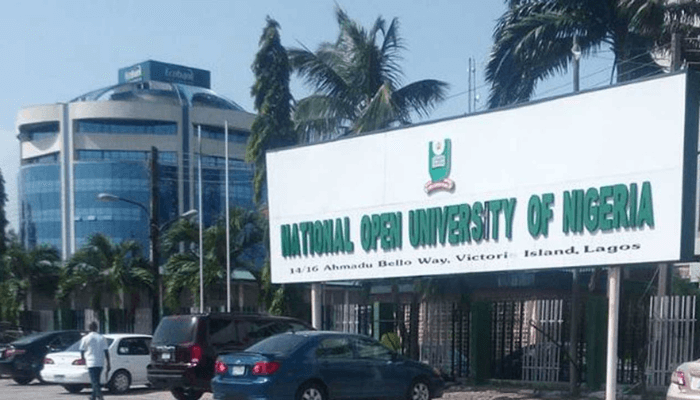
This is where the National Open University of Nigeria (NOUN) deserves recognition. NOUN has proven that open learning is not only possible but effective in a country where millions of admission seekers are denied space in conventional universities each year. For workers, parents, and entrepreneurs, NOUN has become a beacon of hope, providing access to education without requiring them to abandon their means of livelihood.
But Nigeria should not stop at NOUN. Just as private universities were introduced to complement public institutions in full-time education; it is time for the NUC and policymakers to encourage the establishment of private open universities. With millions of young people unable to gain admission into traditional institutions and thousands of professionals eager to up skill, expanding Open University options is both timely and necessary.
Properly regulated, private open universities can deepen opportunities in flexible, technology-driven learning, reduce pressure on conventional campuses, and democratize access to higher education. They can also foster innovation by embracing global best practices in digital learning, virtual laboratories, and professional partnerships.
The stereotype that part-time or Open University students are dullards must also be challenged. Many of these students have tasted the harsh realities of life and understand the value of education far more deeply than some of their full-time peers. Their seriousness and determination often surpass those of students who study without any financial or personal responsibilities. To generalize negatively about them is to commit the fallacy of composition, judging the whole by the weakness of a few. Just as there are unserious part-time students, there are countless unserious full-time students.
At a time when the economy is harsh, inflation is biting, and unemployment is a constant threat, flexible learning remains one of the smartest ways for Nigerians to climb the ladder of opportunity without letting go of the jobs that keep them afloat.
The choice before us is simple: Nigeria can either continue to stigmatize and underfund part-time and open learning, or it can embrace these systems as tools of national development. The NUC must therefore move away from dismissive postures and instead strengthen regulation, ensure quality, and expand access through both public and private participation.
Rather than condemn, let us improve. Rather than stigmatize, let us embrace. For in part-time education, distance learning, and open universities lies not just an alternative but a lifeline for millions of Nigerians determined to rewrite their destinies.