
Africa
Ajaokuta Steel: Nigeria’s Sleeping Giant or Monument to Failure? -By Mohammed Basah
Nigeria’s future does not lie in reviving a dead horse. It lies in building systems that work, assets that produce, and industries that actually deliver value. Ajaokuta can either be reborn with honesty and realism — or finally laid to rest as a costly lesson.


Few things tell Nigeria’s story of wasted potential like the Ajaokuta Steel Complex. Conceived in the 1970s as the industrial crown jewel that would power Nigeria into a new age of self-sufficiency, it has instead become a colossal graveyard of ambition. Decades later, with billions sunk into it and countless promises made, the plant has never produced a single sheet of steel at commercial scale. And yet, every election cycle, leaders dust off Ajaokuta as a political talking point — a dream deferred but never honestly re-examined.
The question Nigerians must ask now is simple: are we prepared to tell ourselves the truth about Ajaokuta, or will we keep throwing good money after bad in the name of nostalgia?
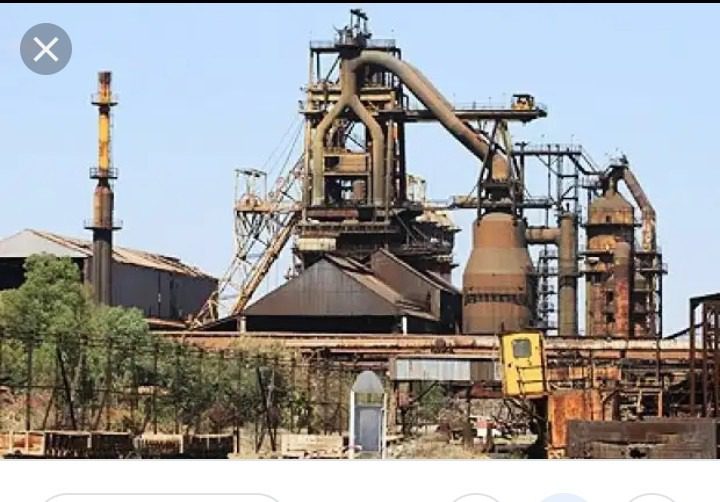
Ajaokuta steel
The Promise That Never Was
At inception, Ajaokuta was meant to be Africa’s largest steel mill. The Soviet Union provided technical support, Nigeria provided ambition, and successive leaders touted it as the bedrock of industrialisation. By the early 1990s, the sprawling plant had blast furnaces, rolling mills, and auxiliary facilities.
On paper, the potential was immense: an integrated plant that would supply everything from billets for construction to flat sheets for automobiles. In reality, Ajaokuta never took off. It lacked three critical ingredients: a reliable ore feedstock from Itakpe, a functioning rail link to Warri port, and the operational discipline needed to run a blast furnace continuously. Without those, the plant was a car without an engine — impressive from the outside, utterly useless inside.
Economist Kalu Aja, who has visited the site, put it starkly: “No Nigerian can visit Ajaokuta, see investments of more than $8bn rotting in the African sun, and not cry.” He is right — it is less a factory than a mausoleum of missed chances.
How Leadership Failed
Every administration since Shehu Shagari has promised to revive Ajaokuta. Few have been honest about its real condition.
- Olusegun Obasanjo, though not an economist, had a streak of pragmatism. He attempted to concession the plant, recognising that the Nigerian state alone lacked the competence and discipline to make it work.
- Umaru Yar’Adua, despite his idealism, dropped the ball by undoing some of those decisions, appointing weak hands to critical economic sectors. His decision to revoke the sale of the plant by the Obasanjo administration, reversed reforms that could have set Nigeria on a better course.
- Goodluck Jonathan largely ignored Ajaokuta, focusing instead on power-sector privatisation.
- Muhammadu Buhari — the “Mr. Integrity” showman — went the opposite way, spending almost $500 million of scarce funds to buy back concessions in a bid to “reclaim” the asset. Money we did not have was spent on something we did not need.
The result is a vicious cycle: every leader frames Ajaokuta as a national asset that must be revived “at all costs,” but none has ever defined those costs, or justified them against measurable returns.
Robert Kiyosaki once said an asset is anything that puts money in your pocket. By that definition, Ajaokuta is not an asset. It has never once put money in Nigeria’s pocket. Instead, it has drained resources that could have gone into building power plants, roads, or smaller, modern steel mills that actually work.
The Debate Today: Revive or Move On?
There are two schools of thought about Ajaokuta.
The first insists it must be revived because steel is strategic. Advocates argue that local steel production would create jobs, reduce import dependence, and catalyse downstream industries. They see Ajaokuta as a national pride project — too big to abandon.
The second camp, increasingly loud and pragmatic, argues that Ajaokuta is obsolete. Global steel technology has advanced. Mini-mills and direct-reduction plants are now cheaper and more flexible. The original Soviet design is outdated. Even Aliko Dangote, hardly a man afraid of big industrial projects, has said bluntly: “Ajaokuta will not work.”
Who is right? The truth lies closer to the second camp. Ajaokuta’s design reflects a 1970s Soviet model, not the leaner, modular systems that dominate the industry today. Reviving it fully would cost not billions, but tens of billions, plus decades of guaranteed political discipline — something Nigeria has never demonstrated.
Lessons from Abroad
Other countries started like Nigeria but took different paths.
- India, which also had Soviet-assisted steel plants, managed to turn them around by combining state-owned companies with aggressive private firms like Tata Steel. Crucially, India didn’t romanticise its white elephants. It modernised some, shut others, and let the private sector drive growth.
- South Korea, in the 1970s, built POSCO with ruthless focus. The government ensured reliable ore supply, captive power, and export markets. POSCO became one of the most efficient steelmakers in the world.
- China threw its weight behind integrated steel hubs but paired them with strict accountability and rapid adaptation to new technology.
The difference? Discipline. Competence. And a willingness to cut losses where necessary. Nigeria, by contrast, has refused to accept that Ajaokuta is not destiny — it is just one project, and not even a successful one.
The Hard Truth: Three Non-Negotiables
Kalu Aja has highlighted three basic conditions without which Ajaokuta cannot work:
- A functioning Itakpe iron ore supply chain (via NIOMCO).
- The Itakpe–Ajaokuta–Warri rail line to move inputs and outputs efficiently.
- Continuous operation of the blast furnace, which requires uninterrupted power and feedstock.
Until all three are solved, turning on Ajaokuta’s furnace would be worse than leaving it idle. It would simply burn cash at industrial scale.
What Should Be Done?
Nigeria faces a choice: keep funding a relic, or redirect resources toward productive alternatives. Here’s what makes sense:
- Stop the politics. Ajaokuta should not be a campaign slogan. Commission an independent, transparent audit of its current condition and make the report public.
- Adopt a staged approach. Instead of chasing full integrated steel, start with operationalising the light rolling mill and validating local demand for simple products like rebar.
- Bring in credible partners. Any concession must include strict milestones, penalties for failure, and escrowed payments. No more sweetheart deals.
- Let private players lead new investment. Encourage greenfield steel plants using modern technology. Sometimes it is cheaper to build afresh than to revive a dinosaur.
- Develop downstream markets. Steel alone is meaningless without coordinated demand from construction, rail, and manufacturing. Government procurement policy should guarantee offtake for domestic producers.
Why This Matters
Nigeria spends over $4 billion annually importing steel and allied products. That is money leaving the economy — money that could create jobs at home. But let us be clear: Ajaokuta, in its current state, cannot close that gap. Pretending it can only wastes time.
The bigger tragedy is not just the money wasted, but the hope betrayed. Every Nigerian generation has been told Ajaokuta will deliver a better tomorrow. For 40 years, that tomorrow has not come. The danger is that we keep telling the same lie, rather than facing the truth: industrialisation will not come from nostalgia. It will come from hard choices, pragmatic investments, and ruthless accountability.
Closing Thoughts
Ajaokuta is not just an industrial project; it is a mirror held up to Nigeria. It shows how we dream big but execute poorly. It shows how politics trumps economics. It shows how we confuse national pride with practical value.
It is time to stop. Time to ask Kiyosaki’s simple question: does this put money in our pocket? If the answer is “no” — as it has been for 40 years — then we must stop pouring money into a bottomless pit.
Olusegun Obasanjo was no professor of economics, but he understood pragmatism. Yar’Adua’s poor choices, Buhari’s expensive buybacks — all are reminders of what happens when sentiment drives policy.
Nigeria’s future does not lie in reviving a dead horse. It lies in building systems that work, assets that produce, and industries that actually deliver value. Ajaokuta can either be reborn with honesty and realism — or finally laid to rest as a costly lesson.
The choice is ours.
Mohammed Basah is a writer, strategist, and founder of Ideas Foundry Limited. Through Entrepreneurship Tonic, a media, education and community platform, he works to close the knowledge, skill and networking gap facing emerging African entrepreneurs.




















You must be logged in to post a comment Login