Africa
Oyo at 50 and the Weight of History on Makinde’s Watch -By Oluwafemi Popoola
They are promises meant for time. Time, however, has no sentiment. Oyo at 50 is a moment of reflection, a test of leadership’s depth. And standing at this defining threshold, Makinde must decide whether the jubilee will mark a high point, or a turning point. His remaining steps will decide how he is remembered, and how boldly Oyo claims its next chapter.

There is a peculiar unease that arises when time becomes a mirror. It is not the restless hunger of ambition, but the heavier discomfort of reflection, the kind that appears when history pauses and waits to be addressed. That unease now hovers over Oyo State, and it seems to rest quietly on the shoulders of Governor Seyi Makinde. But beyond the governor, beyond his politics, there is a deeper emotion in the air. It is the pride of a people whose story long predates the modern Nigerian state.
As Oyo marks its 50th anniversary on February 3, it arrives at an age where identity ripens into conscience. Five decades offer enough distance for triumphs to settle into memory and enough honesty for errors to ask for answers. At such moments, a state is compelled to remember where it comes from.
To carry Oyo in one’s blood is to live with memory as inheritance. Growing up in Ibadan, one becomes aware, almost by instinct, that the ground beneath one’s feet carries echoes of command and conquest. Long before Nigeria learned its own name, Old Oyo, Ọ̀yọ́-Ilé, stood as one of the most formidable political and military civilizations in West Africa. Scholars like Samuel Johnson, in “The History of the Yorubas”, wrote of an empire whose governance systems, cavalry strength, and diplomatic reach commanded respect across the savannah. British historian Robin Law later described the Oyo Empire as “a state of remarkable political sophistication,” sustained not merely by force, but by institutions, checks, and traditions.
Ibadan itself, that unruly, proud city of hills and red earth, rose from war to become a republic of warriors and thinkers, producing men and women who would later shape Nigeria’s intellectual and political life. From the first university in the country, the University of Ibadan, to the crucible of journalism, activism, and public service, Oyo has always punched above its weight. As Chinua Achebe once noted of societies with deep historical consciousness, “A people without history are like wind on bare rock.” Oyo has never been bare rock.
It is against this backdrop that, on Monday, January 26, 2026, Oyo formally began a week-long remembrance of its modern political birth. Fifty years after it was carved out by the military government of General Murtala Mohammed, the state gathered at the International Conference Centre of the University of Ibadan to open celebrations themed “Consolidating the Legacy, Navigating the Present, and Reimagining the Future.” Anniversaries like this are mirrors. They force a reckoning, with where a people have been, and with what their leaders will be remembered for when the music fades.
Governor Seyi Makinde, who declared the event open, described the Golden Jubilee as a moment of reflection, responsibility, and renewal, noting that his personal journey and values were shaped by Oyo State over the last five decades, both as a citizen and a public servant. That statement carries symbolic weight. Golden jubilees are celebrations of survival. They are also statements of continuity. In African tradition, fifty years marks a generational turning, the passing of the torch from those who built to those who must preserve and extend.
On February 3, the anniversary will culminate in a gala night at the Government House, Agodi, where all 17 former governors — living and dead — will be honoured. Families of those no longer alive will receive plaques in place of presence. This is a gentle reminder that power eventually yields to memory.
It is difficult to stand in such moments and not grow introspective. Oyo’s first military governor, Brigadier David Jemibewon, governed a fledgling state still learning its name. Fifty years later, Makinde governs a far more complicated entity. The state has now grown louder, restless, politically conscious, and demanding results. To preside over a golden jubilee is to be forced into dialogue with history, and history is rarely polite. It asks uncomfortable questions. What have you built? What will endure?
For the past days, Makinde has sounded like one of the most jittery politicians in Nigeria today. It is not because he lacks confidence, but because the future has become stubbornly unclear. It is a particular kind of feeling that comes when a politician begins to sense the end of a chapter without seeing the next page. It is not fear exactly. Fear is too crude a word. It is uncertainty laced with urgency. It is a tightening of time. When that feeling sets in, men begin to speak differently.
His public statements since President Bola Tinubu’s visit have been unusually explosive, unusually blunt. He has criticised federal policies, and openly lamented the shrinking space to “speak truth to power”. These are not the words of a man at ease with tomorrow. They sound like the reflections of someone who knows that seasons change, and that not every governor who celebrates a golden jubilee will have a clear political road beyond it.
There have been murmurs, some hopeful and others mischievous, about Seyi Makinde’s presidential ambitions. Ambition is not foreign to politics, but realism is its silent partner. Even Makinde understands that such a dream cannot presently fly. Not from where he stands. Not from a party that is barely standing. The PDP today resembles a structure whose doors are open but whose walls are crumbling. To claim seriousness within it at this moment is to ignore the obvious. Power has moved. Momentum has shifted.
The APC is the political heat source of the moment, and Nigerian politicians, like moths, are rarely immune. Even Rabiu Kwankwaso’s camp has begun to thin. In Kano, Abba Yusuf and 21 members of the State House of Assembly have boarded the APC train, leaving Kwankwaso to shout betrayal into the wind. It is not ideology at work; it is survival. And Makinde knows this. That knowledge explains the urgency in his voice, the candour in his tone, the sense that he is speaking now because silence may soon cost him relevance.
I have watched this phase many times in Nigerian politics. It is almost textbook. When certainty disappears, honesty rushes in. When the future becomes opaque, politicians suddenly find the courage to say what they had previously swallowed. In that sense, Makinde is not unique, he is simply human. This is the attitude of the average Nigerian politician when the comfort of continuity is no longer guaranteed.
But, there is something about Makinde’s honesty that feels more personal. I admire him. I truly do. And I say this even as I admit that I feel a measure of pity for him right now. Pity not as condescension, but as empathy. Power is a terrible place to stand when you realise it may not travel with you into the future. That realisation humbles even the strongest men.
Makinde’s visit to President Tinubu last week fits neatly into this emotional landscape. Governors visit presidents all the time, but the timing of this visit speaks volumes. Since that meeting, Makinde’s public utterances have carried a sharper edge, as though he has decided that if the future will not protect him, truth might.
This is often how political candour is born in Nigeria. Not the one from comfort, but from uncertainty.
However, It would appear dishonest of me to reduce Makinde to anxiety alone. Whatever his political future holds, his record in Oyo State stands firm. Despite the present jitters, Seyi Makinde remains one of the best governors the state has produced. On this, I have little doubt.
When it comes to the welfare of the people of Oyo State, no recent governor comes close. Civil servants know this. Pensioners feel it monthly. Young Oyo indigenes can testify better than any commentator. Job recruitment has been structured. Empowerment programmes have been deliberate. Salaries are paid. Pensions are not treated as charity. In a country where governance is often an afterthought, Makinde has governed.
History, at least in Oyo State, will be kind to him.
Perhaps that is why this moment feels so poignant. Here is a man who has largely done his best, yet now stands at a political crossroads with no clear signpost ahead. That is a sobering place to be. It makes people reflective. It makes them speak.
Meanwhile, there is a quiet luck in being the governor at 50. Makinde’s stewardship of Oyo State during its golden jubilee feels symbolic, almost deliberate, as though time itself extended an invitation. His ascension suggests a journey shaped as much by circumstance as by conviction. He has worked, and that work shows. But leadership is ultimately judged not at anniversaries, but at departures.
At the jubilee celebrations, he presented a vision for the next five decades, grand, hopeful, and demanding, despite the cloud of a ₦30 billion scandal that has tested the resilience of his administration. He recommitted to infrastructure that must endure, education that prepares rather than improvises, and institutions strong enough to resist decay.
They are promises meant for time. Time, however, has no sentiment. Oyo at 50 is a moment of reflection, a test of leadership’s depth. And standing at this defining threshold, Makinde must decide whether the jubilee will mark a high point, or a turning point. His remaining steps will decide how he is remembered, and how boldly Oyo claims its next chapter.
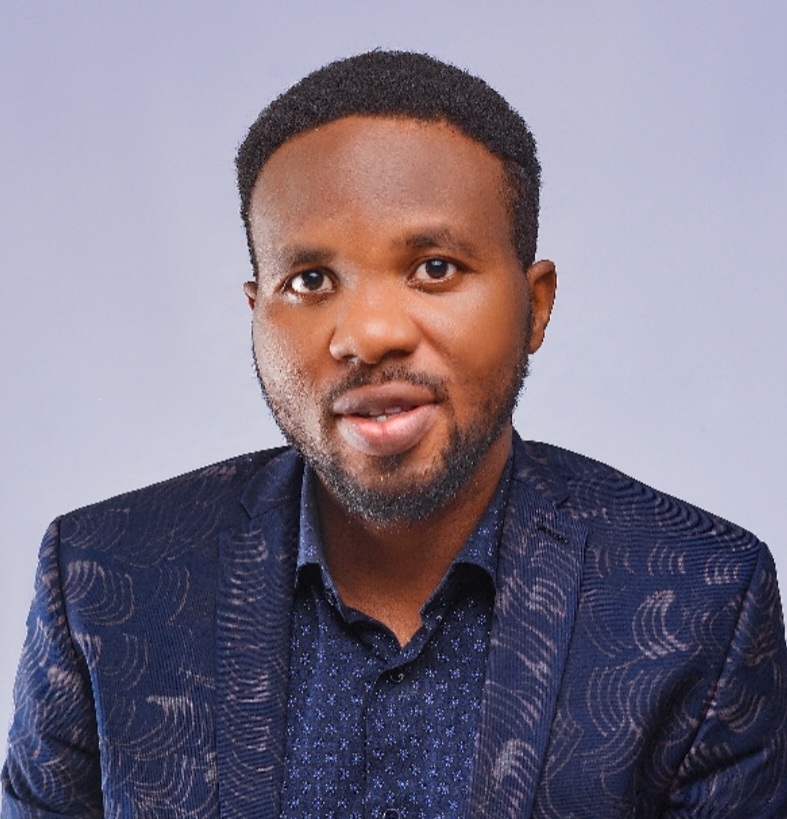
Oluwafemi Popoola is a Nigerian journalist, media strategist, and columnist. He can be reached via bromeo2013@gmail.com