
Africa
Law, Perception, and Proportionality: A Psychological Reflection on the Ozekhome Prosecution -By Prof. John Egbeazien Oshodi
Ozekhome’s longstanding advocacy for constitutional freedoms and civil liberties has made him both influential and controversial. Public figures who frequently challenge authority often become focal points of institutional tension.

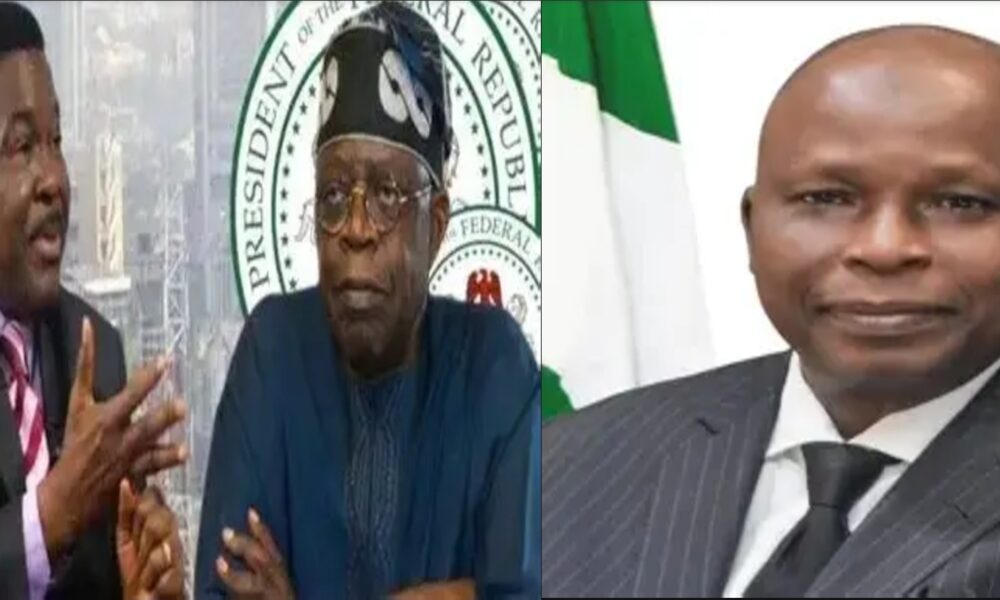
The ongoing prosecution of Professor Mike Ozekhome, SAN, by the Nigerian government raises a profound psychological and constitutional question for both the legal community and the wider public. When a civil property dispute resolved in London later becomes the basis of a criminal prosecution in Abuja, legitimate concerns arise about proportionality, jurisdictional boundaries, and democratic optics.
This analysis does not excuse professional misconduct. As a psychologist, I do not defend wrongdoing, nor do I minimize the seriousness of professional obligations within the legal system. However, democratic societies must carefully distinguish between correcting professional errors and escalating disputes into criminal matters in ways that may appear disproportionate to citizens.
This reflection therefore focuses not on personalities, but on institutional behavior. Democracies thrive when state power is exercised with restraint, transparency, and fairness. When legal processes appear to extend beyond restoration into punishment, especially in politically sensitive contexts, citizens begin to question motives and fairness.
This is not an attack on government. It is an appeal to the wisdom often reflected in Nigerian communal traditions, where justice balances accountability with fairness, and authority is exercised with caution to preserve public trust. Institutions must remain larger than individual conflicts if democracy is to remain psychologically stable.
The London Disconnect: Civil Loss Versus Criminal Escalation
The foundation of the present controversy lies in a ruling by the London First tier Tribunal Property Chamber. In the jurisdiction that shaped Nigeria’s common law tradition, the dispute was treated strictly as a civil matter concerning property title.
The tribunal’s concern was restoration rather than punishment. It determined that the property transfer was invalid and returned ownership to the rightful estate. Importantly, despite the United Kingdom’s robust legal framework against financial and property misconduct, authorities did not escalate the matter into criminal prosecution or refer it to prosecutorial agencies.
This outcome demonstrates how civil systems often prioritize correction of harm over criminal sanctions when intent and circumstances do not clearly justify prosecution. Restoration resolved the core dispute. Property was returned, and legal order was restored without resorting to imprisonment or criminal stigma.
Nigeria’s decision to pursue criminal charges introduces a different trajectory. While sovereign states possess independent prosecutorial authority, divergence from prior civil resolution inevitably raises questions about proportionality. Citizens may ask why restoration was sufficient in one jurisdiction yet imprisonment appears necessary in another.
Observers also note that this escalation occurs within a political climate in which Ozekhome has been an outspoken critic of government policy. Even if prosecutorial decisions are legally justified, public perception becomes shaped by context. When critics of government face legal consequences, suspicion naturally arises about whether dissent forms part of the background narrative surrounding prosecution.
Thus, the psychological concern is not merely legal divergence, but the appearance of selective escalation, which can weaken public confidence in prosecutorial neutrality.
The AGF and the Risk of Perceived Personalization
The involvement of Attorney General of the Federation Lateef Fagbemi, SAN, introduces further psychological complexity. Ozekhome has publicly criticized the AGF and called for his resignation, making the relationship between critic and chief law officer politically visible.
When the chief law officer personally oversees or is closely associated with prosecution involving a public critic, legal action risks being perceived as personalized, even when grounded in lawful authority. Public trust depends not only on legality but also on visible impartiality.
In democratic systems, institutions must avoid situations where legal action appears connected to personal disagreements or political tensions. Even the appearance of personalization can undermine confidence in fairness. Citizens expect prosecutorial decisions to appear detached from personal or political disputes.
From a psychoafricalytic perspective, democratic health depends on leaders demonstrating emotional resilience in the face of criticism. Criticism is inherent to democratic engagement. When legal action coincides with political confrontation, suspicion arises that authority may be responding emotionally rather than institutionally.
Therefore, the issue is not whether prosecution is legally permissible, but whether institutional distance is sufficiently maintained to preserve public confidence that justice is being pursued rather than personal grievances addressed.
Judicial Independence and the Call for Judicial Sagehood
Nigeria’s judiciary has long faced perceptions of operating under executive influence. In high profile prosecutions, judges may experience psychological pressure regardless of their personal independence or commitment to fairness.
When cases involve politically visible figures or attract national attention, judges must navigate not only legal questions but also the expectations and fears of the public. Any appearance of executive influence risks weakening faith in judicial neutrality.
A judiciary perceived as echoing executive preferences becomes psychologically constrained, deepening national cynicism. Citizens begin to doubt whether outcomes arise from law or from political alignment.
Judicial sagehood therefore becomes essential. Judges must demonstrate courage and intellectual independence, asking difficult questions even when politically uncomfortable. Public confidence strengthens when courts visibly scrutinize prosecutorial reasoning.
One such question naturally arises in this case. If another jurisdiction resolved the dispute through civil restoration, what factors justify criminal prosecution locally? Courts must carefully determine whether criminal intent exists or whether civil correction already addressed the core harm.
Justice requires separating legal accountability from political atmosphere. Judges who preserve this distinction contribute to institutional healing and democratic stability.
Comparison of Intent and Jurisdiction
In the United Kingdom, proceedings emphasized restoration of property rights. Legal focus centered on correcting ownership and restoring legal order rather than punishing individuals.
In Nigeria, proceedings have shifted toward criminal accountability. This change introduces different psychological and social consequences, including reputational damage and potential custody.
Civil proceedings operate on balance of probabilities, allowing disputes to be resolved through restoration and compensation. Criminal proceedings require proof beyond reasonable doubt and carry far more severe personal consequences.
One system prioritized restoration and closure. The other introduces punishment and prolonged public controversy. Citizens inevitably interpret these differences through political and emotional lenses.
These contrasting approaches shape public perception of intent. While both systems may operate within their legal rights, divergence invites scrutiny about motives and fairness.
A Democratic Sentry and the Question of Proportionality
Ozekhome’s longstanding advocacy for constitutional freedoms and civil liberties has made him both influential and controversial. Public figures who frequently challenge authority often become focal points of institutional tension.
Professional misconduct, if proven, must never be excused. Legal professionals hold positions of trust, and accountability remains essential. However, democratic credibility depends on ensuring that punishment remains proportionate to wrongdoing.
When civil disputes appear to evolve into criminal trials, some citizens fear that dissent itself becomes vulnerable. Whether accurate or not, such perceptions can damage trust in democratic institutions.
This situation therefore reveals what may be described as the psychological nakedness of state power. Citizens observe not only legal arguments but also emotional and symbolic dimensions of state action. Authority appears exposed when motivations are questioned.
Nigeria stands at an important crossroads. Democratic maturity requires justice that is not only lawful but visibly fair. Legal accountability must coexist with openness to criticism and institutional restraint.
The path forward lies in ensuring that prosecution, when necessary, is clearly rooted in justice rather than appearing connected to political conflict. Only then can both legal integrity and democratic confidence be preserved.
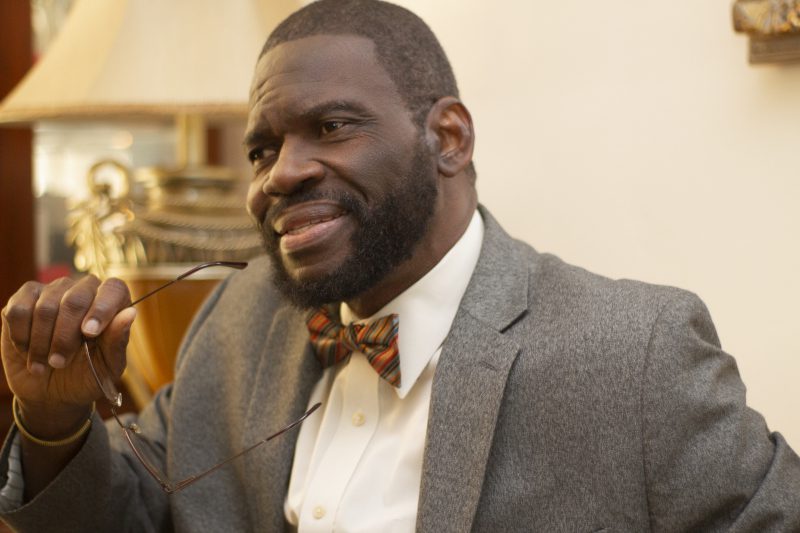
Professor John Egbeazien Oshodi, Clinical/Forensic Psychologist
About the Author
Prof. John Egbeazien Oshodi is an American psychologist, an expert in policing and corrections, and an educator with expertise in forensic, legal, clinical, and cross-cultural psychology, including public ethical policy. A native of Uromi, Edo State, Nigeria, and son of a 37-year veteran of the Nigeria Police Force, he has long worked at the intersection of psychology, justice, and governance. In 2011, he helped introduce advanced forensic psychology to Nigeria through the National Universities Commission and Nasarawa State University, where he served as Associate Professor of Psychology.
He teaches in the Doctorate in Clinical and School Psychology at Nova Southeastern University; the Doctorate Clinical Psychology, BS Psychology, and BS Tempo Criminal Justice programs at Walden University; and lectures virtually in Management and Leadership Studies at Weldios University and ISCOM University. He is also the President and Chief Psychologist at the Oshodi Foundation, Center for Psychological and Forensic Services, United States.
Prof. Oshodi is a Black Republican in the United States but belongs to no political party in Nigeria—his work is guided solely by justice, good governance, democracy, and Africa’s development. He is the founder of Psychoafricalysis (Psychoafricalytic Psychology), a culturally grounded framework that integrates African sociocultural realities, historical awareness, and future-oriented identity. He has authored more than 500 articles, multiple books, and numerous peer-reviewed works on Africentric psychology, higher education reform, forensic and correctional psychology, African democracy, and decolonized models of clinical and community engagement.



















You must be logged in to post a comment Login