
Forgotten Dairies
Kano Family Killing: Nigerian Youths and Collective Responsibilities -By Prof. MK Othman
The government should invest heavily in education and healthcare to improve human capital. Nigeria should allocate 20% of its annual budget to education and 10% to health. There should be a legislated policy requiring all children of public office holders and high-ranking civil servants to attend public schools from primary to tertiary levels. This will prompt policymakers to take a serious look at our educational sector.

Over the past six years, I have written extensively about Nigerian youth and their future, including articles highlighting the risks of neglecting our youth. Despite repeated warnings, the situation continues to decline. At the heart of this crisis is the undeniable fact: the trajectory of our nation depends on how we prepare, empower, and guide our young people. Their current condition is not merely a youth issue but a direct reflection of our societal priorities and collective responsibility.
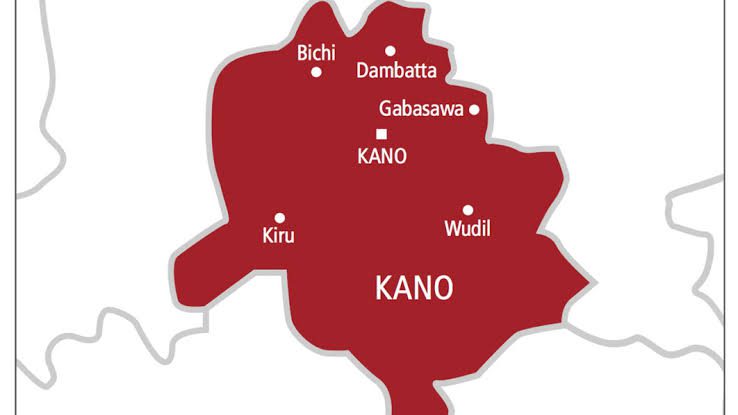
Entering 2026, Nigerians face mounting socioeconomic challenges. Recently, a senseless daylight killing occurred in Chiranchi, Kano: a mother and her six children were murdered by youth. The Kano State Governor, Abba Kabir Yusuf, condemned the act as barbaric and unacceptable, ordering a manhunt. He stated, “The killing of a mother and her innocent children is barbaric, senseless, and a grave assault on our shared humanity.” The tragedy prompted national mourning, with President Tinubu denouncing the crime and calling for thorough prosecution.
The suspects were all young people aged 21 to 40, and the main suspect. The main suspect, Umar Auwal, is a nephew of the slain mother, Fatima Abubakar. This raises grave concerns about youth involvement in violent crime, the collapse of family values, and cultural decay, often fueled by drug abuse, underemployment, and unemployment.
Nigeria is a country of youth, but not for the youth, as we fail to prepare, train, and orient them to take over the mantle of leadership, nor do we plan for a smooth transition. Yes, Nigeria is a country of youth; young men and women under 30 constitute approximately 70% of the Nigerian population. A significant portion, 42%, is under 15 years old. The population for Nigeria in 2025 was estimated at 237,527,782 people at mid-year, with the current population being 240,225,799 as of Monday, January 26, 2026, based on Worldometer’s elaboration of the latest United Nations data.
Nigeria has an average birth rate of 850 babies per hour and an average death rate of 280 people per hour, resulting in a population increase of 570 people per hour, 13,491 people per day, and 4.92 million people per year. At this rate, Nigeria is projected to reach 263 million by 2030 and 401 million by 2050, making it the third most populous country in the world, up from its current position of sixth, which accounts for 2.89% of the world population. In 2024, the United Nations Children’s Fund (UNICEF) denounced the growing number of out-of-school children in Nigeria, stating that it had now reached 18.3 million.
Nigeria’s population explosion, with youth as the majority, is critical. The nation stands at a crossroads—either we transform this population into productive human capital, or we face self-destruction with consequences that threaten not only the country but the continent and beyond. The everyday evidence of youth desperation, from substance abuse to get-rich-quick schemes, underscores a systemic failure to provide meaningful opportunities and values. The core issue is not merely individual choices but our collective neglect. How do we change our course?
The issue of youth delinquency and violent crimes demands action from everyone—schools, parents, teachers, and government. Each must take specific steps: schools should establish mentorship and anti-drug programs; parents must closely monitor and guide their children; teachers need training to recognize and address at-risk youth; and the government should enforce policies supporting youth development. Only through shared, concrete responsibility can we address this pressing issue.
We must recognize that youth and children are the most vulnerable members of society. Children are like a clean whiteboard; whatever is inscribed upon it appears, good or bad. Numerous influences affect this whiteboard: parents, teachers, peer groups, the environment, society, and, above all, destiny. The influencers of youth – young men and women – are classified into two categories: parents and the government, which serves as the overall regulator of society and the environment.
As responsible parents, it is our moral responsibility and parental obligation, within societal constraints and our abilities, to ensure that our children are taught proper lessons using the correct procedures. We must be keenly interested in what our children are doing at all times, who they are associating with, and how they spend their time, both actively and in leisure. Their performance in school, social, and religious settings should be of great interest to us, as we reward them for good achievements and discipline them for the opposite. As we review their school report cards, we should not forget to collect their phones and monitor their interactions with peers through cell phones. Our knowledge of our children’s private lives should have no limits. We should ask questions, question them about inappropriate actions, and be prepared to teach them proper behavior and attitudes. Their good upbringing would not only be a credit to us but also fulfill our moral responsibilities.
In schools, teachers play a crucial role in shaping young people’s development, but certain teacher behaviors, school practices, and systemic failures can inadvertently—or deliberately—push students toward criminal involvement. Research in Nigeria highlights several ways educators contribute to youth crime. A few of such factors are Misconduct and sexual Abuse, neglect and failure to Maintain Discipline, and inadequate training on Juvenile Delinquency.
The government should invest heavily in education and healthcare to improve human capital. Nigeria should allocate 20% of its annual budget to education and 10% to health. There should be a legislated policy requiring all children of public office holders and high-ranking civil servants to attend public schools from primary to tertiary levels. This will prompt policymakers to take a serious look at our educational sector. There is a need to review our educational curriculum at all levels of our educational system. Germane issues on problem-solving strategies, innovations, job creation, nationalism, culture, among others, should be incorporated into the renewed curriculum. The educational system should be tailored to accelerate societal development in an agrarian nation with a rapidly increasing population and diverse nationalities. This way, we can replace the “time bomb” with a bright future for our youths and the potential of making Nigeria achieve greatness. May it happen quickly.
Ultimately, we—the youth, parents, and government leaders—must unite to address the challenges facing our youth. Parents must actively engage in their children’s upbringing by consistently monitoring, supporting, and guiding them. Teachers should create nurturing, disciplined, and drug-free learning environments, receive ongoing training, and intervene appropriately when youth show signs of distress or delinquency. The government must invest in education, enforce relevant policies, and prioritize youth empowerment by creating sustainable job opportunities and effective mentorship programs. These actions, if taken promptly and earnestly, can transform potential crises into pathways for national greatness. May God guide us to success, amen.
Prof. M. K. Othman, MNIAE, MNSE, MASABE
(Professor of Soil and Water Engineering)
Vice Chancellor, Federal University Dutsin-ma, Katsina State,
+2348065571637




















You must be logged in to post a comment Login