Forgotten Dairies
Public Hospitals, Private Prices: Nigeria’s Healthcare Crisis -By Rinret Istifanus
At its core, this issue is about trust. Nigerians need to trust that when they walk into a government hospital, they will receive care not a financial burden that threatens their survival. Restoring that trust will require deliberate action, compassion, and a renewed commitment to the original purpose of public healthcare.

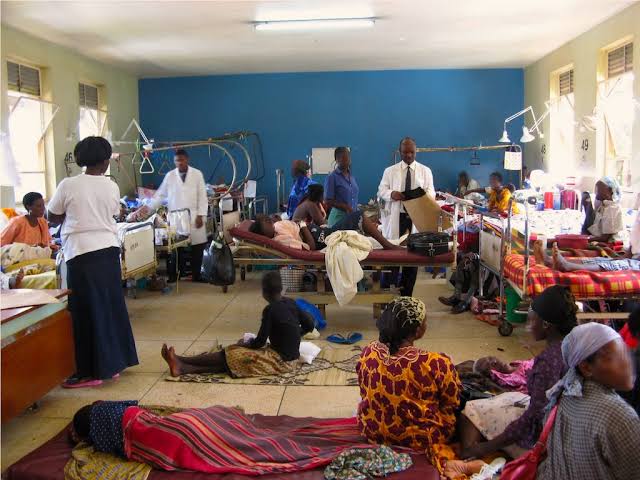
There is something deeply unsettling about walking into a government hospital in search of help, only to be handed a bill that feels like a punishment. These hospitals were built to serve the people especially the poor, the vulnerable, and those with nowhere else to turn. Yet today, many Nigerians are faced with a painful contradiction: the very institutions meant to save lives are increasingly becoming places where survival comes at an unbearable cost.
Take, for instance, the cost of a cesarean section. In what is supposed to be a public healthcare facility, families are being asked to pay as much as ₦300,000 for the procedure alone. When the cost of drugs, tests, and other medical expenses are added, the total bill can rise to over ₦400,000. For many Nigerians, this is not just expensive it is impossible.
A mother in labor should not have to worry about whether her family can afford to keep her alive. She should not have to measure her chances of survival against the balance in her account. Yet this is the reality that countless families are forced to confront every day. What was once a place of refuge is slowly turning into a system that excludes the very people it was designed to protect.
To be clear, healthcare is not cheap to provide. Hospitals require equipment, trained personnel, drugs, and constant maintenance. Medical professionals deserve to be paid fairly for their expertise and service. But the question remains: at what point does cost become exploitation? At what point does a public service lose its purpose?
Government hospitals are not meant to operate like profit-driven institutions. Their primary responsibility is not to generate revenue, but to ensure that no Nigerian is denied access to essential care because of financial limitations. When the cost of basic and emergency procedures becomes this high, it raises serious concerns about priorities and accountability within the system.
The consequences of this crisis go far beyond financial strain. Families are pushed into debt. Some delay seeking medical help until it is too late. Others resort to unsafe alternatives, risking complications that could have been avoided with proper care. In the most tragic cases, lives are lost not because treatment was unavailable, but because it was unaffordable.
This is not just a healthcare issue; it is a moral one. A society that cannot guarantee affordable access to life-saving care for its citizens is a society that must pause and reflect. The value of human life should never be determined by the ability to pay a hospital bill.
There is an urgent need for reform. Greater transparency in billing, better government funding, and stronger oversight mechanisms are essential. Policies must be implemented not just on paper, but in practice ensuring that public hospitals truly serve the public. Health insurance systems, where available, must be strengthened and made accessible to the average Nigerian.
At its core, this issue is about trust. Nigerians need to trust that when they walk into a government hospital, they will receive care not a financial burden that threatens their survival. Restoring that trust will require deliberate action, compassion, and a renewed commitment to the original purpose of public healthcare.
Because in the end, the question is simple: if government hospitals are no longer affordable to the people, then who are they really for?